การสื่อสารเชิงอัตลักษณ์เพื่อการตลาดการเมือง : สีแทนพรรคการเมืองไทย
คำสำคัญ:
พรรคการเมืองไทย, สีแทนพรรคการเมืองไทย, การสื่อสารเชิงอัตลักษณ์, การตลาดการเมืองบทคัดย่อ
บทความวิจัยนี้มีวัตถุประสงค์เพื่อศึกษา และวิเคราะห์การสื่อสารเชิงสัญลักษณ์ด้วยการใช้สีแทนพรรคการเมืองไทยที่มีผลต่อการตลาดการเมือง เป็นการวิจัยเชิงคุณภาพที่ใช้กระบวนการวิจัยเอกสารเป็นเครื่องมือสำคัญในการคัดเลือกเอกสารระดับทุติยภูมิ เลือกวิธีการสุ่มอย่างง่ายจาก 5 พรรคการเมืองที่มีการใช้สีเพื่อสื่อสารเชิงอัตลักษณ์ ประกอบด้วย 1. พรรคเพื่อไทย 2. พรรคภูมิใจไทย 3. พรรคประชาชน 4. พรรคประชาธิปัตย์ และ 5. พรรคชาติไทยพัฒนา ซึ่งมีการคัดเลือกเอกสารที่ผ่านการพิจารณาจากความถูกต้อง ความน่าเชื่อถือ ความเป็นตัวแทนและความหมายที่ชัดเจน
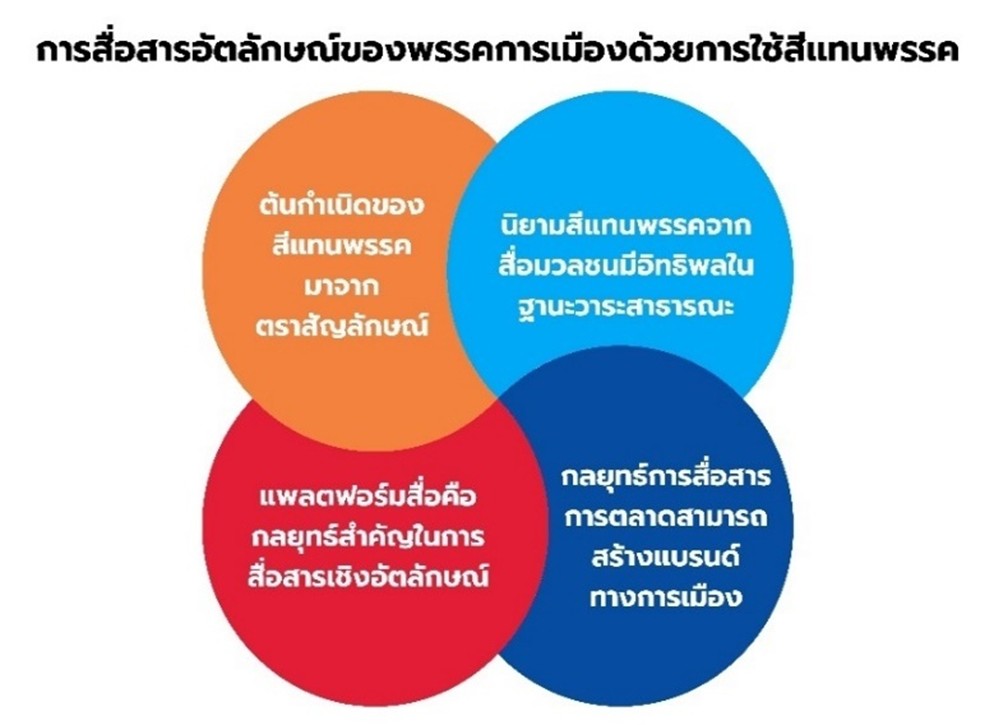
ผลการศึกษาพบว่า สีทำหน้าที่เป็นเครื่องมือสำคัญในด้านการสื่อสารเชิงสัญลักษณ์ที่มีประสิทธิภาพในทางการเมือง โดยพรรคการเมืองไทยใช้สีในตราสัญลักษณ์สื่อสารผ่านทางแพลตฟอร์มออนไลน์และได้รับการตอกย้ำจากสื่อมวลชนในการสื่อสารอัตลักษณ์ ถ่ายทอดอุดมการณ์และเสริมสร้างการจดจำพรรคในสายตาประชาชน สีจึงไม่ใช่เพียงองค์ประกอบศิลป์แต่เป็นภาษาทางการเมืองที่ส่งผลต่อการรับรู้ ทัศนคติ และพฤติกรรมการเลือกตั้งในยุคการตลาดการเมืองแบบมีส่วนร่วม การบูรณาการระหว่างสีในฐานะสัญลักษณ์ของพรรคการเมืองกับแพลตฟอร์มออนไลน์ถือเป็นปรากฏการณ์ใหม่ด้านการสื่อสารการตลาดการเมืองร่วมสมัย พรรคการเมืองสามารถหยิบยกมากำหนดเป็นกลยุทธ์ทางการเมืองเพื่อสร้างความได้เปรียบในเชิงภาพลักษณ์และจูงใจการสนับสนุนจากประชาชนได้
เอกสารอ้างอิง
กรุงเทพธุรกิจ. (2568). คดี 44 สส. ฮั้วสว. พลิกสมการ พท.-ภท. โอกาสหักดิบไม่เป็นศูนย์. สืบค้น 25 เมษายน 2568, จากhttps://www.bangkokbiznews.com/politics/1177270
ไทยโพสต์. (2568). จังหวะรุก ภูมิใจไทย 17 ปี พรรคสีน้ำเงิน. สืบค้น 20 เมษายน 2568, จาก https://www.thaipost.net/dominate-the-situation-news/773451/
ไทยรัฐ. (2567). เปิดตัว “พรรคประชาชน” พรรคส้มร่างที่สาม วางเป้าตั้งรัฐบาล พรรคเดียว 2570. สืบค้น 20 มีนาคม 2568, จากhttps://plus.thairath.co.th/topic/politics&society/104680
บีบีซี นิวส์. (2566). เลือกตั้ง 2566 : กกต. รายงานผลเลือกตั้งอย่างเป็นทางการ ก.ก. เหลือ 151 ส.ส. ส่วน ปชป. ได้เพิ่มเป็น 25 ส่งจุรินทร์ผ่านคุณสมบัติเป็นนายก. สืบค้น 25 เมษายน 2568, จากhttps://www.bbc.com/thai/articles/c1d34xlzvrlo
มติชน ออนไลน์. (2566). ศึกชิงหัวหน้า ปชป. เดิมพันอนาคต “พรรคสีฟ้า”. สืบค้น 26 กุมภาพันธ์ 2568, จากhttps://www.matichon.co.th/politics/news_
มนตรี วีรยางกูร และสุปราณี ธรรมพิทักษ์. (2567). ยุทธศาสตร์การกำหนดนโยบายของพรรคการเมืองในยุคดิจิทัล. วารสารการเมือง การบริหาร และกฎหมาย. มหาวิทยาลัยบูรพา, 16(1), 16-33.
เลอภพ โสรัตน์. (2561). บทบาทสื่อมวลชนกับการมีส่วนร่วมทางการเมืองไทย. วารสารการวิจัยกาสะลองคำ มหาวิทยาลัยราชภัฏเชียงราย, 7(1), 95–107.
สิริพรรณ นกสวน สวัสดี. (2553). การเมืองการปกครองเปรียบเทียบ. กรุงเทพฯ: คณะรัฐศาสตร์ จุฬาลงกรณ์มหาวิทยาลัย.
อมรินทร์ทีวี. (2023). “ชาติไทยพัฒนา” ยันพรรคสีชมพูทางเลือกดีที่สุด. สืบค้น 25 เมษายน 2568, จาก https://www.amarintv.com/news/politic/175455
เอกศาสตร์ สรรพช่าง. (2566). แดง เหลือง ส้ม ฟ้า ชมพู: ว่าด้วยสีในงานออกแบบของพรรคการเมืองไทย. สืบค้น 25 เมษายน 2568, จาก https://www.the101.world/color-and-political-communication/
ฮูวัยดีย๊ะ พิศสุวรรณ อุเซ็ง และคณะ. (2567). สื่อสังคมออนไลน์ : การสื่อสารทางการเมืองในยุคดิจิตัล. วารสารวิชาการ การจัดการภาครัฐและเอกชน, 6(1), 1–13.
Almond, G. & Powell, G. (1966). Comparative Politics: A Development Approach. Boston: Little Brown.
Bhumjaithai Party. (n.d.). Facebook Fanpage Cover. Retrieved March 8, 2025, from https://www.facebook.com/bhumjaithaiparty
Chartthaipattana Party. (n.d.). Facebook Fanpage Cover. Retrieved March 8, 2025, from https://www.facebook.com/ChartthaipattanaParty
Democrat Party. (n.d.). Facebook Fanpage Cover. Retrieved March 8, 2025, from https://www.facebook.com/DemocratPartyTH
Gage, J. (1999). Color and Meaning: Art, Science, And Symbolism. California: University of California Press.
Goodman, W. (1957). The Two-party System in the United States. New York: D. Van Nostrand Company.
Lilleker, D. & Jackson, N., (2010). Interactivity And Branding, Public Political Communication as A Marketing Tool. Journal of Political Marketing. 14, (1-2).
Mogalakwe, M. (2006). The Use of Document Research Methods in Social Research. African Sociological Review, (10)1. 221-230.
People's Party. (n.d.). Facebook Fanpage Cover. Retrieved March 8, 2025, from https://www.facebook.com/PPLEThai
Pheuthai Party. (n.d.). Facebook Fanpage Cover. Retrieved March 8, 2025, from https://www.facebook.com/pheuthaiparty
Scott, J. (1990). A Matter of Record, Documentary Sources in Social Research. Cambridge: Policy Press.
Scott, J. (2006). Social Research and Documentary Sources. Sage Benchmarks in Social Research Methods. 1, 3-40.
ดาวน์โหลด
เผยแพร่แล้ว
รูปแบบการอ้างอิง
ฉบับ
ประเภทบทความ
หมวดหมู่
สัญญาอนุญาต
ลิขสิทธิ์ (c) 2025 วารสารวิชาการรัฐศาสตร์และรัฐประศาสนศาสตร์

อนุญาตภายใต้เงื่อนไข Creative Commons Attribution-NonCommercial-NoDerivatives 4.0 International License.