การรับรู้ความยุติธรรมในองค์กรของเจ้าหน้าที่ตำรวจไทย: การสัมภาษณ์เชิงลึกกับอดีตเจ้าหน้าที่ตำรวจ
คำสำคัญ:
การรับรู้, ความยุติธรรม, การบริหารงานตำรวจ, การปฏิรูปตำรวจ, เจ้าหน้าที่ตำรวจบทคัดย่อ
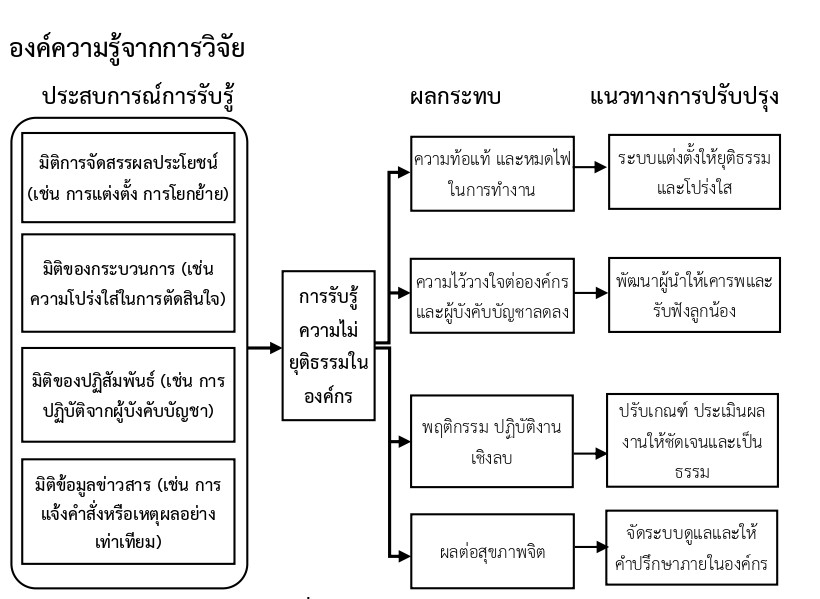
บทความวิจัยนี้มีวัตถุประสงค์เพื่อ 1. ศึกษาประสบการณ์ของเจ้าหน้าที่ตำรวจไทยเกี่ยวกับการรับรู้ความยุติธรรมในองค์กร 2. วิเคราะห์ผลกระทบของการรับรู้ความยุติธรรมต่อทัศนคติและพฤติกรรมของเจ้าหน้าที่ และ 3. เสนอแนะแนวทางในการปรับปรุงความยุติธรรมในกระบวนการต่าง ๆ ภายในองค์กรตำรวจ โดยใช้ระเบียบวิธีวิจัยเชิงคุณภาพแบบปรากฏการณ์วิทยา (Phenomenological Approach) คัดเลือกผู้ให้ข้อมูลสำคัญแบบเจาะจงร่วมกับการคัดเลือกแบบลูกโซ่ จำนวน 30 คน ซึ่งเป็นอดีตเจ้าหน้าที่ตำรวจในระดับสารวัตร รองผู้กำกับการ และผู้กำกับการ จากกองบัญชาการตำรวจ 10 แห่งทั่วประเทศ เครื่องมือวิจัยคือแบบสัมภาษณ์ปลายเปิดแบบกึ่งโครงสร้าง การเก็บข้อมูลดำเนินผ่านการสัมภาษณ์เชิงลึกเป็นรายบุคคล และวิเคราะห์ข้อมูลด้วยการสังเคราะห์เชิงเนื้อหาโดยใช้กรอบแนวคิดความยุติธรรมในองค์กร 4 มิติ
ผลการวิจัยพบว่า 1. ผู้ให้ข้อมูลสะท้อนประสบการณ์เกี่ยวกับความยุติธรรมในองค์กรใน 4 มิติ ได้แก่ ความไม่เป็นธรรมในการแต่งตั้งโยกย้าย ความลำเอียงของผู้บังคับบัญชา การขาดการสื่อสารที่โปร่งใส และความสัมพันธ์เชิงอำนาจที่ไม่ให้เกียรติ 2. ความรู้สึกไม่ยุติธรรมส่งผลให้เกิดความหมดไฟ ความไม่ไว้วางใจองค์กร พฤติกรรมประชด และปัญหาทางสุขภาพจิต และ 3. แนวทางการปรับปรุงที่เสนอ ได้แก่ การเพิ่มความโปร่งใสในระบบแต่งตั้ง การพัฒนา Soft Skills ของผู้บังคับบัญชา และการพัฒนาระบบสื่อสารที่ทั่วถึง โดยองค์ความรู้ใหม่จากงานวิจัยนี้คือโมเดลเชิงประจักษ์ที่แสดงให้เห็นกลไกความไม่ยุติธรรมในระบบราชการตำรวจไทย ซึ่งเชื่อมโยงกับแรงจูงใจและพฤติกรรมของบุคลากร และสามารถนำไปใช้เป็นแนวทางในการปฏิรูปองค์กรให้เหมาะสมกับบริบทวัฒนธรรมไทย
เอกสารอ้างอิง
Bradford, B., et al., (2014). Why do ‘the law’comply? Procedural justice, group identification and officer motivation in police organizations. European journal of criminology, 11(1), 110-131.
Chokprajakchat, S. (2017). Politics in the promotions and appointments of the Royal Thai Police. Journal of Applied Security Research, 12(4), 525-542.
Colquitt, J. A., et al., (2013). Justice at the millennium, a decade later: A meta-analytic test of social exchange and affect-based perspectives. Journal of Applied Psychology, 98(2), 199–236.
Dirks, K. & Ferrin, D.L., (2002). Trust in Leadership: Meta-Analytic Findings and Implications for Research and Practice. Journal of Applied Psychology, 87(4), 611-628.
Greenberg, J. (1987). A taxonomy of organizational justice theories. Academy of Management Review, 12(1), 9-22.
Khruakham, S. & Mangkhalasiri, P. (2019). Public Satisfaction towards Police: A Study of the Modern Police Stations Project in Thailand. Journal of Thai Justice System, 12(3), 1-24.
Mangkhalasiri, P. (2024). Challenges of Investigating and Prosecuting Child Sex Trafficking and Child Labour Trafficking in Thailand (Doctoral dissertation, University of London, University College London (United Kingdom)).
Reynolds, P. D., et al., (2018). The expendables: A qualitative study of police officers’ responses to organizational injustice. Police Quarterly, 21(1), 42-74.
Royal Thai Police. (2025). Royal Thai Police. Retrieved May 10, 2025, from https://en.wikipedia.org/wiki/Royal_Thai_Police
Singh, D. (2022). The causes of police corruption and working towards prevention in conflict-stricken states. Laws, 11(5), 69. https://doi.org/10.3390/laws11050069
The Nation. (2019, August 16). Retiring police officers to leave over 6,000 posts vacant. The Nation (Thailand). Retrieved May 10, 2025, from https://www.nationthailand.com/in-focus/30374893
Tyler, T. R. (1990). Why people obey the law. New Haven, CT: Yale University Press.
ดาวน์โหลด
เผยแพร่แล้ว
รูปแบบการอ้างอิง
ฉบับ
ประเภทบทความ
หมวดหมู่
สัญญาอนุญาต
ลิขสิทธิ์ (c) 2026 วารสารวิชาการรัฐศาสตร์และรัฐประศาสนศาสตร์

อนุญาตภายใต้เงื่อนไข Creative Commons Attribution-NonCommercial-NoDerivatives 4.0 International License.