‘ประชาธิปไตย’ ไม่เหมือนกัน: ปัญหาในกระบวนการกำหนดแนวคิด และความคลาดเคลื่อนในการวัดผล
คำสำคัญ:
ประชาธิปไตย, กระบวนการกำหนดแนวคิด, ความคลาดเคลื่อนในการวัดผล, การออกแบบวิจัยบทคัดย่อ
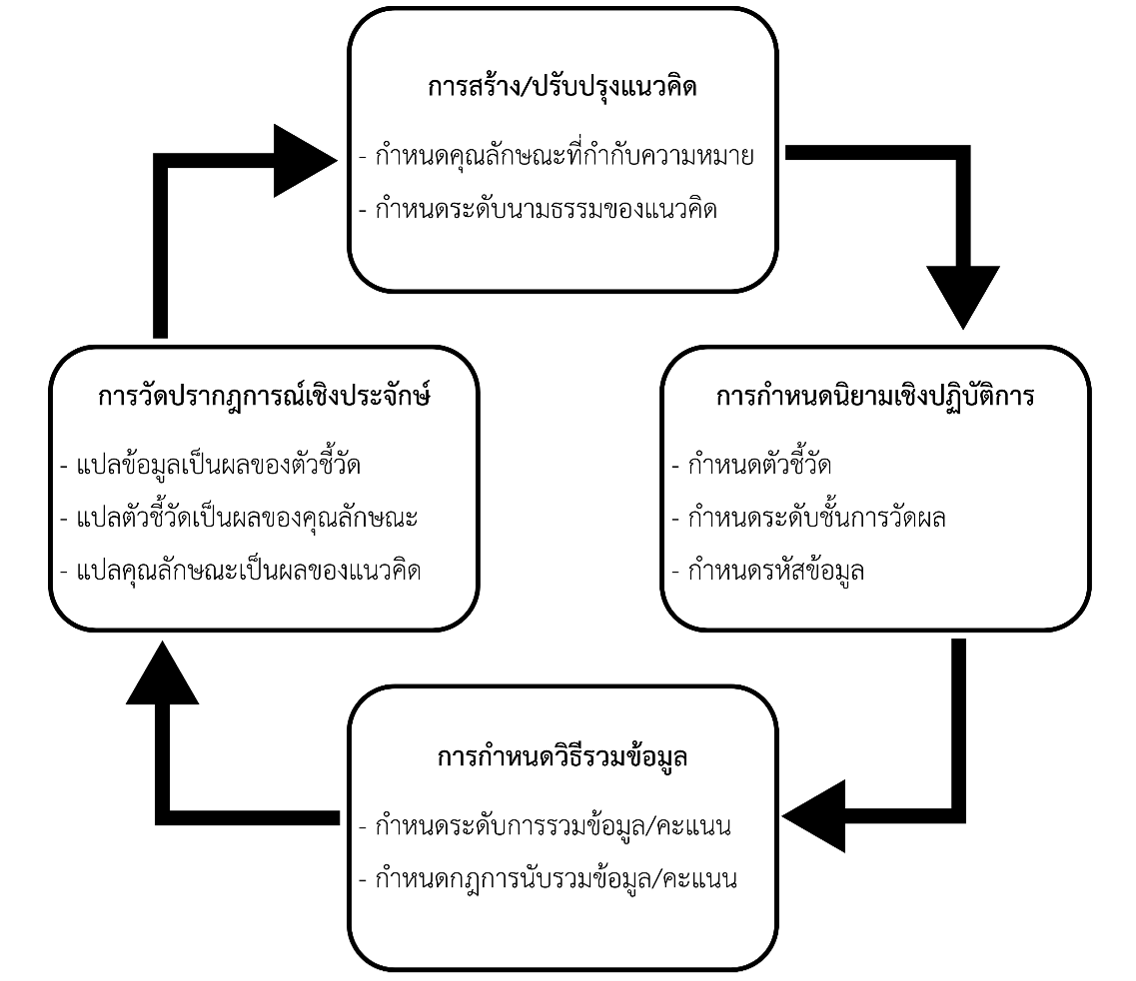
ปรากฏการณ์คลื่นลูกที่สามของการทำให้เป็นประชาธิปไตยไม่เพียงนำมาซึ่งพลวัตทางการเมืองในภูมิภาคต่าง ๆ หากยังก่อให้เกิดข้อถกเถียงอย่างน้อย 2 มิติในการศึกษาการเมืองเปรียบเทียบ มิติแรกว่าด้วยปัจจัยเชิงสาเหตุของการเปลี่ยนผ่านสู่ประชาธิปไตยและการจรรโลงให้ประชาธิปไตยตั้งมั่น มิติที่สองว่าด้วยการกำหนดแนวคิดและการวัดค่าประชาธิปไตยให้คงเส้นคงวาและถูกต้องตามจริง บทความนี้เสนอว่ามิติที่สองมักได้รับความสนใจอย่างจำกัด จึงนำไปสู่การขาดความเข้าใจร่วมกันอย่างรุนแรง อันเป็นอุปสรรคต่อการสร้างข้อสรุปทั่วไปในมิติแรก ทั้งนี้ การสร้างแนวคิดประชาธิปไตยวางอยู่บนความท้าทาย 2 ประการ คือ การพยายามหลีกเลี่ยงมิให้เกิดส่วนต่อขยายของแนวคิดเดิมมากเกินจำเป็น และการทำให้แนวคิดครอบคลุมกรณีศึกษาจำนวนมากเพียงพอ นักวิจัยอาจเลือกระหว่างการสร้างแนวคิดแบบคลาสสิกหรือแนวคิดรัศมีศูนย์กลาง ซึ่งล้วนแล้วแต่มีจุดเด่นและข้อจำกัดด้วยกันทั้งสิ้น นอกจากนั้นแล้ว การวัดค่าประชาธิปไตยยังประสบปัญหาความผิดพลาดคลาดเคลื่อนอยู่เสมอ เนื่องจากการกำหนดเส้นแบ่งระหว่างระบอบการเมืองโดยไม่มีเหตุผลรองรับอย่างเพียงพอและนักวิจัยอาจขาดความรู้อันลุ่มลึกเกี่ยวกับกรณีที่กำลังศึกษาอยู่การกำหนดแนวคิดและการวัดผลในการวิจัยทางสังคมศาสตร์จึงมิใช่การดำเนินการที่เสร็จสิ้นในครั้งเดียวหากเป็นกระบวนการที่ต้องทวนสอบและปรับปรุงอย่างต่อเนื่องจนกว่าการวิจัยจะแล้วเสร็จ
เอกสารอ้างอิง
Almond, G. A. & Verba, S. (1963). The Civic Culture: Political Attitudes and Democracy in Five Nations. Princeton, NJ: Princeton University Press.
Bogaards, M. (2009). How to Classify Hybrid Regimes? Defective Democracy and Electoral Authoritarianism. Democratization, 16(2), 399-423.
_____ (2012). Where to Draw the Line? From Degree to Dichotomy in Measures of Democracy. Democratization, 19(4), 690-712.
Collier, D. & Levitsky, S. (1997). Democracy with Adjectives: Conceptual Innovation in Comparative Research. World Politics, 49(3), 430-451.
Collier, D. & Mahon, J. (1993). Conceptual 'Stretching' Revisited: Adapting Categories in Comparative Analysis. American Political Science Review, 87(4), 845-855.
Diamond, L. (1999). Developing Democracy: Toward Consolidation. Baltimore, MD: Johns Hopkins University Press.
_____. (2000). Is Pakistan the (Reverse) Wave of the Future?. Journal of Democracy, 11(3), 91-106.
Freedom House. (1998). Freedom in the world 1997–1998: The annual survey of political rights and civil liberties. New Brunswick, NJ: Transaction Publishers.
Geddes, B. (1999). What Do We Know About Democratization After Twenty Years?. Annual Review of Political Science, 2, 115-144.
Gerring, J. (2011). Social science methodology: A unified framework (2nd ed.). Cambridge: Cambridge University Press.
Huntington, S. P. (1991). The Third Wave: Democratization in the Late Twentieth Century. Norman, OK: University of Oklahoma Press.
Linz, J. & Stepan, A. (1996). Toward Consolidated Democracies. Journal of Democracy, 7(2), 14-33.
Lipset, S. M. (1959). Some Social Requisites of Democracy: Economic Development and Political Legitimacy. American Political Science Review, 53(1), 69-105.
Merkel, W. (2004). Embedded and Defective Democracies. Democratization, 11(5), 33-58.
Moore Jr., B. (1966). Social Origins of Dictatorship and Democracy: Lord and Peasant in the Making of the Modern World. Boston, MA: Beacon Press.
Munck, G. L. & Verkuilen, J. A. Y. (2002). Conceptualizing and Measuring Democracy. Evaluating Alternative Indices. Comparative Political Studies, 35(1), 5-34.
O'Donnell, G. & Schmitter, P. C. (1986). Transitions from Authoritarian Rule: Tentative Conclusions about Uncertain Democracies. Baltimore, MD: Johns Hopkins University Press.
Rustow, D. A. (1970). Transitions to Democracy: Toward a Dynamic Model. Comparative Politics, 2(3), 337-363.
Sartori, G. (1970). Concept Misformation in Comparative Politics. American Political Science Review, 64(4), 1033-1053.
_____. (1984). Guidelines for concept analysis. In G. Sartori (Ed.), Social science concepts: A systematic analysis (pp. 15–85). Beverly Hills, CA: Sage Publications.
Schmitter, P. & Karl, T. (1991). What Democracy Is…and Is Not. Journal of Democracy, 2(3), 75-88.
Schmitter, P. C. (1995). Transitology: The Science or the Art of Democratization?. In J. S. Tulchin & B. Romero (Eds.), The Consolidation of Democracy in Latin America (pp. 11-41). Boulder, CO: Lynne Rienner.
ดาวน์โหลด
เผยแพร่แล้ว
รูปแบบการอ้างอิง
ฉบับ
ประเภทบทความ
หมวดหมู่
สัญญาอนุญาต
ลิขสิทธิ์ (c) 2026 วารสารวิชาการรัฐศาสตร์และรัฐประศาสนศาสตร์

อนุญาตภายใต้เงื่อนไข Creative Commons Attribution-NonCommercial-NoDerivatives 4.0 International License.