
Figures of Speech in the Lyric Composition of Rannaphan Yangyuenpoonchai
Article Sidebar
Main Article Content
Abstract
Background and Objectives: Rannaphan Yangyuenpoonchai is both a talented singer and lyricist. The songs that Rannaphan Yangyuenpoonchai composed the lyrics for have been consistently popular among listeners. It has been found that figures of speech are regularly used in the popular songs. This research therefore aims to study Rannaphan Yangyuenpoonchai’s use of figures of speech in composing lyrics.
Methods: This is qualitative research. The study begins with a review of the documents and the research related to the use of figures of speech in songs or lyric literature. The study then explores the theoretical framework of imagery and its application in song literature, with the aim of adapting it to the research topic. The data for this research comprise 46 songs from five studio albums, with lyrics composed by Rannaphan Yangyuenpoonchai. The analysis focuses exclusively on the use of imagery in these works.
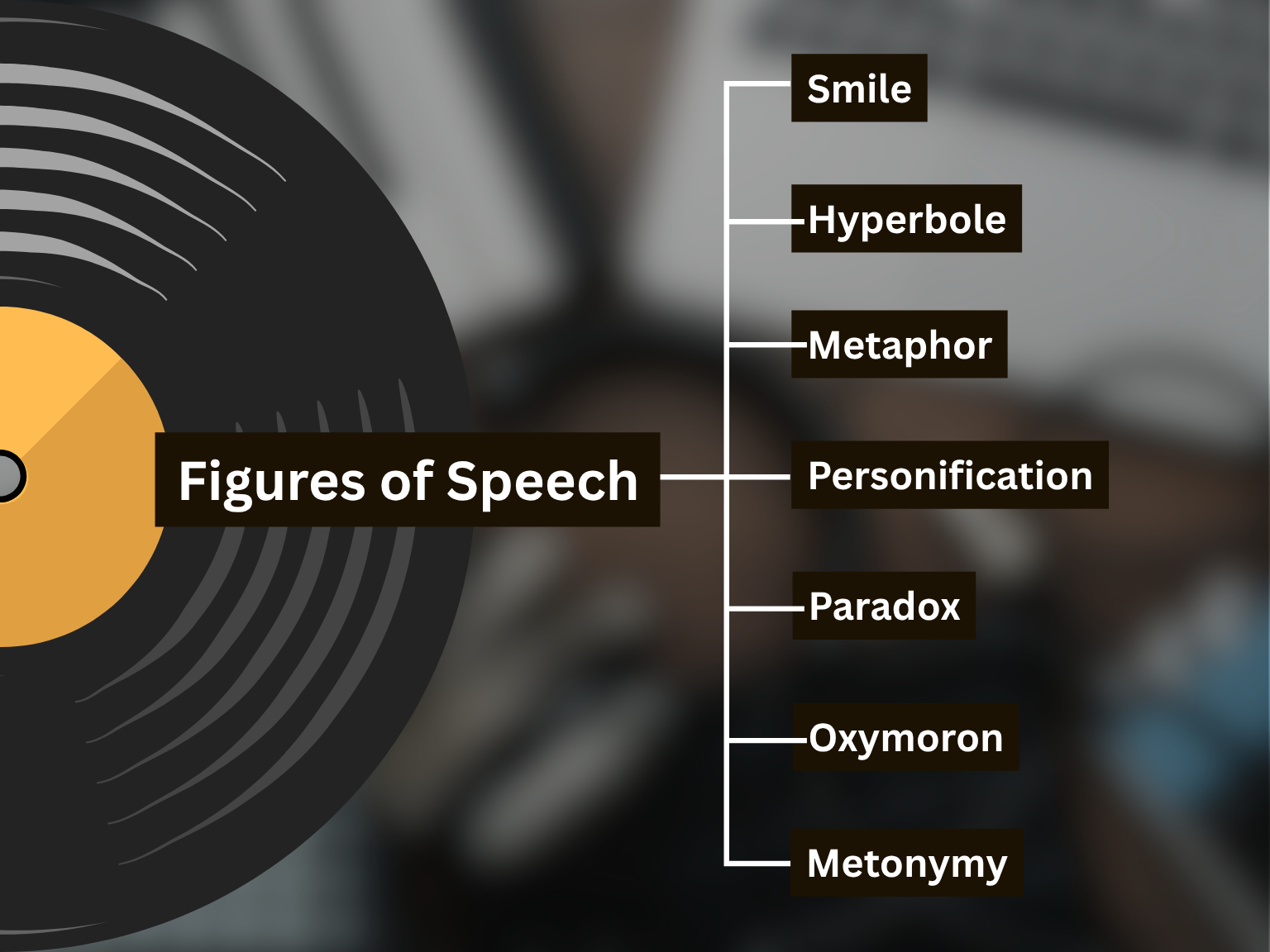
Results: The research results revealed that Rannaphan Yangyuenpoonchai used seven types of figures of speech in composing lyrics, with the most popular type of figures of speech being similes in 20 songs, hyperboles in 19 songs, metaphors in 9 songs, personifications in 6 songs, paradoxes in 3 songs, oxymoron in 1 song and metonymy in 1 song. Rannaphan Yangyuenpoonchai’s use of figures of speech in composing lyrics plays an important role in the songs, namely, using figures of speech in songs makes the songs more interesting than speaking directly. Figures of speech also allow listeners to imagine, see images, understand thoughts, and feel in line with the songs, and also help convey the meaning of the songs even better. Furthermore, the repeated comparisons in many songs reveal Rannaphan Yangyuenpoonchai’s unique style of using figures of speech in composing lyrics.
Application of this study: The results of this study show the use of figures of speech in the lyric composition of Rannaphan Yangyuenpoonchai, which can be further applied to study the use of figures of speech in the lyric composition of other composers.
Conclusions: There are seven types of figures of speech appearing in the songs composed by Rannaphan Yangyuenpoonchai: simile, hyperbole, metaphor, personification, paradox, oxymoron, and metonymy. The most common figure of speech is simile, probably because simile is a figure of speech that can be easily compared. It can convey meaning to create imagination and comparative understanding. In addition, Rannaphan Yangyuenpoonchai’s songs often have content about love, and similes are often used in songs with content about love. In addition, the repetition of the comparison in many songs shows Rannaphan Yangyuenpoonchai’s unique language style.
Downloads
Article Details

This work is licensed under a Creative Commons Attribution-NonCommercial-NoDerivatives 4.0 International License.
References
Changkhwanyuen, P. (1982). The Art of Writing. Bangkok: Thepprathanphon. (In Thai)
Chongsathitwatana, S. (2015). Jeemchan Kangsan: Literary Language in Thai Literature. Bangkok: Academic Publication Project, Faculty of Arts, Chulalongkorn University. (In Thai)
Kongsoom, S. (2007). The Analytical Study about Idioms and Figures of Speech in Thai Country Songs of “Chai Muangsing”. Master Thesis, M. A. in Thai Language, Kasetsart University, Thailand. (In Thai)
Liangruenrom, A. (2006). The Style in The Country Songs of Sala Khunnawut. Master Thesis, M.A. in Thai Language, Kasetsart University, Thailand. (In Thai)
Patklear. (2018). Our Songs, We Write Every Song. Retrieved 10 December 2024, from https://twitter.com/patklear (In Thai)
Pun Meun Het Pon. (2024). Retrieved 10 December 2024, from https://www.youtube.com/watch?v=7RbCL_Eoj98 (In Thai)
Rakmanee, S. (1995). Figurative Language in Thongchai McIntyre's songs. Journal of Academic Humanities, 3(1), 55-63. (In Thai)
Sing Kaung. (2024). Retrieved 10 December 2024, from https://www.youtube.com/watch?v=Z- qjxO_ZJKM (In Thai)
Suebpeng, P., Rattanapitak, T., & Wareeket, K. (2020). The Study of Figures of Speech in Song lyrics of Prof. Dr. Prasert Na Nakorn. Journal of Humanities and Social Sciences, 1(1), 30-40. (In Thai)
Suwanprajak, S. (2018). The Stylistic Impressions and the Reflected Pictures in the Songs of Dr. Fuu Band. In The 1st National Academic Conference and Presentation Project for Students in Humanities and Social Sciences 2018, (pp. 148-160), September 15, 2018. Suan Sunandha Rajabhat University, Thailand.
Yodchan, P. (2014). An Analysis of The Use of Figures of Speech in Thai Western-Style Music Literature Sung by Charin Nantanakorn. Master Thesis, M.A. in Thai Language, Naresuan University, Thailand. (In Thai)
