
Development of Collaborative Mechanisms and Community Network Systems for Creative Cultural Tourism: A Case Study of Nakhon Thai Subdistrict, Nakhon Thai District, Phitsanulok Province, Thailand
Article Sidebar
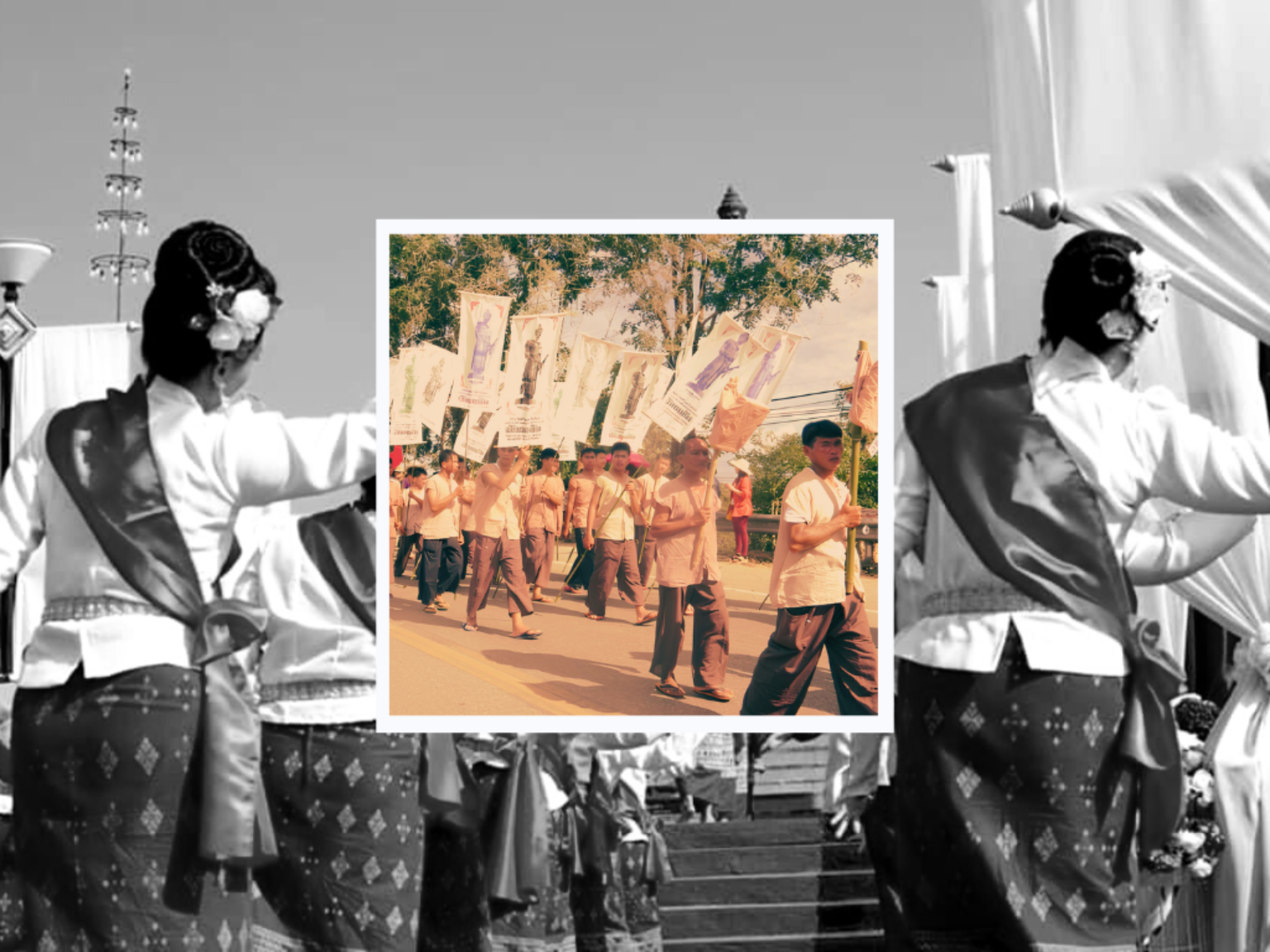
Main Article Content
Abstract
Background and Objectives: Creative tourism involves travel that emphasizes engagement with and experience of a place’s cultural heritage, arts, and unique characteristics. It fosters meaningful connections between local residents and tourists through active participation in living culture, as defined by the United Nations Educational, Scientific and Cultural Organization (UNESCO). This research aims to examine the development of community cooperation mechanisms and community networks rooted in creative cultural tourism, considering both internal and external perspectives. The study focuses on Nakhon Thai subdistrict, Nakhon Thai district, Phitsanulok province, and has three main objectives: 1) to analyze the systems of cooperation and community networks related to creative cultural tourism, 2) to explore models and approaches for fostering collaboration within community-based network systems founded on creative cultural tourism, with active participation from all sectors in the development of tourism in Nakhon Thai subdistrict, and 3) to develop strategic frameworks or policy recommendations at the community level by fostering cooperation and encourage the active participation of community networks in Nakhon Thai subdistrict.
Methods: The researcher utilized qualitative research methods, gathering data through purposive sampling via semi-structured interviews with three distinct groups of informants: 15 government officials, 5 community members, and 3 representatives from private businesses. Additionally, focus group discussions and pertinent document reviews were conducted. The data were analyzed through content analysis to synthesize findings and present the study results in a systematic and comprehensive way.
Results: The development of creative cultural tourism in Nakhon Thai district, Phitsanulok, shows collaboration between the government, local administrative organizations, communities, business sector, and educational institutions. In terms of policy, cultural preservation, infrastructural development, and tourist activities, every sector supports one another. The link with nearby provinces and universities helps increase the tourism potential. The area possessing significant cultural assets and local resources can be further developed in the long term. Success depends on community involvement at every level, necessitating decentralization of authority, support of local products, and ongoing creative activities to raise Nakhon Thai district as a sustainable cultural tourism destination in the future.
Application of this study: The policy proposals center on building local cooperation systems by means of a tourist development committee comprising representatives of the government, business sector, and community. Together, this group will plan, address issues, and methodically track results, coupling practice-based learning activities like weaving, local food, and cultural storytelling. The networks of community product manufacturers and monthly cultural markets should be supported to promote inclusive and balanced income distribution. Moreover, a cultural learning center ought to be established in cooperation with nearby universities to compile local knowledge and lead to the creation of high-value tourism.
Conclusions: The development of creative cultural tourism in Nakhon Thai subdistrict resulted from the cooperation of several sectors by emphasizing on local identity and creative activities. Important strategies include raising involvement, building infrastructure, supporting OTOP (One Tambon One Product), and effective resource management for community sustainability.
Downloads
Article Details

This work is licensed under a Creative Commons Attribution-NonCommercial-NoDerivatives 4.0 International License.
References
Arunothai, N. (2019). Development of Creative Tourism Based on the Culture of Conservation. Bangkok: Chulalongkorn University Social Research Institute. (In Thai)
Benhaida, S., Perkumienė, D., & Labanauskas, G. (2024). Development of Creative Tourism Based on the Culture of Conservationcreative Tourism: Two Decades of Conceptual Evolution and Characterization. Administrative Sciences, 14(8), 172. https://doi.org/10.3390/admsci14080172
Bittar Rodrigues, C., & Prideaux, B. (2018). A Management Model to Assist Local Communities Developing Community-Based Tourism Ventures: A Case Study From the Brazilian Amazon. Journal of Ecotourism, 17(1), 1-19. https://doi.org/10.1080/14724049.2017.1309045
Chanchai, N. (2018). The Development of Creative Tourism Based on Local Lifestyles and Culture: A Case Study of Hua Hin, Prachuap Khiri Khan Province. Retrieved 16 October 2024, from https://tnrr.nriis.go.th/#/services/research-report/detail/307237. (In Thai)
Chiengkul, W., & Kumjorn, P. (2024). Delving into Cultural Immersion: Enhancing Empathy and Attachment in Creative Cultural Tourism in Thailand. Journal of Quality Assurance in Hospitality & Tourism, 1-27. https://doi.org/10.1080/1528008X.2024.2353586 (In Thai)
Dachum, P. (2013). Creative Tourism Development: From Concepts to Practice for Thailand. Silpakorn University e-Journal (Social Sciences, Humanities, and Arts), 33(2), 331-366. (In Thai)
Department of Community Development. (2005). Guidelines for Promoting Sufficiency Economy in Communities for Community Development Officers. Bangkok: Bangkok Block. (In Thai)
Duxbury, N., & Richards, G. (2019). Towards a Research Agenda for Creative Tourism: Developments, Diversity, and Dynamics. Journal of Tourism Consumption and Practice, 6(1), 5-20.
Janchua, C. (2009). Research for Capacity Development in Community-Based Tourism Management: The Case of Bor Kluar Pan Pee Community, BO Pho Subdistrict, Nakhon Thai District, Phitsanulok Province. Phitsanulok: Pibulsongkram Rajabhat University. (In Thai)
Kongkaew, T., & Others. (2014). Spatial Cooperation Model Project to Create Farmers’ Learning in Agricultural Decision-Making: An Example Case of Cost-Reducing Corn Cultivation in Nakhon Thai District. Retrieved 16 October 2024, from https://tnrr.nriis.go.th/#/services/research-report/detail/300083. (In Thai)
Lertpachrapong, R., & Saengjamnong, A. (2020). The Development of Creative Tourism Activity Models to Promote Tourism in the Klong Rang Chao Khae Community, Sena District, Phra Nakhon Si Ayutthaya Province. Retrieved 16 October 2024, from https://tnrr.nriis.go.th/#/services/research-report/detail/308207. (In Thai)
Lin, M. (2024). Marketing Strategies of Cultural Cluster and Creative Tourism: A Mediating Role of Tourists’ Creative Experience. International Journal of Trade, Economics and Finance, 15(2), 77-82. https://doi.org/10.18178/ijtef.2024.15.2.773.
Matayamburut, W. (2020). Creative Tourism Marketing in the Connecting Routes of Cambodia, Laos, Myanmar, and Vietnam to Position Thailand as the Center. Retrieved 16 October 2024, from https://tnrr.nriis.go.th/#/services/research-report/detail/308213. (In Thai)
Mayor of Nakhon Thai Subdistrict Municipality. (2024, November 22). Interview. Nakhon Thai Subdistrict Municipality Office.
Nakhon Thai District Chief. (2024, October 2). Interview. Nakhon Thai District.
Nakhon Thai Subdistrict Cultural Council. (2024, October 2). Interview. Nakhon Thai Subdistrict Cultural Council Office.
Nakhon Thai Subdistrict Municipality Office. (2024a). Local Development Plan (B.E. 2566-2570). Retrieved 16 October 2024, from http://www.oic.go.th/FILEWEB/CABINFOCENTER55/DRAWER098/GENERAL/DATA0000/00000112.PDF. (In Thai)
Nakhon Thai Subdistrict Municipality Office. (2024b). Tourism Promotion Plan for Nakhon Thai Subdistrict for the Year 2025. Retrieved 16 October 2024, from https://www.nakhonthai.go.th/detailRev2?page=4&id=996. (In Thai)
Nan, Q. (2024). The Role of Industry Convergence in Promoting the Development of Cultural and Creative Tourism Under the Background of Data Convergence. Journal of Computational Methods in Sciences and Engineering, 24(4-5), 2799-2813. https://doi.org/10.3233/jcm-247514.
Ngo, T. H., & Creutz, S. (2022). Assessing the Sustainability of Community-Based Tourism: A Case Study in Rural Areas of Hoi An, Vietnam. Cogent Social Sciences, 8(1), 2116812. https://doi.org/10.1080/23311886.2022.2116812
OECD. (2014). Tourism and The Creative Economy. Paris: OECD Publishing.
Officials of the Phitsanulok Provincial Culture Office. (2024, November 2). Interview. The Phitsanulok Provincial Culture Office.
Officials of the Phitsanulok Provincial Tourism and Sports Office. (2024, October 11). Interview. The Phitsanulok Provincial Culture Office.
Online Manager. (2020). Community Tourism Rebounds After COVID. Retrieved 16 October 2024, from https://mgronline.com/business/detail/9630000062026. (In Thai)
Payakpate, J. (2008). Knowledge Management Platform for Promoting Sustainable Energy Technologies in Rural Thai Communities. Retrieved 16 October 2024, from http://researchrepository.murdoch.edu.au/view/author/Payakpate,%20Janjira.html. (In Thai)
Piamphongsarn, P., & Others. (2009). The New Way of Thai Society. 4th ed. Bangkok: Faculty of Economics, Chulalongkorn University Development. (In Thai)
Prajongkan, V., & Junanantatham, S. (2020). Tourism at a Crossroad: How Should the Future of Thai Tourism Proceed After the Storm?. Retrieved 16 October 2024, from https://www.bot.or.th/Thai/ResearchAndPublications/articles/Pages/Article_18Aug2021.aspx. (In Thai)
Pounpanwong, W. (2023). Sufficiency Economy as a Framework for the Development of Ethnic Communities by the Thai State: A Study of Changes in Lifestyle, Economic Activities, Social Contexts, and Community of the Tribes in the Area of the Nong Hoi Royal Project Development Center, Chiang Mai Province. Chulalongkorn Journal of Social Sciences, 53(1), 101-130. https://doi.org/10.61462/cujss.v53i1.1292. (In Thai)
Rasoul, S., & Others. (2022). Creative Destination, Creative Cultural Experience, and Destination Brand Self-Congruence (DBSC). Journal of Policy Research in Tourism, Leisure and Events, 17(1), 231-254. https://doi.org/10.1080/19407963.2022.2107655.
Rasyid, T., Aiman, S., & Rezeky. (2023). The Concept of Development in Ibnu Khaldun’s Thought. Journal La Sociale, 4(6), 520-523. https://doi.org/10.37899/journal-la-sociale.v4i6.989.
Representative of the business sector in Nakhon Thai Subdistrict. (2024, October 2). Interview. Nakhon Thai Subdistrict Municipality Office.
Representatives of the public sector in Nakhon Thai Subdistrict. (2024, November 22). Interview. Nakhon Thai Subdistrict Municipality Office.
Saenkham, T. (2017). Pakthongchai Festival. Retrieved 16 October 2024, from https://rituals.sac.or.th/detail.php?id=98. (In Thai)
Setyaningsih, W., & Others. (2024). Design of Eco-Cultural City Tourism Village Development Model Through Creative-Based Tourism Towards a Sustainable Creative Industry. Journal of Infrastructure, Policy and Development, 8(9), 7593. https://doi.org/10.24294/jipd.v8i9.7593.
Sharma, I. & Aggarwal, A. (2024). Exploring the Relationship Between Tourist Experiences at Creative Tourist Destinations and Their Intentions to Indulge in Co-Creation Activities. In M. Bari, M. Soliman, & E. Alaverdov (Eds.), Shifts in Knowledge Sharing and Creativity for Business Tourism. (pp. 71-87). New York: IGI Global Scientific Publishing. https://doi.org/10.4018/979-8-3693-2619-0.ch005
Sirithipa, J. (2003). Study of Local Wisdom: A Case Study of the Pak Thong Chai Tradition to Strengthen the Community of Nakhon Thai District, Phitsanulok Province. Retrieved 16 October 2024, from https://tnrr.nriis.go.th/#/services/research-report/detail/143846. (In Thai)
Sopa, J. (2018). The Development of Community Enterprises to Support Creative Tourism for Learning About Local Food Wisdom in Cultural World Heritage Cities (Sukhothai, Si Satchanalai, Kamphaeng Phet, and Ayutthaya). Bangkok: Suan Dusit University. (In Thai)
Suebsunthon, S., & Kunwong, N. (2018). Creative Tourism Management Based on Sustainability. Retrieved 16 October 2024, from http://hs.pbru.ac.th/journal/wp-content/uploads/2019/05/2561_2_14.pdf. (In Thai)
The Chaipattana Foundation. (2009). The Concept of Self-Reliant Development. Retrieved 16 October 2024, from http://www.chaipat.or.th/. (In Thai)
Wisudthiluck, S. (2015). Knowledge on Creative Tourism: A Guide and Practical Guidelines. Retrieved 16 October 2024, from https://socanth.tu.ac.th/wp-content/uploads/2017/08/suddan-2558.pdf. (In Thai)
Zeng, A., & Others. (2024). Does the Scarcity Marketing of Tourism Cultural and Creative Products Trigger Impulsive Consumption?. Journal of Vacation Marketing. https://doi.org/10.1177/13567667241261394.
