
Sin: The Relationship Between Language and Ideology in the Discourse of Electronic Books Produced by Wat Phra Dhammakaya
Article Sidebar
Main Article Content
Abstract
Background and Objectives: Beliefs about “sin” that are prevalent in Thai society are closely linked to Buddhist thoughts and a collectivist social structure. The analysis of linguistic strategies can reveal the influence of language in shaping individuals’ behavior within Thai society. This study aims to investigate linguistic strategies and analyze the discursive, social, and cultural practices within the conceptual framework of “committing sin” in the discourse of electronic books produced by Wat Phra Dhammakaya.
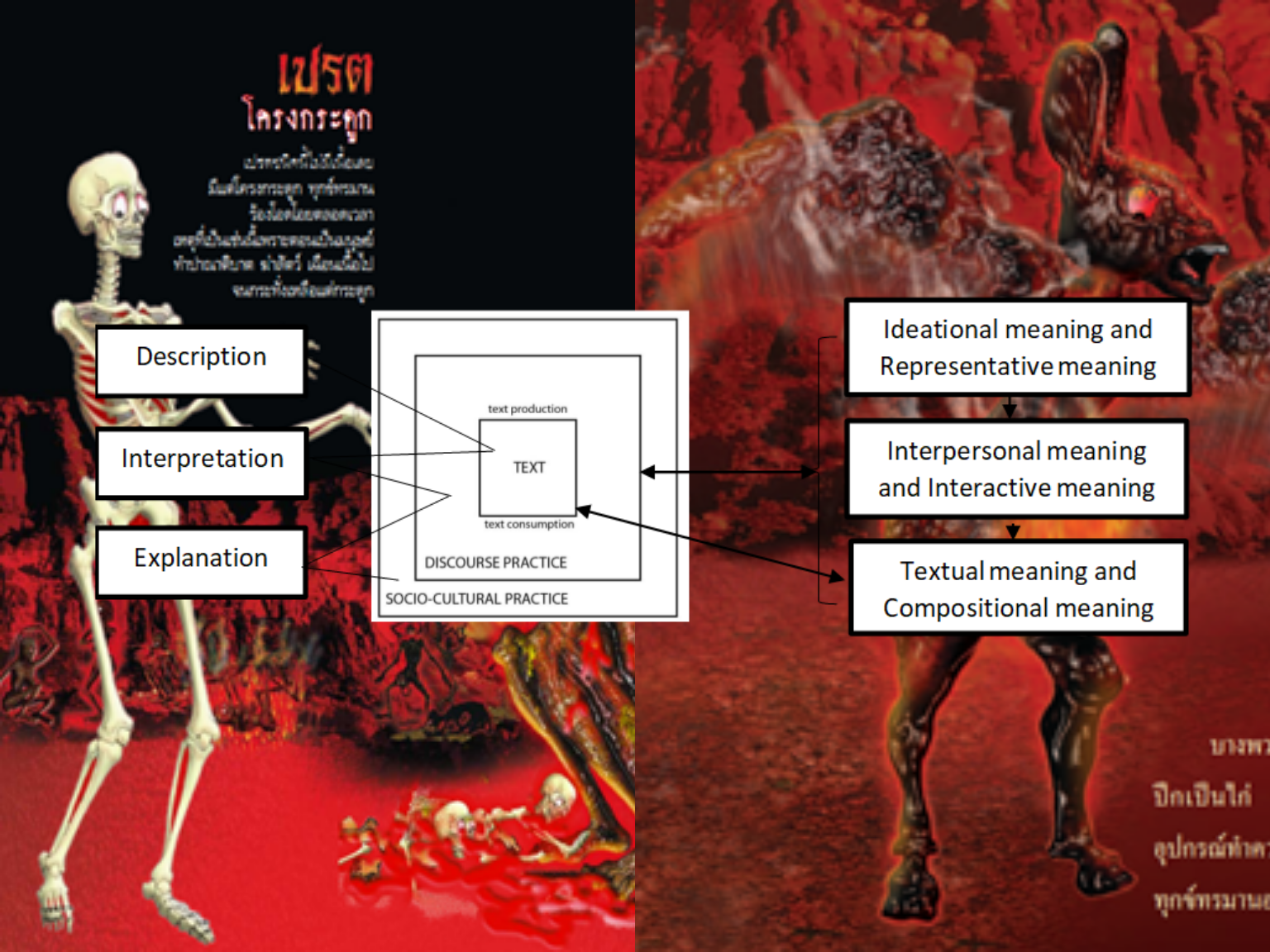
Methods: This research article employs Fairclough’s critical discourse analysis framework (1995) and Kress & van Leeuwen’s visual analysis approach (2006). The data were collected from the e-books produced by Wat Phra Dhammakaya, which have been disseminated via the website www.kalyanamitra.org since 2002.
Results: The findings identify four main linguistic strategies: 1) lexical choice, 2) metaphor and implication,
3) reasoning, and 4) discourse. Discursively, the manuscript production process is led by monks and distributed through the Dhammakaya Foundation. In terms of social and cultural practices, the study reveals that Thai notions of “sin” are influenced by three key concepts: 1) the understanding of “merit-sin” and “virtue and retribution” in Thai society, 2) the understanding of “suffering-happiness,” in Thai society, and 3) the understanding of “karma” in Thai society. Furthermore, the study identifies two outcomes of the ideology of “sin”: 1) sin as a mechanism for restoring justice, and 2) the construction of the concept of the realms of hell in Thai society.
Application of this study: The research findings indicate that the reproduction of traditional discourses is facilitated by communication processes in which “insiders” easily accept the authority of the discourse. The “sin” discourse which spreads in Thai society is deeply intertwined with Thai-like Buddhist thoughts and the collectivist nature of social structures.
Conclusions: The study of discourse in the electronic books produced by Wat Phra Dhammakaya provides insight into the role of language in constructing meaning and reproducing ideological frameworks. It also enhances the understanding of the role of “partial textual reproduction through adaptation for presenting in modern media” as a mechanism of socialization and its function of providing spiritual grounding and moral guidance as well as giving hope and encouragement to a group of people in society.
Downloads
Article Details

This work is licensed under a Creative Commons Attribution-NonCommercial-NoDerivatives 4.0 International License.
References
Chotidilok, S. (2017). ‘Merit’: The Relationship Between Language and Ideology in Discourses Produced by Wat Phra Dhammakaya. Doctoral Dissertation, Ph.D. in Philosophy Program in Thai, Chulalongkorn University, Thailand. (In Thai)
Dhammakaya Foundation. (2009). Tai Laeo Pai Nai Phak Thukkhati. [Where Do We Go After Death? Part 1: The Unfortunate Destination]. [electronic book]. Bangkok: SMK Printing. https://kalyanamitra.org/book/index_dhammabook_detail.php?id=175 (In Thai)
Dhammakaya Foundation. (2010). Pret Phu Thoraman Chak Phon Khong Bap. [Hungry Ghosts Tortured by the Results of Sin]. [electronic book]. Nakhon Pathom: Rungsin Printing. https://kalyanamitra.org/book/index_dhammabook_detail.php?id=197 (In Thai)
Dhammakaya Foundation. (2005a). Ru Than Wibak Kam. [Understand Karma's Consequences]. [electronic book]. n.p. https://kalyanamitra.org/book/index_dhammabook_detail.php?id=151 (In Thai)
Dhammakaya Foundation. (2005b). Seuk Ching A-baai. [The Battle for the Underworld]. [electronic book]. Nakhon Pathom: Rungsin Printing. https://kalyanamitra.org/book/index_dhammabook_detail.php?id=111 (In Thai)
Dhammakaya Foundation. (2005c). Wibak Kam Wibak Kam. [The Consequences of Karma and Desire]. [electronic book]. Bangkok: SMK Printing. https://kalyanamitra.org/book/index_dhammabook_detail.php?id=116 (In Thai)
Dhammakaya Foundation. (2003). Case Study Thi Thuk Khon Tong Ru. [Case study from Kindergarten Dream School Program on DMC]. [electronic book]. Bangkok: Sukhomwit Printing. https://www.dmc.tv/article/3275 (In Thai)
Fairclough, N. (1995). Critical Discourse Analysis: The Critical Study of Language. London: Longman.
Jaroenkiatboworn, K. (2000). Relationship Between Language and Point of View in Thai Newspaper’s Coverage on Wat Phra Dhammakaya. Master Thesis, M.A. in Linguistics, Chulalongkorn University, Thailand. (In Thai)
Kress, G., & van Leeuwen, T. (2006). Reading Images: The Grammar of Visual Design. 2nd ed. London: Routledge.
Mahachulalongkornrajavidyalaya. (1996). Phra Trai Pi Dok. [TIPITAKA Volume 27: PALI ROMAN Sutta Pitaka Vol 19]. Bangkok: Mahachulalongkornrajavidyalaya. (In Thai)
Pakasook, A. (2021). The Worldview of “Karma” in Thai Society as Reflected in the Titles of Dhamma Books. Journal of Korean Association of Thai Studies, 28(1), 95-114.
Royal Society. (2001). Pochananu-krom Sap Wannakhadi Thai Samai Sukhothai Traiphumikatha. [Dictionary of Thai Literature Terms: Sukhothai Period]. Bangkok: Arun Printing. (In Thai)
