
The Citation Analysis of Asia Social Issues Journal as Indexed in International Databases
Article Sidebar
Main Article Content
Abstract
Background and Objectives: Journal citation analysis is a method used to study the frequency of usage of various types of publications that are cited in footnotes, reference lists, or bibliographies through statistical methods. It is based on citation counts, which quantifies the number of times a publication is mentioned or cited to determine the volume of usage of journals across different databases. This method can be used to assess the significance of a journal. It is beneficial to the editorial board of a journal, as it provides insights into the strengths and weaknesses of academic journal management. Additionally, it serves as a reference index, indicating the impacts of research articles and benefits to the global research community. It represents an accepted form of peer acknowledgment from scholars and research groups within the same field. Given its importance, the researcher intends to study the status of the articles in Asia Social Issues, a journal of Walailak University, as well as analyze article citations in the Scopus database. This will provide valuable information to management or the editorial board, enabling them to plan and support the development of Asia Social Issues, by selecting the fields of articles and high-quality articles to increase citations and secure ranking in international databases. The objectives of this study are (1) to study and evaluate the quality of the articles in Asia Social Issues, by examining article citations in Scopus, and (2) to compare the details of citing articles in various aspects, including publication type (category), journal quartile score, and the authors’ affiliations (The affiliation of authors), in order to analyze the content of the articles from the journal, which have been cited in the Scopus database.
Methods: This study conducts a citation analysis of Asia Social Issues, a journal published by Walailak University. The analysis examines the number of citations of 277 articles published between 2013 and 2024. The citation data were retrieved from the Scopus database, focusing on the following attributes: article ID, publication year, author country, categories, cited years, and source, respectively. Additionally, information on the citing articles, including publisher’s name, category, quartile, percentile, and country, was also collected. The collected data were subsequently analyzed using descriptive statistics. The analysis was divided into two main sections: (1) citation analysis of the articles from Asia Social Issues in the Scopus database, focusing on the age of the cited articles (article age) and content analysis, respectively, and (2) analysis of the citing articles of Asia Social Issues Journal, focusing on the category and quality of the journals (category and journal quartile score) and the countries of the authors (author country), respectively.
Results: The findings revealed that out of 227 articles, 114 articles had been cited (41.16%). The most frequently cited articles were two years old, cited 54 times (47.37%). The most cited subject area was management, with 73 citations (64.04%). Regarding citing articles, most citations (88 times, 77.19%) were from academic journals. The highest number of citations was found in Q1 journals (39 times, 34.21%). In terms of author nationality, Thai authors contributed 35 citations (30.70%), while international authors contributed 79 citations (69.30%) across five continents. The highest number of citations came from Asia (57 times, 50.00%), followed by Europe (13 times, 11.40%), North America (5 times, 4.39%), and Africa (3 times, 2.63%), respectively. The lowest number of citations was from South America (1 time, 0.88%).
Application of this study: Journal citation analysis provides significant benefits to editorial boards by identifying strengths and weaknesses in the management of academic journals. It serves as background information for enhancing article screening processes for publication and defining target audiences for journal promotion, since citations frequency reflect researchers’ need for the information.
Conclusions: Based on the citation analysis of the Asia Social Issues Journal at Walailak University, the editorial board should consider expanding article submissions in the subject areas of management, education, sociology and anthropology, cultural studies, political sciences, and psychology, respectively. Additionally, efforts should be made to enhance the dissemination of the published articles to researchers in Africa, Asia, Europe, North America, and South America, respectively to increase the number of citations in publications indexed in international databases in the future.
Downloads
Article Details

This work is licensed under a Creative Commons Attribution-NonCommercial-NoDerivatives 4.0 International License.
References
Baker, S. L., & Lancaster, F. W. (1991). The Measurement and Evaluation of Library Services. Arlington, VA: Information Resources Press.
Biddle, J. (1996). A Citation Analysis of the Sources and Extent of Wesley Mitchell’s Reputation. History of Political Economy, 28(2), 137-169.
Bornmann, L., & Others. (2012). What Factors Determine Citation Counts of Publications in Chemistry Besides Their Quality?. Journal of Informetrics, 6(1), 11-8.
Case, D. O., & Higgins, G. M. (2000). How Can We Investigate Citation Behavior? A Study of Reasons for Citing Literature in Communication. Journal of the American Society for Information Science, 51(7), 635-645.
Chaimin, C., Plaichan, P., & Chaimin, K. (2011). Citation Analysis of Academic Articles Published in International Journals, and Database System Development of Those Articles at Faculty of Agriculture, Chiang Mai University. Journal of Information Science, 29(2), 28-39.
Clark, G. (1986). Leading Marketing Departments in the United States: Who is Publishing Where and How Much are They Publishing? In T. Shrimp et al., (eds). Proceeding of the AMA Summer Educators’ Conference. Chicago: American Marketing Association.
Clark, G., & Kaminski, P. (1987). Institutional Productivity Rankings Based on Two Different Credit Attribution Methods. In M. Morriss & E. Teeple (Eds.). Marketing in a dyadic environment. Oriando, FL.: Atlantic Marketing Association.
Coe, R., & Weinstock, I. (1983). Evaluation Journal Publication of Marketing Professors: A Second Look. Journal of Marketing Education, 5(1), 37-42.
De Groote, & Others. (2005). Online Journals’ Impact on the Citation Patterns of Medical Faculty. Journal of the Medical Library Association, 93(2), 223-228.
Dulle, F. W., & Others. (2004). Creating a Core Journal Collection for Agricultural Research in Tanzania: Citation Analysis and User Opinion Techniques. Library Review, 53(5), 270-277.
Horayangkura, J. (2014). Citation Analysis of Chulalongkorn University's Theses in Logistics Management. Master Thesis, M.A. in Information Studies, Chulalongkorn University, Thailand. (In Thai)
Kanjanasilp, D. (2017). Kan Khian Ang ing. [How to Write A Reference]. Nakhon Ratchasima: The Center for Library Resources and Educational Media, Suranaree University of Technology. (In Thai)
Kaplan, A., & Others. (2014). Finding Quality: A Multilingual Search Engine for Educational Research. In I. Gogolin, F. Åström & A. Hansen (Eds.). Assessing Quality in European Educational Research: Indicators and Approaches, (pp. 22-30). Wiesbaden: Springer Fachmedien Wiesbaden.
Ketefian, S., & Freda, M. C. (2009). Impact Factors and Citations Counts: A State of Disquiet. International Journal of Nursing Studies, 46(6), 751-52.
Kurtz, D., & Boone, L. (1988). Rating Marketing Faculties on the Basis of Editorial Review Board Membership. Journal of Marketing Education, 10(1), 64-68.
Launglaythong, N. (2019). Analysis of References in Academic Papers by Researchers Defence Technology Institute (Public Organization) Annual Fiscal Year 2016-2017. Ational Defence Studies Institute Journal, 10(2), 101-110.
Morrison, A., & Inkpen, A. (1991). An Analysis of Significant Contributions to the International Business Literature. Journal of International Business Studies, 22(1), 143-152.
Muanmit, T. (2010). Citation Analysis of Law Master’s Theses Related to Public Law for Collection Evaluation. Master Thesis, M.A. in Information Studies, Srinakharinwirot University, Thailand. (In Thai)
Na Pattalung, M. (2006). Journal Citation Analysis of Research Papers by Researchers of the Chulabhorn Research Institute. Master Thesis, M.A. in Library and Information Science, Chulalongkorn University, Thailand. (In Thai)
Nimmanwattana, P. (2004). Journal Citation Analysis of Research Papers by Member of the Faculty of Medicine. Master Thesis, M.A. in Library and Information Science, Chulalongkorn University, Thailand. (In Thai)
Ninlaart, O. (2024). Analysis of Journal Management of the Asia Social Issues, Walailak University with International Journal Evaluation Criteria. Journal of Information and Learning, 35(1), 86-98.
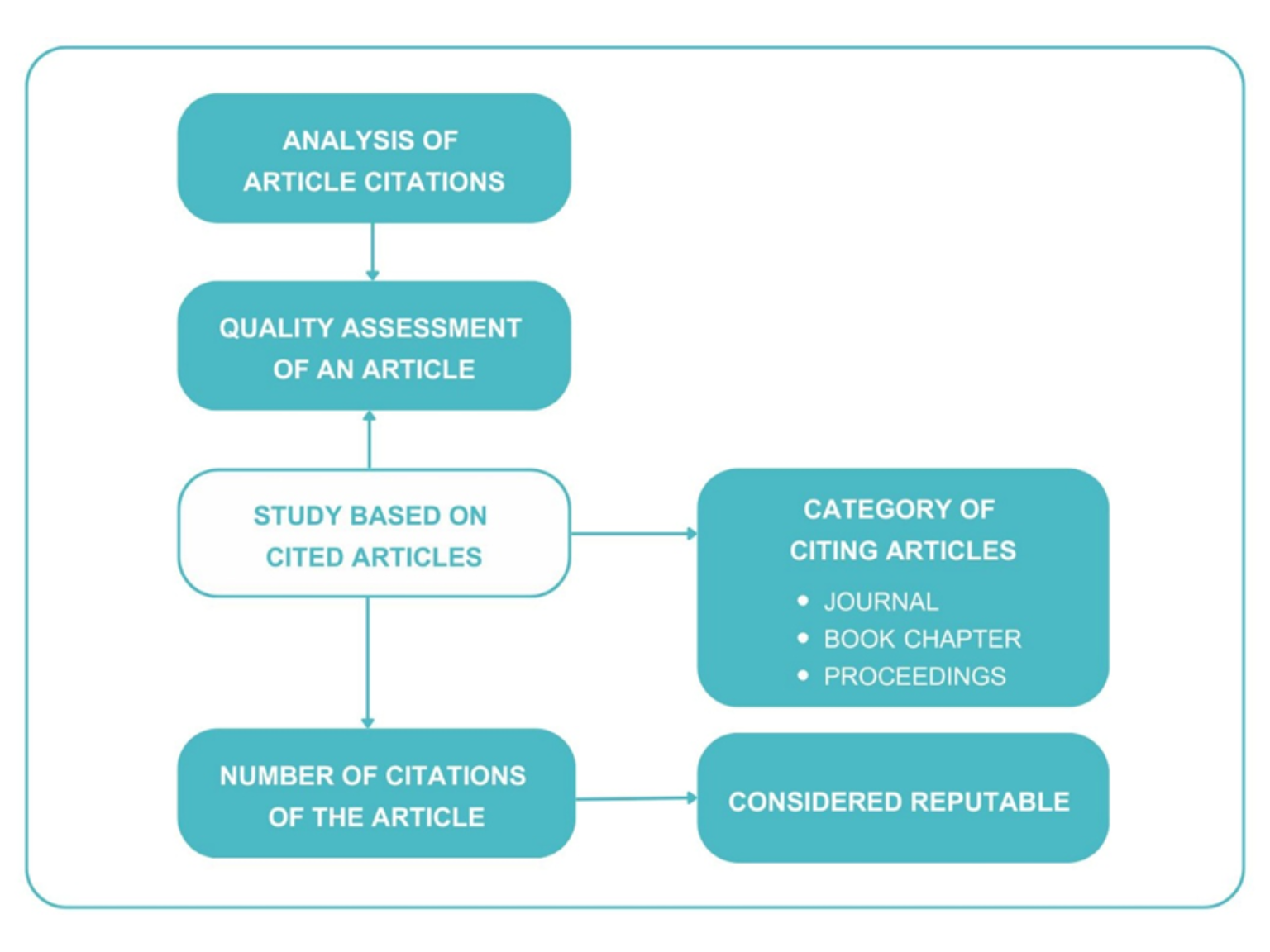
Ninlaart, O. (2025a). Figure 3 Conceptual Framework of Citation Analysis.
Ninlaart, O. (2025b). Figure 4 How to Search for Citation Frequency in the Scopus Database.
Ninlaart, O. (2025c). Figure 5 Configuration to Display Only Journal-Specific Data.
Thai-Journal Citation Index Centre. (2025a). Figure 1 Details of the Journal Asia Social Issues in the TCI Database. Retrieved 16 February 2025, from https://tci-thailand.org/journal_info?jid=11627
Thai-Journal Citation Index Centre. (2025b). Figure 2 List of Thai Journals to be Submited for Consideration for Inclusion in Scopus 2023-2026. Retrieved 6 February 2025, from https://tci-thailand.org/view?slug=TCI_TSRI_Scopus_2
