
Morphological Creativity and Identity Expression in the Slang of LGBTQIA+ Thais in the Hiwwhee Gang
Article Sidebar
Main Article Content
Abstract
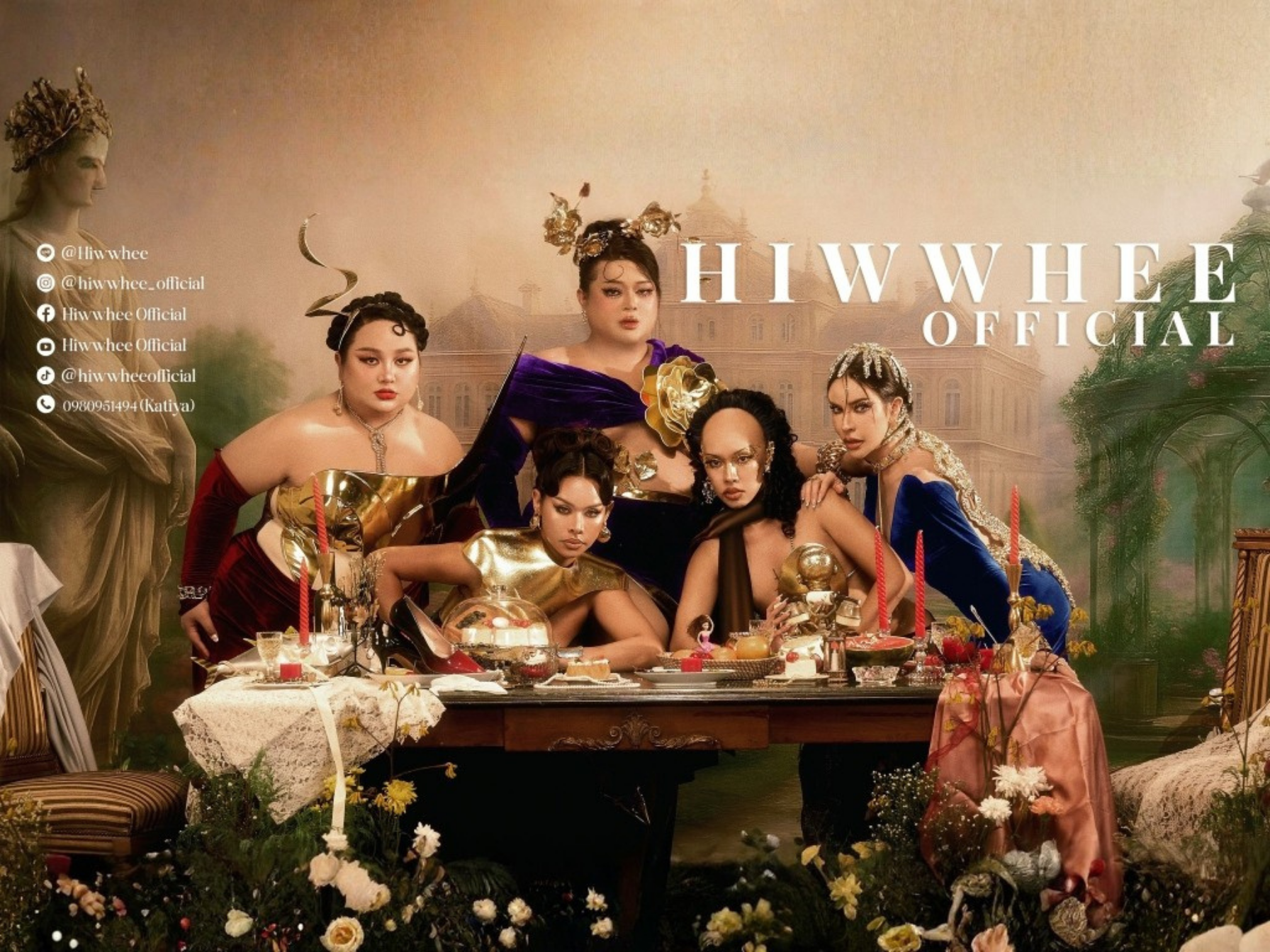
Background and Objectives: The Thai LGBTQIA+ community has fostered a vibrant lexicon of slang that reflects its morphological creativity, identity expression, and popularity. A particularly influential force in this linguistic movement is the Hiwwhee Gang—a popular group of queer YouTubers with over five million followers—which plays a significant role in the creation, dissemination, and circulation of queer language in digital media. This study aims to identify and categorize the specific types of LGBTQIA+ slang used by the Hiwwhee Gang by analyzing how these expressions reflect the group’s morphological creativity, construct group identity and signal in-group membership. It also examines how their use of slang facilitates audience engagement, and circulates and fosters a sense of inclusion within their online community.
Methods: The study adopts a qualitative linguistic approach, analyzing 34 slang items used in the Hiwwhee Gang’s YouTube content. These were categorized according to word formation processes, including blending, compounding, clipping, borrowing, onomatopoeia, and semantic shift, together with an analysis of frequency, the motivations underlying word formation, and the sociocultural contexts of slang use among LGBTQIA+ communities, using the Hiwwhee Gang as a case study.
Results: Thai LGBTQIA+ slang is notable for its creative use of lexical blending, sound imitation, and phonological play to produce humorous effects. While blending and compounding are common in the Gang’s slang, ideophones and performative speech acts, suggesting the group members’ behavior, actions, or values via slang, such as สะดุ้ง (sa dung or startled) or เซะตุ้มเล้ง (se tum leng or chaotic), pointing to the discourse-stylistic nature of queer conversation. Likewise, semantic shifts are notable, as terms like ขมวด (khamuat or to wrap) and ฉ่ำ (cham or juicy) take on entirely new meanings in different context. These linguistic innovations not only offer humor and identity performance but also resist mainstream discourse and play an important role in resisting heteronormative ideology by generating linguistic forms that challenge conventional word structures and traditional meaning-making processes.
Application of this study: The findings are valuable for scholars in linguistics, gender studies, and digital media. Educators and language policy designers may also apply these insights to better accommodate linguistic diversity in designing curriculums which respect linguistic diversity. Moreover, the research also promotes the preservation and elevation of queer vernaculars as culturally significant linguistic forms.
Conclusions: The use of slang among the Thai LGBTQIA+ community functions as a tool for identity construction, community boundary formation, and the creation of spaces for social participation through language. When queer speakers reinterpret existing lexical items and move beyond conventional linguistic and semantic frameworks of the dominant language, a culturally specific language emerges that enables presence, visibility, and solidarity. The findings further indicate that creativity in word formation plays a crucial role both as a cultural tool and as a strategy for resisting mainstream social structures in contemporary Thai society.
Downloads
Article Details

This work is licensed under a Creative Commons Attribution-NonCommercial-NoDerivatives 4.0 International License.
References
Allan, K., & Burridge, K. (2006). Forbidden words: Taboo and the censoring of language. Cambridge University Press. https://doi.org/10.1017/9780511617881
Anggraeni, D. (2011). Word Formation Process in Outdoor Advertisement (A Case Study of Billboard Installed in Semarang). Undergraduate thesis, Universitas Diponegoro, Indonesia.
Aroonmanakun, W. (2004). A Unified Model of Thai Romanization and Word Segmentation. In Proceedings of the 18th Pacific Asia Conference on Language, Information and Computation, (pp. 205–214), December 8-10, 2004, Japan.
Asri, W. K., & Others. (2024). Analyzing Semantic Shifts in English and German by Exploring Historical Influences and Societal Dynamics. Studies in English Language and Education, 11(2), 1085–1100. https://doi.org/10.24815/siele.v11i2.37460
Brown, L. B. (2015). What’s in a Name? Examining the Creation and Use of Sexual Orientation and Gender Identity Labels. Issues in Religion and Psychotherapy, 37(1), 8.
Chaleomsri, M. (2024). Chaloemsi: Phruechchika Roem Ton Mai Kap Arai Mai. [Chaloemsi: November — A New Beginning with Something New]. Retrieved 24 December 2024, from https://www.youtube.com/watch?v=lu2m3Lx7gJI (In Thai)
Fitria, T. N. (2022). Analysis of Word Formation Process in Online Shop’s Terminologies. Kajian Linguistik Dan Sastra, 7(2), 176–189. https://doi.org/10.23917/kls.v7i2.15511
Fluk Karon. (2024). Vlog Week #3: Athit Sutthai Khong Kan Yu Ban Lang Ni Kap Khwam Songcham Thi Luea Yu. [Vlog Week #3: The Last Week Living in This House and the Memories That Remain]. Retrieved 23 December 2024, from https://www.youtube.com/watch?v=LK5wcLpDu2c (In Thai)
Halliday, M. A. K. (1976). Anti-Languages. American Anthropologist, 78(3), 570–584.
Hinton, L., Nichols, J., & Ohala, J. (1994). Sound Symbolism. Cambridge: Cambridge University Press.
Hiwwhee Official. (2017). Hiwwhee Official. Retrieved 21 December 2024, from https://www.youtube.com/ channel/UCAWk6ZWsFfBh1YlILqopIOg (In Thai)
Hiwwhee Official. (2024). Hiwwhee Pai Hiwwhee Ma EP.121 | Nang Rot Ma Aeo Num Duemdham Thammachat Rapprathan Ahan Nuea. [Hiwwhee Pai Hiwwhee Ma EP.121 | Riding a Horse Carriage, Strolling with a Young Man, Enjoying Nature, and Eating Northern Thai Food]. Retrieved 23 December 2024, from https://www.youtube.com/watch?v=7xdOA3ql9Q8 (In Thai)
Hiwwhee Official. (2025). Hiwwhee Hio Woi EP.20 | Rangsans Menu Raek Khong Pi Duai Watthudip Pen Met Tae Hiwwhee Met Yoe Kwa. [Crafting the First Dish of the Year with Seed-Based Ingredients — But Hiwwhee Has Even More!]. Retrieved 2 February 2025, from https://www.youtube.com/watch?v=fdLQv0IqyZY (In Thai)
Jackson, P. (2009). Global Queering and Global Queer Theory: Thai [Trans]Genders and [Homo]Sexualities in World History. Autrepart, 49, 15–30. https://doi.org/10.3917/autr.049.0015
Jannah, S. U. (2023). Slangs in Teen Talk Context in Mean Girls: A Sociolinguistic Approach. Undergraduate thesis, UIN Raden Mas Said Surakarta, Indonesia.
Juepak Official. (2024). Kae Bon Sang Thao Wetsuwan Nueai Khae Nai Ko Mi Serum Nar. [Fulfilling a Vow by Building a Thao Wessuwan Statue — No Matter How Tiring It Gets, Nara Serum Has My Back!]. Retrieved 23 December 2024, from https://www.youtube.com/watch?v=BJZBdMZrf2E (In Thai)
Kanchanabundhu, K., & Trakulkasemsuk, W. (2022). Shift to Impress: How Thai Lgbts Create New Terms in Their Daily Chats. REFLections, 29(3), 621–637. https://doi.org/10.61508/refl.v29i3.262413
Khalid, A. (2019). The Study of Semantic Change and Its Effect on Linguistic and Literary Comprehension of ESL Learners. Journal of Communication and Cultural Trends, 1(2), 43–54. https://doi.org/ 10.32350/jcct.12.04
Kopaczyk, J. (2014). Christopher Upward and George Davidson. The History of English Spelling. International Journal of Lexicography, 27(2), 171–175. https://doi.org/10.1093/ijl/ecu005
Lakoff, R. (1973). The Logic of Politeness: or, Minding Your P's and Q's. Chicago Linguistics Society, 9, 292-305.
Ma, Q. (2018). The Significance of Onomatopoeia in Languagization: From the Perspective of Sound-Meaning Relationship Under Dynamic System Principle. Macrolinguistics, 6, 43-62. https://doi.org/10.26478/ja2018.6.8.3
Nisamanee, N. (2025). Ut Ut Eat EP 1 Rat Na Sen Krop Chan Yak 37 Pi Nai Tamnan Rongraem Elizabeth. [Ut Ut Eats Episode 1: The Legendary 37-Year Crispy Noodle Rad Na Giant Plate at Elizabeth Hotel Bangkok]. Retrieved 2 February 2025, from https://www.youtube.com/watch?v=rQUV4teYkUs (In Thai)
Rezeki, T. I., & Sagala, R. W. (2019). Semantics Analysis of Slang (SAOS) in Social Media of Millennial Generation. KREDO: Jurnal Ilmiah Bahasa dan Sastra, 3(1), 36–46.
Royal Institute. (2013). Dictionary of the Royal Institute of Thailand 2011. Retrieved 21 December 2024, from https://dictionary.orst.go.th/ (In Thai)
Ryanto, I. W. (2022). The Functions of Slang Expressions by Archie Andrews in the Comic Book Archie’s Double Digest 204. Undergraduate Thesis. Department of English Letters, Faculty of Letters, Universitas Sanata Dharma Yogyakarta, Indonesia.
Sabudpraeng. (2024). Hiwwhee Kingdom. [Image attached] [Status update]. Retrieved 21 December 2024, from https://www.facebook.com/sabudprang/posts/998798564941401/
Sanitdee, N. (2022). So Fierce, Mom! A Study of LGBTQ+ Colloquial Language in Thailand in Terms of Phonological and Pragmatico-Semantic Changes. Retrieved 10 December 2024, from https://zenodo.org/records/7489634
Sanitdee, N. (2023). Thai LGBTQ+ Colloquials through the Lens of Construction Grammar. Retrieved 10 December 2024, from https://zenodo.org/records/10050817
Thairath Variety. (2024). Mix Chalermsri Sex Chiat Tai Phitsadan Lan Lok | Sut Rit Sut Det EP.7. [Mix Chalermsri: Bizarre Near-Death Sex Stories from Around the World | Sudrit Suddet EP.7]. Retrieved 10 December 2024, from https://www.youtube.com/watch?v=meKxS2tVZaw (In Thai)
Unthanon, K., Chanthao, R., & Dandee, W. (2024). Word-Formation of New Vocabulary in Thai Dictionary. International Journal of Education and Social Science Research, 7(2), 179–189. https://doi.org/10.37500/ijessr.2024.7209
Vogue Thailand. (2024). Wikhro ' kaeng hio wi ' klum in flu en soe sut hot thi kamlang khrong lok so chian midia khong prathet thai! [Analyzing “Hiwwhee Gang”: The Hottest Influencer Group Taking Over Thailand’s Social Media!] Vogue Thailand. Retrieved 16 April 2024, from https://www.vogue.co.th/celebrity/article/hiwwhee-group-the-most-influential-kols-in-thailand (In Thai)
Wan Mohd Muzani, A., & Mohammad Lotfie, M. (2024). Morphological Neologisms: The Emergence of Social Media Slang on TikTok: Neologisme Morfologi: Kemunculan Slanga Media Sosial di TikTok. Sains Insani, 9(1), 103–113. https://doi.org/10.33102/sainsinsani.vol9no1.597
Wihadi, M., Pratiwi, S. P., & Rahmatunnisa, W. (2020). Prevalent Positioned Slang Word Tapestry. English Journal Literacy Utama, 5(1), 317–324. https://doi.org/10.33197/ejlutama.vol5.iss1.2020.483
Williams, P. (2024). ELB home – English Lessons Brighton. English Lessons Brighton. Retrieved 15 July 2024, from https://englishlessonsbrighton.co.uk
Yahya, H. K., & Ardi, H. (2023). Analysis of Word Formation in Slang Words Find in the Movie Big Daddy. Journal of English Language and Literature, 12(2), 312–317.
Yule, G. (2010). The Study of Language. 4th ed. New York: Cambridge University Press.
