
The Politics of Fear: Russophobia and The Construction of Russia as the Other in Western Media Discourse
Article Sidebar
Main Article Content
Abstract
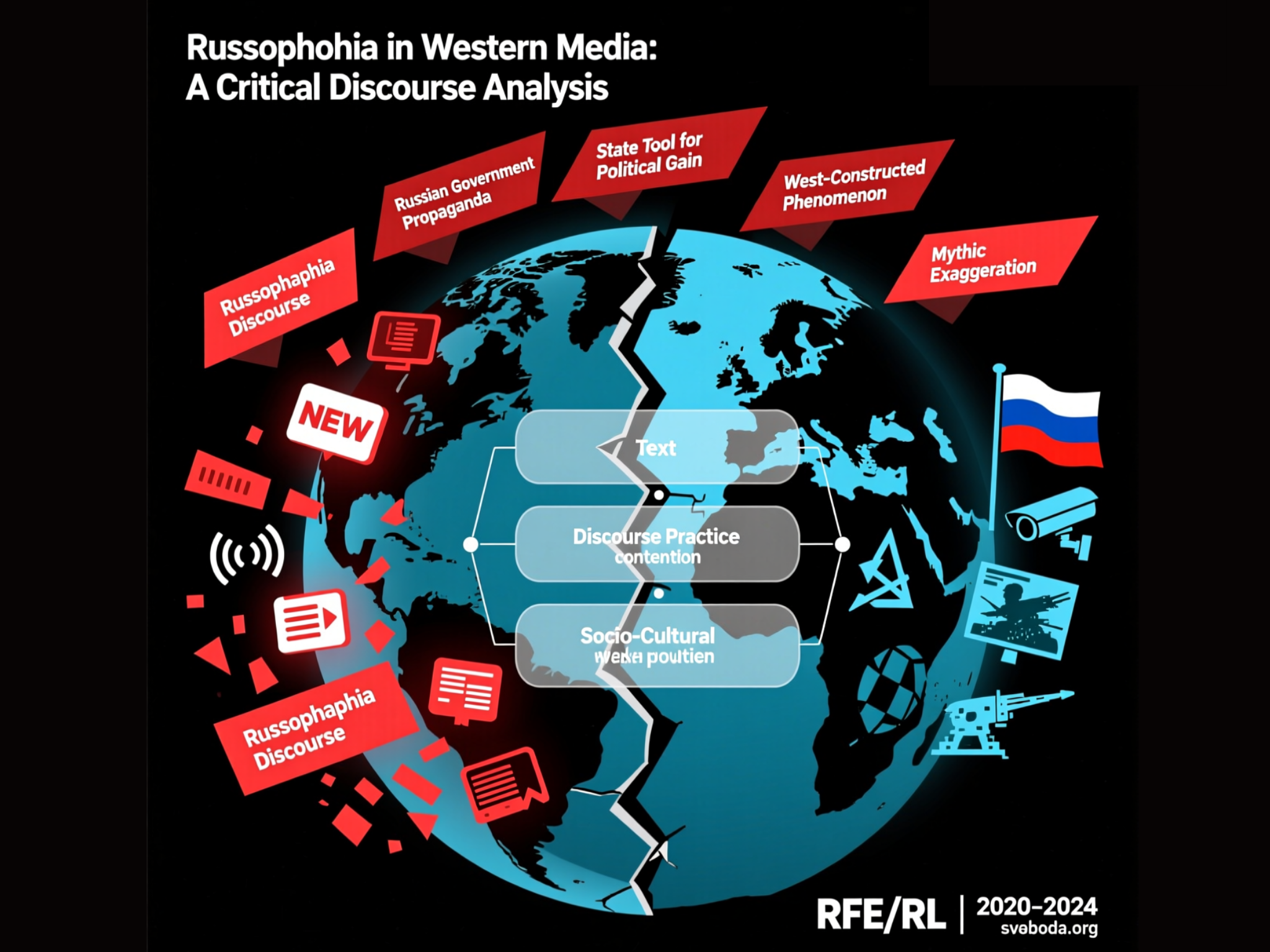
Background and Objectives: Russophobia is not merely a general negative sentiment. It has also been identified as a discursive tool employed by certain factions in contemporary western media, playing a crucial role in shaping the image of Russia amid the ongoing political conflict between Russia and the West. This research has three main objectives: to study 1) discourse practices in the production, distribution, and consumption of texts on Russophobia in western media; 2) anti-Russian discourse through linguistic strategies used; and 3) socio-cultural practice influencing the construction of Russophobia discourse in western media.
Methods: This research is classified as qualitative research, using Norman Fairclough’s critical discourse analysis (CDA) as the analytical framework. This concept comprises three main dimensions: text, discourse practice, and socio-cultural practice. In addition, texts were examined using diverse linguistic strategies. The data were gathered from Radio Free Europe/Radio Liberty (RFE/RL) Russian language broadcasts from 2020 to 2024, representing a major western media outlet that holds significant influence over the Russian-speaking audience.
Results: RFE/RL is a media organization that publishes news and analysis in 27 languages, covering 23 countries across Eastern Europe, Central Asia, the Caucasus, and the Middle East. Its Russian-language content is broadcast under the name ‘Radio Svoboda (Radio Liberty)’. The organization distributes content through the website https://www.svoboda.org, which serves as an alternative media platform to local government-controlled outlets. Its primary target audience includes Russian citizens in Russia and Russian-speaking listeners abroad. Five main Russophobia discourses were identified in RFE/RL content: 1) as Russian government propaganda; 2) as a Russian state device for political gain and suppressing dissent; 3) as a motive by western attempts to weaken or destroy Russia; 4) as a western-created phenomenon; and 5) as a discourse that is viewed as non-existent from the perspective of foreign observers. Diverse strategies were used to create these discourses, such as inventing specific vocabulary, speech acts, presuppositions, figurative language, metaphors, claims, and denials. Socio-cultural practices influencing Russophobia discourse construction include 1) the historical roots of Russophobia in relation to the West; 2) the Russian government and its policies against Russophobia; and 3) the western stance on the phenomenon of Russophobia in international politics.
Application of this study: The findings are significant both academically and for public policy, particularly in analyzing the role of the media in the construction of political discourse. This helps international political analysts understand the mechanisms and significance of media in shaping the image and conceptual framing of a given country. It is also beneficial for crisis communication management and can serve as a model for analyzing the discourse of other forms of ‘phobia,’ such as Islamophobia and Sinophobia.
Conclusions: Russophobia reflects the negative images and perceptions directed toward Russia, embedding discourses produced and circulated by western media for political purposes, such as RFE/RL. These media outlets play a crucial role in shaping Russia’s image for global audiences as well as specific target groups. Through the analytical lens of CDA, the mechanisms of constructing in-groups and out-groups become evident, reinforcing the targeted country’s image with clarity. This approach also reveals the complex interplay between language, media, and power within geopolitical contexts.
Downloads
Article Details

This work is licensed under a Creative Commons Attribution-NonCommercial-NoDerivatives 4.0 International License.
References
Angkapanichkit, J. (2018). Discourse Analysis. Bangkok: Thammasat University Press. (In Thai)
Aroonoast, P. (2022). The Concept of Russophobia in the Russian Language: A Cognitive Semantic Study. In A. Pansuwan (Ed.), The 11th National Conference Smart “New Normal, New Thinking, New Challenges”, (pp. 242-253). 24 June 2022, Faculty of Arts, Silpakorn University, Thailand. (In Thai)
Asaturov, S., & Martynov, A. (2022). The Historical Memory of Russians as a Source of Anti-Western Sentiment. National Interest, 2(9), 34-40.
Belobolodova, A. V. (2020). Linguistic Markers of Russophobia in the English-Language Media Discourse. Philology. Theory & Practice, 13(2), 156-161. (In Russian)
Comai, G. (2021). Russophobia in Russian Official Statements and Media. A Word Frequency Analysis. Retrieved 8 July 2025, from https://www.researchgate.net/publication/353631878_Russophobia_in_Russian_official_statements_and_media_A_word_frequency_analysis
Darczewska, J., & Zochowski, P. (2015). Russophobia in the Kremlin’s Strategy, a Weapon of Mass Destruction. Retrieved 30 July 2025, from https://www.osw.waw.pl/sites/default/files/pw_56_ang_ russophobia_net.pdf
Dushenko, K. V. (2022a). ‘Russophobia’ and Related Concepts in Germany in the 19 TH Century. Herald of Culturology, 2, 25-51. (In Russian)
Dushenko, K. V. (2022b). The Concept of “Russophobia” Among Russian Authors of the 19-20th Centuries. Philosophy Journal of the Higher School of Economics, 6(3), 222-255. (In Russian)
Fairclough, N. (1995a). Critical Discourse Analysis: The Critical Study of Language. London: Longman.
Fairclough, N. (1995b). Media Discourse. London: Arnold.
Fairclough, N. (1996). Language and Power. London: Longman.
Fisher, D. (1851). Russia and the Crystal Palace 1851. Farmham: Ashgate.
Gigitashvili, G. (2016). The Western Media Caught in the Kremlin’s Russophobia Trap. Retrieved 30 July 2025, from https://www.liia.lv/en/opinions/the-western-media-caught-in-the-kremlins-russophobia-trap-568
Ilyin, A. (2020). Russophobia as an Ideological Trend in the Information Space of the West. Free thought, 23-33. (In Russian)
Karpushkina, I. N. (2023). Representation of Russia in German Media Sphere (2000-2010). The Power Of History – The History Of Power, 9(6), 36-47. (In Russian)
Kara-Murza, S. G. (2015). Russophobia of the West. Outlines of Global Transformations: Politics, Economics, Law, 1, 6-14. (In Russian)
Khazagaeva, Y. (2022). We Are Being Humiliated Because Others See Us as Special. Retrieved 30 July 2025, from https://holod.media/2022/10/08/anti-russian-sentiment/ (In Russian)
Kolchina, A. S. (2010). Radio Liberty in the 1950s-1970s: Searching Forms of Propaganda During the Cold War. The Journal Vestnik Moskovskogo Universiteta. Seriya 10. Zhurnalistika, 3, 103-116. (In Russian)
Kuzmin, I. (2024). What Is Russophobia and What Are Its Causes. We Explain in Simple Words. Retrieved 5 July 2025, from https://secretmag.ru/enciklopediya/rusofobiya.htm (In Russian)
Halliday, M. A. K., & Matthiessen, C. M. I. M. (2004). An Introduction to Functional Grammar. 3rd ed. London: Arnold.
Hoyle, A., & Others. (2024). Weapons of Mass Division: Sputnik Latvia’s Russophobia Narratives and Testing the Rejection-Identification Model in Russian Speakers in Latvia. Political Psychology, 45, 753–772.
Meduza. (2024). Putin Approves New Strategy to Combat Extremism. It Introduces the Term “Russophobia” and Refers to “Extremist Threats” From Ukraine. Retrieved 29 July 2025, from https://meduza.io/news/2024/12/28/putin-utverdil-novuyu-strategiyu-protivodeystviya-ekstremizmu-tam-poyavilsya-termin-rusofobiya-i-govoritsya-ob-ekstremistskih-ugrozah-iz-ukrainy (In Russian)
Mettan, G. (2017). Creating Russophobia: From the Great Religious Schism to Anti-Putin Hysteria. Atlanta: Clarity Press.
Nemensky, O. B. (2013). Russophobia as an Ideology. Studies in Nationalism, 1(13), 26-65. (In Russian)
Neumann, I. B. (2002). Europe Post Cold War Rememberane of Russia:cui bono?. Cambridge: Cambridge University Press.
Oates, S., & Others. (2021). Nyetwork News: The Convergence of the Russophobia Narrative in Russian Propaganda and Fox News in Election 2020. Retrieved 12 July 2025, from https://papers.ssrn.com/sol3/papers.cfm?abstract_id=3934064
Official Publication of Legal Acts. (2024). Strategy for Countering Extremism in the Russian Federation. Retrieved 29 July 2025, from http://publication.pravo.gov.ru/document/0001202412280115?index=1 (In Russian)
Palahan, N. (2021). From Censorship to “Sovereign Internet”: Development of Media Regulation in Russia. Journal of Digital Communications, 5(1), 335-357.
Panpothong, N. (2013). Critical Discourse Analysis Based on Linguistics. Bangkok: Faculty of Arts, Chulalongkorn University, Thailand. (In Thai)
Promvek, K., & Others. (2022). Russia’s Agenda-Setting in the Russian-Ukrainian Media War. Journal of Management Science, Dhonburi Rajabhat University, 4(2), 1-10.
Radio Free Europe/Radio Liberty. (2020). Retrieved 9 July 2025, from https://www.svoboda.org (In Russian)
Radio Free Europe/Radio Liberty. (2021). Retrieved 9 July 2025, from https://www.svoboda.org (In Russian)
Radio Free Europe/Radio Liberty. (2022). Retrieved 9 July 2025, from https://www.svoboda.org (In Russian)
Radio Free Europe/Radio Liberty. (2023). Retrieved 9 July 2025, from https://www.svoboda.org (In Russian)
Radio Free Europe/Radio Liberty. (2024a). Retrieved 9 July 2025, from https://www.svoboda.org (In Russian)
Radio Free Europe/Radio Liberty. (2024b). About RFE/RL. Retrieved 13 July 2025, from https://about.rferl.org/about-rfe-rl/ (In Russian)
Radio Free Europe/Radio Liberty. (2024c). Russian Service. Retrieved 13 July 2025, from https://about.rferl.org/service/russian-service/ (In Russian)
Robert, K. (2020). Russophobia in the Obama Era Foreign Policy Discourse (2009-2017). Vestnik RUDN. International Relations, 20(3), 476-490.
Robinson, N. (2019). “Russophobia” in Official Russian Political Discourse. De Europa, 2(2), 61-77.
Ryabova, M. Y. (2022). Russophobia as a Communicative Strategy. Philology. Theory & Practice, 15(11), 3615-3620. (In Russian)
Saveliev, A. N. (2008). Russophobia in Russia. 2006-2007. Analytical report. M.: Russian information center. (In Russian)
Searle, J. R. (1979). Expression and Meaning: Studies the Theory of Speech Acts. USA: Cambridge University Press.
Sergeyev, S. M. (2013). How is Russian Russophobia Possible? Notes of a Compromised Historian. Studies in Nationalism, 13, 66-85. (In Russian)
Shevtsova, L. (2015). Humiliation as a Tool of Blackmail. Retrieved 29 July 2025, from http://www.the-american-interest.com/2015/06/02/humiliation-as-a-tool-of-blackmail/
Shirinyantse, A. A., & Myrikova, A. V. (2015). «Internal» Russophobia and «Polish Issue» in Russia in the 19th Century. Problem Analysis and Public Administration Projection, 1, 15-27. (In Russian)
Sresunt, S. (2014). Critical Discourse Analysis Methodology in Development Studies. Pathum Thani: Puey Ungphakorn School of Development Studies. (In Thai)
Stubbs, M. (1983). Discourse Analysis: The Sociolinguistic Analysis of Natural Language. Chicago: University of Chicago Press.
Tanshina, N. P. (2024). Russophobia as a Phenomenon. Review NCPTI, 3(38), 6-16. (In Russian)
Tanshina, N. P. (n.d.). Russophobia Is in the West’s Blood: The Practice of Demonizing Russia Was Adopted by Europe Over 500 Years Ago. Retrieved 29 July 2025, from https://histrf.ru/read/articles/rusofobiya-u-zapada-v-krovi-priem-demonizacii-rossii-evropa-vzyala-na-vooruzhenie-bolee-500-let-nazad (In Russian)
The Ministry of Foreign Affairs of the Russian Federation. (2023). The Concept of the Foreign Policy of the Russian Federation. Retrieved 22 November 2025, from https://mid.ru/en/foreign_policy/fundamental_ documents/1860586/?lang=ru (In Russian)
The Roscongress Foundation. (2023). Russophobia: Nazism of the 21st Century. Retrieved 29 July 2025, from https://legalforum.info/news/rusofobija-natsizm-xxi-veka-/ (In Russian)
Tsygankov, A. (2012). Russia and the West From Alexander to Putin, Honor in International Relations. Cambridge: Cambridge University Press.
van Dijk, T. A. (1998). Ideology: A Multidisciplinary Approach. London: Sage.
van Dijk, T. A. (2008). Discourse and Power. Basingstoke: Palgrave Macmillan.
Wahlang, J. (2021). Russophobia and the West: A Study on Europe Anti Russian Sentiments. International Journal of Russian Studies, 10(2), 115-123.
