
The Application of Artificial Intelligence Technology in Language Translation: A Case Study of Using ChatGPT in Translating Korean Public Service Campaign Advertisements
Article Sidebar
Main Article Content
Abstract
Background and Objectives: ChatGPT is a chatbot-based translation tool which is notable for its ability to translate a wide range of languages with accuracy. This research article employed ChatGPT to assist in translating Korean into Thai. The research materials consisted of Korean public service campaign advertisements, chosen because advertisements are intended to persuade and motivate audiences to take specific actions, making literal translation from the source language particularly challenging if the intended effect is to be preserved.The objectives of this research were 1) to examine the translation of vocabulary, idioms, and sentences from Korean into Thai using ChatGPT, and 2) to investigate the strengths and errors of ChatGPT’s Korean–Thai translations.
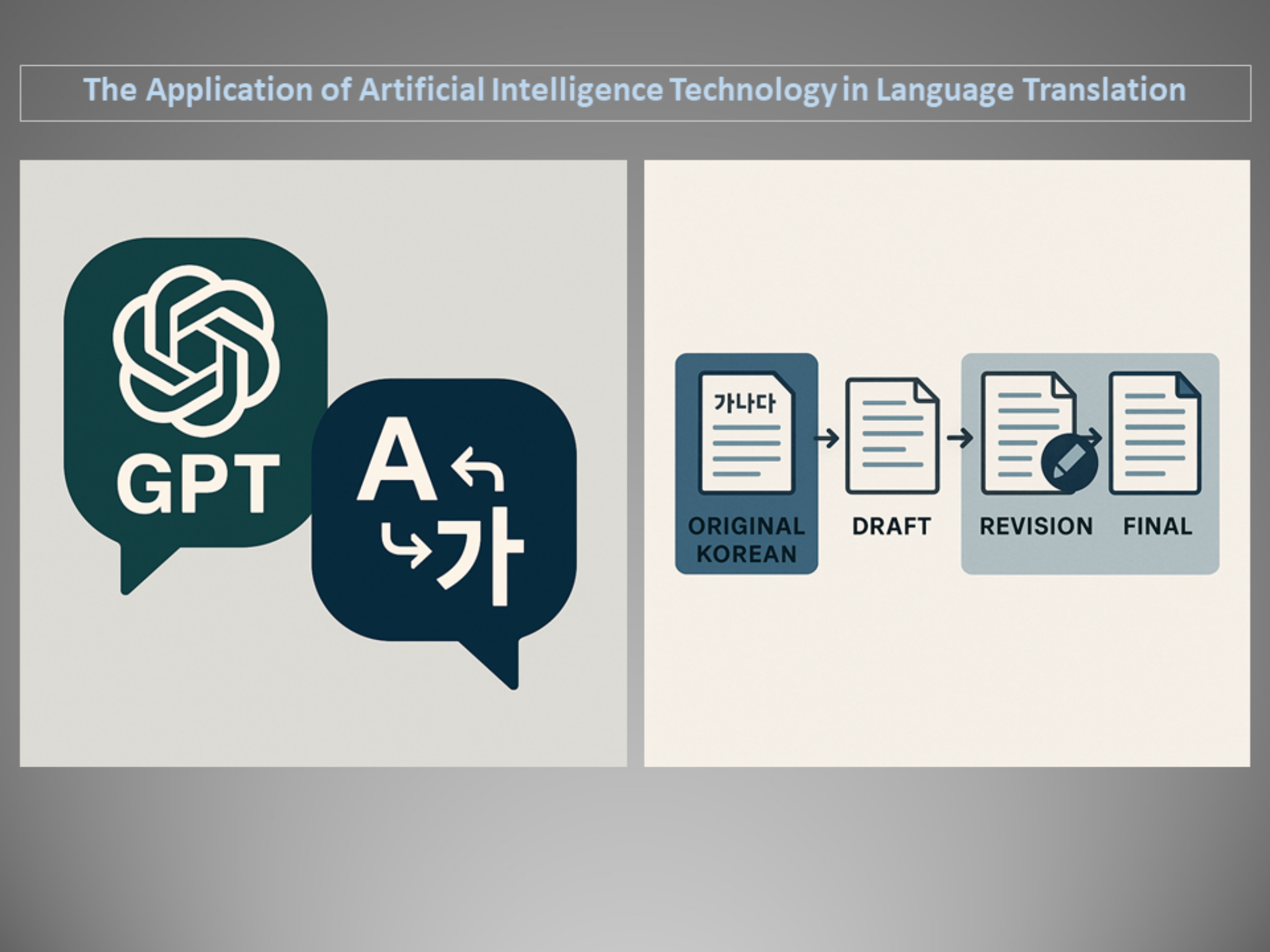
Methods: This research is a qualitative study. The source data were television and radio advertisements from the Korea Broadcast Advertising Corporation (Kobaco). Award-winning advertisements produced over a 20-year period (2004–2024) were selected, totaling 42 samples. Then, ChatGPT (GPT-5 Plus version) was used as the translation tool.
Results: The study found that ChatGPT’s translations of vocabulary, idioms, and sentences can be discussed in three main points: 1) Vocabulary translation of general words did not show major problems. However, caution was required when translating country names, as there was ambiguity regarding whether the terms referred to the source or target country. As for the translation of culture-specific terms, translators should exercise caution when using ChatGPT to translate them, while pronoun translation also posed challenges. In contrast, personal name translation did not show many problems. However, the translator should verify whether the transliteration is in line with the accepted standards. 2) Idiom translation by ChatGPT did not show problems, whether by adapting phrases into catchy slogans or using contemporary language. ChatGPT translated by referring to the context of the content and then linking the sentences consistently. 3) Sentence translation showed problems when there were gender-specific markers of the speaker in the sentence. The translator had to check with the original video whether the speaker was female or male. The advantages of ChatGPT translations are that 1) for the advantages of using ChatGPT, the translations showed wordplay, lexical variety, and fairly accurate choices of words in the target language. ChatGPT also provided functions such as automatically adding quotation marks and bolding important parts. 2) for the areas for improvement, ChatGPT had problems when translating archaic words, too short words or sentences, and synonyms. In these cases, the translations deviated from the actual meaning.
Application of this study: The findings of this research show the application of artificial intelligence to the translation of Korean public service advertisements into Thai. This provides a guideline for analyzing and applying artificial intelligence to the translation of other types of content, other types of advertisements, and other source and target languages
Conclusions: Over the past 20 years (2004–2024), public service advertisements of the Republic of Korea reflected vocabulary themes of individuality, family, and society, with the five most frequently used words being: 1) 부모 (parents), 2) 우리 (we, us), 3) 당신 (you), 4) 사회 (society), and 5) 배려 (consideration, caring for others). These words are part of the characteristics of advertisements for the public good, aiming to encourage audiences to change behaviors and motivate audiences to contribute toward a better society. This is a key message that translators should understand when producing translations of public service advertisements.
Downloads
Article Details

This work is licensed under a Creative Commons Attribution-NonCommercial-NoDerivatives 4.0 International License.
References
Jeong, H. Y. (2025). A Study on Chinese to Korean AI Translation Patterns According to Text Type: Focusing on Chatgpt 4o. Master Thesis, M.A. in Translation and Interpretation, Hankuk University of Foreign Studies, South Korea. (In Korean)
Ko, C. (2018). Kaan Patiwat Kontent Nai Yuk Haeng AI. [The Artificial Intelligence Content Revolution]. Bangkok: Amarin Printing and Publishing. (In Thai)
Kobaco. (n.d.). What Is Public Advertising?. Retrieved 8 August 2025, from https://www.kobaco.co.kr/site/main/content/what_public_ad
Kobaco. (2017). Nanum, Gibu Munhwa – Bap-I Doego Sipseumnida. [Sharing, Donation Culture – I Want To Become A Meal]. Retrieved 14 August 2025, from https://www.kobaco.co.kr/site/main/archive/advertising/5/574?cp=15&pageSize=8&sortDirection=DESC&arcUse=true&arcCategory=5&metaCode1=broadcast&adtDefaultYear=false (In Korean)
Kobaco. (2018). Damunhwa Poyong – Haengbog-Eul Chaewojuneun Saram. [Multicultural Inclusion – People Who Fill Happiness]. Retrieved 14 August 2025, from https://www.kobaco.co.kr/site/main/archive/advertising/5/572?cp=15&pageSize=8&sortDirection=DESC&arcUse=true&arcCategory=5&metaCode1=broadcast&adtDefaultYear=false (In Korean)
Kobaco. (2019). Hakgyo Pongnyeok – Tok Chyeosseul Ppun-Inde (30choA). [School Violence – “It Was Just A Tap” (30s A)]. Retrieved 12 August 2025, from https://www.kobaco.co.kr/site/main/archive/advertising/5/13907?cp=1&pageSize=8&sortDirection=DESC&arcUse=true&arcCategory=5&metaCode1=broadcast&adtDefaultYear=false (In Korean)
Kobaco. (2019). Jeochulsan – Aineun Nara-Ui Geonganghan Mirae. [Low Birthrate – Children Are The Nation’s Healthy Future]. Retrieved 14 August 2025, from https://www.kobaco.co.kr/site/main/archive/advertising/5/579?cp=14%26pageSize=8%26sortDirection=DESC%26arcUse=true%26arcCategory=5%26metaCode1=broadcast%26adtDefaultYear=false (In Korean)
Kobaco. (2020a). Adong Anjeon – Unjeonjaga Bohoja. [Child Safety – The Driver Is The Guardian]. Retrieved 12 August 2025, from https://www.kobaco.co.kr/site/main/archive/advertising/5/13943 (In Korean)
Kobaco. (2020b). Bumowa Jasikgan-Ui Daehwa – Pyeongsaeng Taegyo. [Conversation Between Parents and Children – Lifelong Prenatal Education]. Retrieved 14 August 2025, from https://www.kobaco.co.kr/site/main/archive/advertising/5?cp=1&sv=%EB%8C%80%ED%99%94&pageSize=8&sortDirection=DESC&arcUse=true&arcCategory=5&metaCode1=broadcast&adtManufactureYear=&adtDefaultYear=false (In Korean)
Kobaco. (2020c). Gyoyuk-Gwa Cheongsonyeon-Ui Mirae – Bumowahakbumo. [Education and The Future of Youth – Parents And Guardians]. Retrieved 14 August 2025, from https://www.kobaco.co.kr/site/main/archive/advertising/5/584?cp=13&pageSize=8&sortDirection=DESC&arcUse=true&arcCategory=5&metaCode1=broadcast&adtDefaultYear=false (In Korean)
Kobaco. (2021a). Adong Boho – Adong Hakdae Bangji. [Child Protection – Preventing Child Abuse]. Retrieved 12 August 2025, from https://www.kobaco.co.kr/site/main/archive/advertising/5/14154 (In Korean)
Kobaco. (2021b). Hwangyeong Aechakyonggi A. [Environmental Attachment Container A]. Retrieved 12 August 2025, from https://www.kobaco.co.kr/site/main/archive/advertising/5/14135?cp=1&pageSize=8&sortDirection=DESC&arcUse=true&arcCategory=5&metaCode1=broadcast&adtDefaultYear=false (In Korean)
Kobaco. (2021c). Sanghojonjung-Gwa Tonghap – Daehanminguk Deutgi Pyeongga (30cho A). [Mutual Respect and Integration – Korea Listening Test (30s A)]. Retrieved 12 August 2025, from https://www.kobaco.co.kr/site/main/archive/advertising/5/13843?cp=7&pageSize=8&sortDirection=DESC&arcUse=true&arcCategory=5&metaCode1=broadcast&adtDefaultYear=false (In Korean)
Kobaco. (2023). Pishing·Seumishing Yebang – Shim Cheong. [Preventing Phishing & Smishing – Sim Cheong]. Retrieved 10 August 2025, fromhttps://www.kobaco.co.kr/site/main/archive/advertising/5/14506 (In Korean)
KOBACO Gong-ik Gwang-go Hyeob-uihoe. (2006). Cham Jalhaesseoyo. [Well Done]. Retrieved 14 August 2025, from https://www.youtube.com/watch?v=iQW3Om8Ika0 (In Korean)
KOBACO Gong-ik Gwang-go Hyeob-uihoe. (2011). An-gwa Bakk-i Dareun Gajok (Gajok-ui Gachi). [A Family Different Inside and Out – The Value Of Family]. Retrieved 14 August 2025, from https://www.youtube.com/watch?v=E-RF-2eLmhI (In Korean)
KOBACO Gong-ik Gwang-go Hyeob-uihoe. (2013). Anjeon Unjeon – Ojik Unjeonman Haseyo. [Safe driving – Just drive only] Retrieved 14 August 2025, from https://www.youtube.com/watch?v=5JNjkSnNcQs (In Korean)
KOBACO Gong-ik Gwang-go Hyeob-uihoe. (2014). Eneoji Jeoryak – Balmyeongboda Widaehan Balgyeon. [Energy Saving – A Discovery Greater Than Invention]. Retrieved 14 August 2025, from https://www.youtube.com/watch?v=riDfOnjiLjI (In Korean)
KOBACO Gong-ik Gwang-go Hyeob-uihoe. (2015). Nara Sarang – Nareul Wihan. [Love for the nation – For myself]. Retrieved 13 August 2025, from https://www.youtube.com/watch?v=9KWa0eHy40U (In Korean)
KOBACO Gong-ik Gwang-go Hyeob-uihoe. (2016). Jeochulsan Munje – Agi-Ui Maeum. [Low birthrate issue – Baby’s mind]. Retrieved 13 August 2025, from https://www.youtube.com/watch?v=ikPe0khxaHs (In Korean)
KOBACO Gong-ik Gwang-go Hyeob-uihoe. (2018). Gapjil Munhwa Inshik Gaeseon – Byeoseul. [Awareness Improvement of Power Abuse Culture – “Position”]. Retrieved 13 August 2025, fromhttps://www.youtube.com/watch?v=EGEtAwxQKkk (In Korean)
KOBACO Gong-ik Gwang-go Hyeob-uihoe. (2019). Sahoijeok Yakja Boho (Baldal Jangae) – Ju-ingong-eun Silseumnida. [Protecting The Vulnerable (Developmental Disabilities) – “I Don’t Want To Be The Main Character”] Retrieved 12 August 2025, from https://www.youtube.com/watch?v=ec6mGGB02lM (In Korean)
KOBACO Gong-ik Gwang-go Hyeob-uihoe. (2020). Uri Gaeneun Sun Hande – Banryeo-Inpyeon. [“Our Dog Is Gentle” – Pet Owner Edition]. Retrieved 12 August 2025, from https://www.youtube.com/watch?v=sadxmQMaRaM (In Korean)
KOBACO Gong-ik Gwang-go Hyeob-uihoe. (2021). Teollin Geurim Chatgi – Viral. [Spot The Differences – Viral]. Retrieved 12 August 2025, from https://www.youtube.com/watch?v=3uBdal1xl9U (In Korean)
KOBACO Gong-ik Gwang-go Hyeob-uihoe. (2023). Saenghwal Anjeon – Ilsang-ui Gaein Anjeon. [Everyday Safety – Personal Safety In Daily Life]. Retrieved 10 August 2025, from https://www.youtube.com/watch?v=rGXXLLKU-TA (In Korean)
KOBACO Gong-ik Gwang-go Hyeob-uihoe. (2024a). Eo – Banjeon Maeneo (Viral). [Public Manners – Reversal Manners]. Retrieved 10 August 2025, from https://www.youtube.com/watch?v=y6JY5plQseQ (In Korean)
KOBACO Gong-ik Gwang-go Hyeob-uihoe. (2024b). Cheongsonyeon Dobak Yebang (Viral). [Youth Gambling Prevention]. Retrieved 10 August 2025, from https://www.youtube.com/watch?v=skH3No71OAc (In Korean)
Krawmoh, W. (2025). Figure 2 Research Process.
Luepromchai, P. (2016). Mastering Translation : A Professional Translator’s Handbook. Bangkok: The Translators and Interpreters Association of Thailand.
MGR Online. (2025). OpenAI Launches GPT-5: PhD-Level Intelligence, Free to Use!. Retrieved 8 August 2025, from https://mgronline.com/cyberbiz/detail/9680000075175#google_vignette (In Thai)
Moneus, A. M., & Sahari, Y. (2024). Artificial Intelligence and Human Translation: A Contrastive Study Based on Legal Texts. Heliyon, 10(6), e28106. https://doi.org/10.1016/j.heliyon.2024.e28106
Nam, S. (2006). Revised Edition of the Guidelines for Translation and Interpreting Studies: Understanding and Practicing Translation and Interpreting. Seoul: Hankook Munhwasa.
Nouraey, P. & Karimnia, A. (2015). The Map of Translation Studies In Modern Iran: An Empirical Investigation. Asia Pacific Translation and Intercultural Studies, 2(2). 123-138. https://doi.org/10.1080/23306343.2015.1059009
Numnon, T. (2024). Generative AI: A Life-Changing Technology. Bangkok: Saengdao. (In Thai)
OpenAI. (2025). ChatGPT (August 8 version) [Large language model]. https://chat.openai.com/chat
Pinmanee, S. (2019). Language, Culture, and Translation: Thai–English. Bangkok: Chulalongkorn University Press.
“Sam Nak Na Yok Rat Ta Mon Tri”. [Office of the Prime Minister]. (2012). Announcement of the Prime Minister’s Office: Rules for the transcription of Korean and Vietnamese, The Royal Thai Government Gazette, 129(112 July 2012), 7-16. (In Thai)
Senapa, C., Sattayaporn, P., & Samrittitanon, L. (2024). Impact of Large Language Model on the Translation Profession: Opportunities and Challenges for Human Translators. Chophayom Journal, 35(3), 282–307.
Suntornpisut, N. (2009). Artificial Intelligence. Bangkok: Chulalongkorn University Press.
The Royal Institute of Thailand. (n.d.). Transliterated Words Database System. Retrieved 16 August 2025, from https://transliteration.orst.go.th/search (In Thai)
Thongsri, N. (2024). A Comparative Analysis of English to Thai Translation by Human translators VS. ChatGPT. Ramkhamhaeng University Journal Humanities Edition, 43(2), 99–122.
Tubtim, N. (2021). The Capacity of Contextual Meaning Translation of Google Translate in the Form of Neural Machine Translation System from Japanese to Thai. Thammasat University Journal of Liberal Arts, 21(1), 90–113. https://doi.org/10.14456/lartstu.2021.4
Valdés, C. (2013). Advertising Translation. In C. Millán & F. Bartrina. (Eds.), The Routledge Handbook of Translation Studies (pp. 303–316). London & New York: Routledge.
