
Provincial Hero Worship Incantations: A Study of Folk Beliefs and Cultural Functions of Thais
Article Sidebar
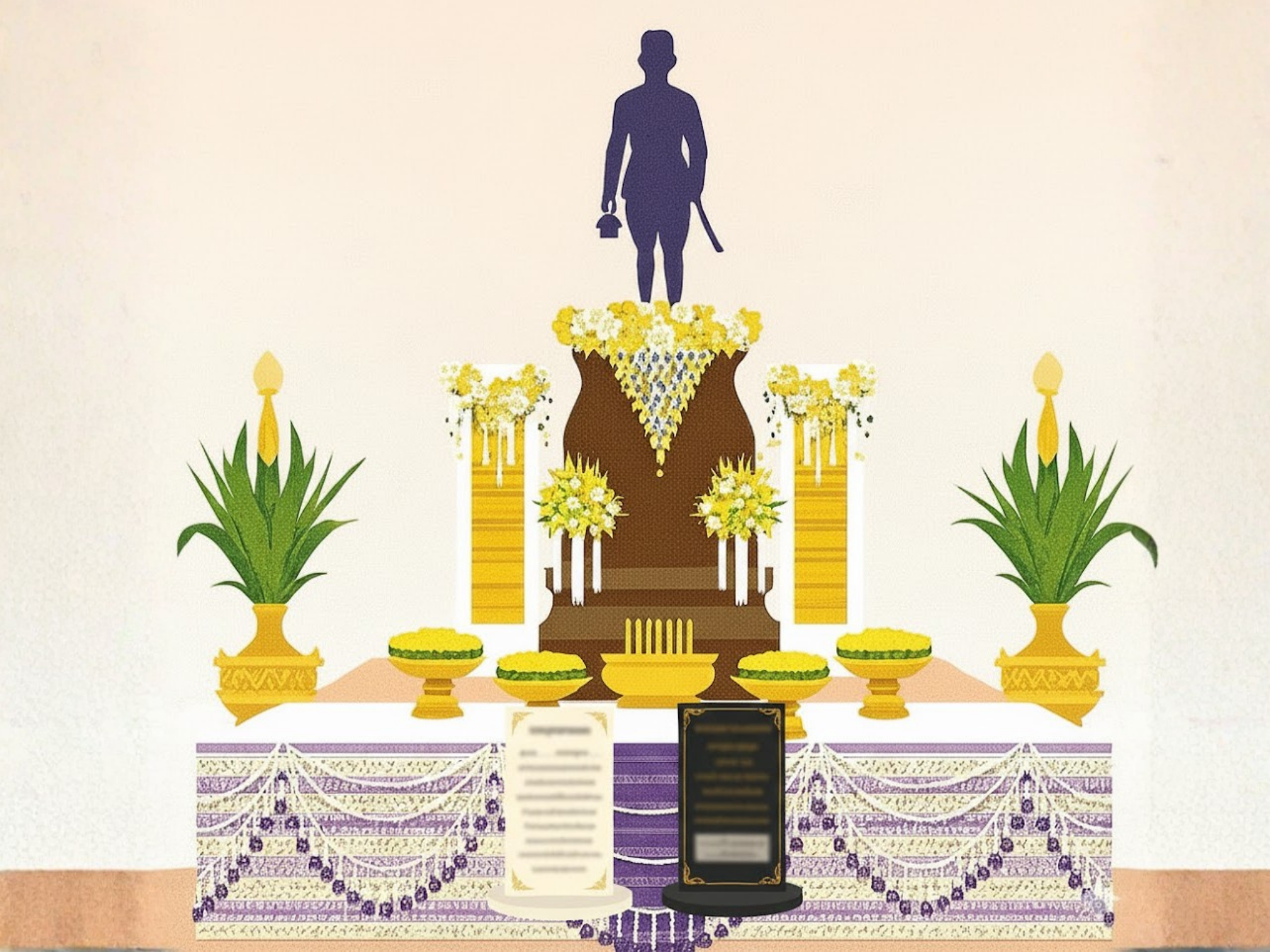
Main Article Content
Abstract
Background and Objectives: The provincial hero worship incantation is a newly emergent literary form that has developed within the past three decades. Characterized by the use of literary language imbued with sacred connotations, it is composed either in Pali, employing formal grammatical structures, or culturally adapted forms within the Thai tradition, including refined Thai verse. The study of such incantations illuminates prevailing belief systems and the cultural roles of Thais. This research aims to analyze provincial hero worship incantations in relation to belief systems and to analyze the roles and functions of provincial hero worship incantations.
Methods: This study employs folkloristic fieldwork methods, including photographic documentation of provincial hero worship plaques and interviews with ritual practitioners responsible for the annual commemoration ceremonies. Data were collected during the period 2023–2025.
Results: The texts display three main structures: 1) invocation of the Triple Gem or other sacred entities, 2) summoning of the heroes’ spirits and praise of heroic deeds, and 3) the offering of ritual items and the seeking of blessings. In the analysis of the relationship between language and ritual as manifested in provincial hero worship incantations, three types of relationships were identified: 1) the connection between Thai national history and provincial heroes, 2) the interaction between supernatural power and humans, and 3) the functional of sacred elements in binding communities. Functionally, the incantations serve both psychological and social purposes. The continued existence of provincial hero worship incantations is attributed to the cultivation of local identity and the cultural value of symbolic kinship affiliation in Thai culture.
Application of this study: This research supports efforts to inscribe provincial hero worship practices as intangible cultural heritage under the domains of social practices, rituals, customs, and festivals. The analysis of provincial hero worship incantations and the ritual functions associated with belief systems may help to reflect shifts in worship practices, revealing a transition from community-based traditions to contexts in which governmental agencies play an increasingly significant role.
Conclusions: The analysis of provincial hero worship incantations enhances understanding of Thai belief systems and their cultural functions, as well as the factors underpinning their continuity. This study serves as a reflection of the forms and characteristics of beliefs concerning supernatural power, which constitute a deeply rooted belief culture in Thai society, with Buddhism functioning as an outer framework that envelops and shapes these beliefs.
Downloads
Article Details

This work is licensed under a Creative Commons Attribution-NonCommercial-NoDerivatives 4.0 International License.
References
Eoseewong, N. (2004). Songkhram Anusawari Kap Rat Thai. Nai Chat Thai Mueang Thai Baep Rian Lae Anusawari Wa Duai Watthanatham, Rat Lae Rup Kan Chit Samnuak. [The War of Monuments and the Thai State. In the Thai Nation, Thai State, Textbooks, and Monuments: On Culture, State, and Forms of Consciousness]. Bangkok: Matichon. (In Thai)
Vithidkul, J. (2020). Mahāyuddhakāravaṃsa: A Pali Version of Rachathirat. Doctoral Dissertation, Ph.D. in Philosophy Program in Thai, Chulalongkorn University, Thailand. (In Thai)
Jiensuwan, S. (2003). An Analytical Study of Tham Khwan Texts and Ritual of the Thai, Phuan and Khmer Ethnic Groups in Changwat Chachoengsao. Master’s thesis, M.A. in Thai Languages, Chulalongkorn University, Thailand. (In Thai)
Lévi-Strauss, C. (1964). The Raw and the Cooked. Weightman J., & Weightman, D. (Trans.). New York: Harper & Row.
Lord, A. B. (1960). The Singer of Tales. Cambridge: Harvard University Press.
Makrudin, S. (2023). Influence of Buddha-Jaya-Mangala Gatha on Thai Society. Mahamakut Graduate School Journal, 21(2), 169-182. (In Thai)
Natsupa, C. (2010). Kan Pen Samai Mai Kap Naokhit Chumchon. [Modernity and the Concept of Community]. Bangkok: Creative Publishing. (In Thai)
Parry, M. (1971). The Making of Homeric Verse: The Collected Papers of Milman Parry. Oxford: Oxford University Press.
Patton, L. L. (2005). Bringing the Gods to Mind: Mantra and Ritual in Early Indian Sacrifice. Berkeley: University of California Press.
Propp, V. (1968). Morphology of The Folktale. Scott, L. (Trans.). 2nd ed. Texas: University of Texas Press.
Roger, M. K., & Felix, M. K. (1971). New Perspectives in Cultural Anthropology. New York: Holt, Rinehart and Winston.
Runra, P. (2004). Sangitiyavansa: Language and Style. Master’s thesis, M.A. in Oriental Languages, Chulalongkorn University, Thailand. (In Thai)
Runra, P. (2019). Phasa Pali Khrueang Prung Taeng Haeng Phasa Wannakam Lae Kathichon Thai. [Pali Language: The Elements of Enrichment in Thai Language, Literature, and Folklore]. Bangkok: Sam Loda Limited Partnership. (In Thai)
Runra, P. (2023). Figure 2 Sacred Invocation to Phraya Chai Sunthorn at Kalasin Province.
Runra, P. (2024). Figure 3 Sacred Invocation to King Taksin the Great at Rayong Province.
Sri-on, S. (2007). Invocation and Epilogue in Pali Literature: Concept, Form, and Language. Master’s thesis, M.A. in Oriental Languages, Chulalongkorn University, Thailand. (In Thai)
Sri-on, S. (2021). Invocations for Buddha images in Amphoe Mueang Ubon Ratchathani. Journal of Thai Studies, 17(1), 121-151.
The Executive Committee for the Celebration in Honour of His Majesty the King. (2001). Watthanatham Phatthakan Thang Prawattisat Ekkalak Lae Phumpanya Changwat Chaiyaphum. [Culture, Historical Development, Identity, and Wisdom of Chaiyaphum Province]. Bangkok: Ministry of Culture. (In Thai)
