
The Development of the Nang Songkran Dance Performance From Cultural Capital to Enhance Values in the Context of Contemporary Thai Society
Article Sidebar
Main Article Content
Abstract
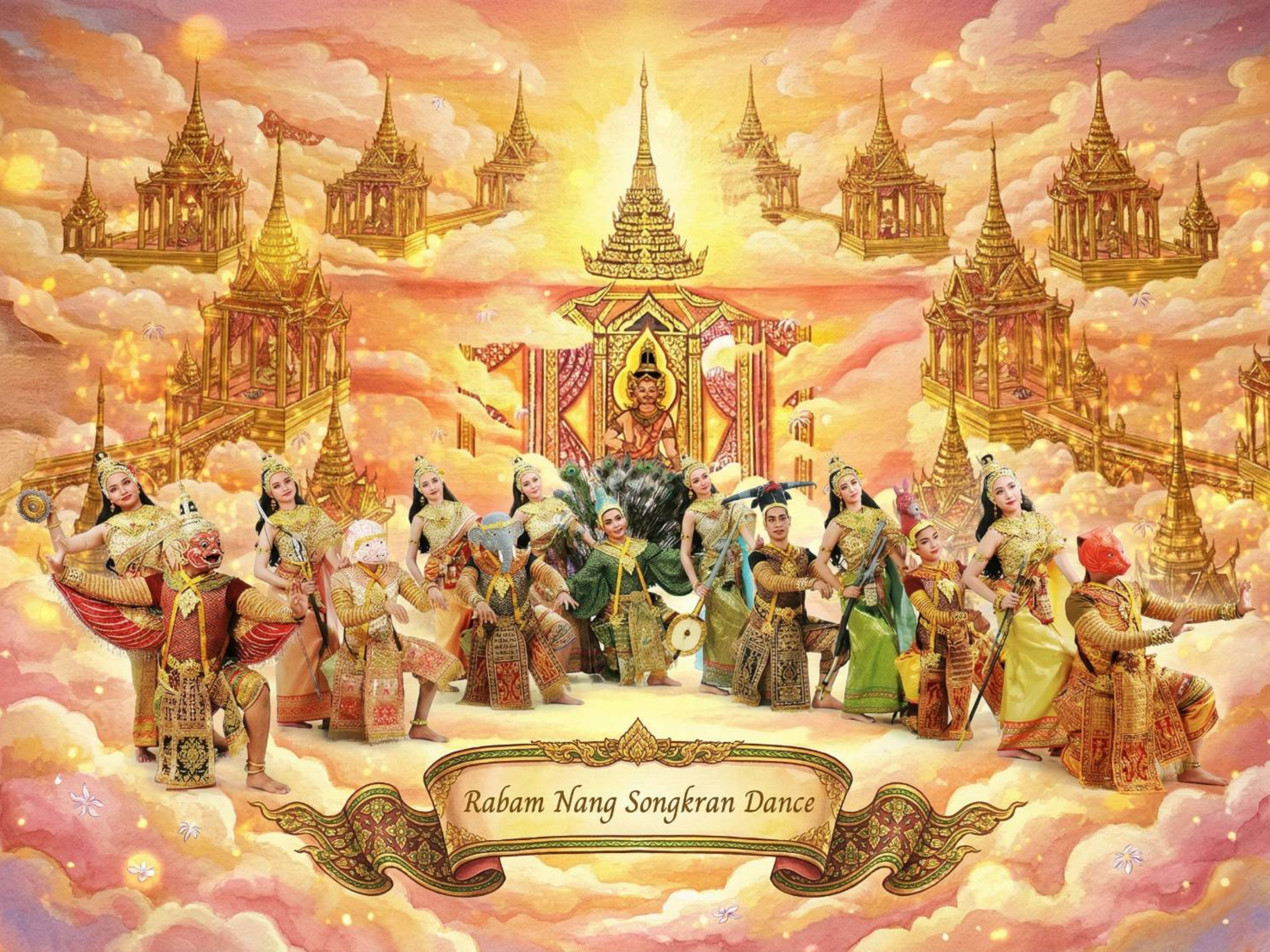
Background and Objectives: The Songkran legend and tradition represent a vital cultural capital of Thailand. However, their profound meanings and moral principles have gradually diminished due to changing social contexts. This research aims to analyze cultural capital, beliefs, and moral values to develop the “Rabam Nang Songkran” dance performance as a cultural medium for preserving identity and promoting the value of Thai performing arts to international and contemporary audiences.
Methods: This research employed a mixed-methods research design. The qualitative research involved document analysis, fieldwork, and in-depth interviews with experts in Thai classical dance and Rabam Nang Songkran performances. Quantitative research was conducted through quality and appropriateness assessments of the developed performance by six Thai performing arts experts, using mean and standard deviation for data analysis.
Results: The evaluation results indicated that the performance quality was at the highest level ( = 4.60, S.D. = 0.52). The study found that the performance structure was redesigned to align with contemporary cultural contexts to enhance audience accessibility while maintaining core cultural capital from the Songkran legend. This integrates beliefs regarding time, cosmology, and the virtue of gratitude. The creative process involved synthesizing eight elements of performing arts: performance format, script, performers, music and lyrics, costumes, props and scenery, lighting techniques, and stage utilization.
Application of this study: This performance serves as an effective cultural medium to transmit traditional wisdom and beliefs to modern audiences. Furthermore, it provides a guideline for leveraging cultural capital to create value-added contributions to the creative economy while preserving the original identity and meaning of the work.
Conclusions: This research demonstrates that the cultural capital embedded in the Songkran legend and tradition can be effectively reinterpreted and transmitted through contemporary performing arts. The development of the Rabam Nang Songkran Dance integrates traditional beliefs, moral values, and cultural knowledge related to time, cosmology, and gratitude within a performance structure that is accessible to contemporary audiences. The findings reflect that performing arts serve not only as a means of cultural preservation but also as an important mechanism for communicating meaning, fostering learning, and connecting younger generations with the cultural foundations of Thai society. The development of the Nang Songkran Dance performance thus serves as an example of applying cultural capital to generate social value and contribute to the creative economy, while preserving the identity and continuity of Thai arts and culture in contemporary and international contexts.
Downloads
Article Details

This work is licensed under a Creative Commons Attribution-NonCommercial-NoDerivatives 4.0 International License.
References
Aneksuk, B., & Panyavuttrakul, W. (2016). Kan Phatthana Rupbaep Lae Phalitphan Thang Kan Thongthiao Nai Changwat Phitsanulok Phuea Rongrap Nakkhongthiao Chao Thai Lae Nakkhongthiao Nai Klum ASEAN [Development of Tourism Formats and Products in Phitsanulok Province to Support Thai Tourists and Tourists in ASEAN]. Phitsanulok: Naresuan University (In Thai)
Auttalo, A. (2019). Analyze the Philosophical Values in the Songkran Festival. Journal of Dhammasuksa Research, 2(2), 8-17. (In Thai)
Boonserm, P. (2022). Developing Local Dance to Promote Ethnic Group Identity in Kanchanburi for the Thai Tourism Industry. Journal of Communication Arts, 40(2), 24-40. (In Thai)
Boontonglek, M., & Others. (2024). Creating Performing Arts to Promote Community Products That Reflects the Local Identity Pathum Thani Province. Journal of Ecohumanism, 3(7), 5218-5229. https://doi.org/10.62754/joe.v3i7.4629
Bourdieu, P. (1986). The Forms of Capital. In J. Richardson (Ed.), Handbook of Theory and Research for the Sociology of Education. New York: Greenwood Press.
Charassri, N. (2007). Narai Avatara, Performing the Thai Ramayana in the Modern World. Bangkok: Amarin. (In Thai)
Chinnalayu, S., & Others. (2022). A Study of Beliefs and Buddhist Doctrine in the Songkran Festival of People in Ban Khok Subdistrict, Ban Khok District, Uttaradit Province, (pp. 206-217), The 3rd National and International Buddhist Conference, January 17, 2026. Nakhon Ratchasims, Thailand. (In Thai)
Cooper, S. (2016). Staging Dance. London: A&C Black (Publishers) Limited.
Khemabhirato, S. (2018). The Valuable Study of Songkran Festival for Community: A Case Study of Ban-Maisukasem, Kong Krailat, Sukhothai. Master’s thesis, M.A. in Arts. Mahachulalongkornrajavidyalaya University, Thailand. (In Thai)
Natayakul, S. (2022). The Creation of Dance. Mahasarakham: Mahasarakham University. (In Thai)
Poonpakdee, N. (2019). The Creation of a Dance from Magic Tricks. Doctoral Dissertation, Ph.D. in Fine and Applied Arts in Common, Chulalongkorn University, Thailand. (In Thai)
Prakobphol, P., & Sungmek, J. (2019). Songkran Festival: Dharma Puzzle of the Legend. Valaya Alongkorn Review (Humanities and Social Science), 9(1), 164-178. (In Thai)
Rittibul, P., & Others. (2024). Creation of Dance According to Beliefs from the Namo Coin Sign. Asian Journal of Arts and Culture. 24(2), e261684(1-16). https://doi.org/10.48048/ajac.2024.261684
Rittibul, P., & Others. (2025a). Nawat Phusa: Promoting Innovation of Natural Banana Fibers Into Product Design to Enhance Cultural Creative Economy Products Through Performing Arts Dimension. Edelweiss Applied Science and Technology, 9(3), 2311-2323. https://doi.org/10.55214/25768484.v9i3.5785
Rittibul, P., & Others. (2025b). Promoting Elderly Health Through Community-Based Cultural Capital Performing Arts Activities. Scientific Culture, 11(3), 273-283.
Rittibul, P., & Others. (2025c). Kan Phatthana Nawattakam Sinlapa Kan Sadang Rabam Nang Songkran [Development of Innovation Performing Arts Rabam Nang Songkran]. Pathum Thani: Faculty of Fine and Applied Arts, Rajamangala University of Technology Thanyaburi. (In Thai)
Saitongkum, J. (2018). The Creative Process of Thai Dramatic Art-Sakkaratwarat Dance. Research and Development Journal Suan Sunandha Rajabhat University, 10(1), 103-117. (In Thai)
Tunthong, K. (2020). The Study of Nhae Ane Lho Bong Rite Identity, Morgan Lifestyle, To Create The Project Through the Performance Aspect. Pathum Thani: Rajamangala University of Technology Thanyaburi. (In Thai)
United Nations Conference on Trade and Development (UNCTAD). (2008). Creative Economy Report 2008. Retrieved 16 December 2025, from http://www.unctad.org/creative-economy.
