สังคหวัตถุ 4 กับการพัฒนาการสื่อสารเพื่อการส่งออกไทยสู่ตลาดโลก
คำสำคัญ:
สังคหวัตถุ 4, การพัฒนาการสื่อสาร, การส่งออกไทยสู่ตลาดโลกบทคัดย่อ
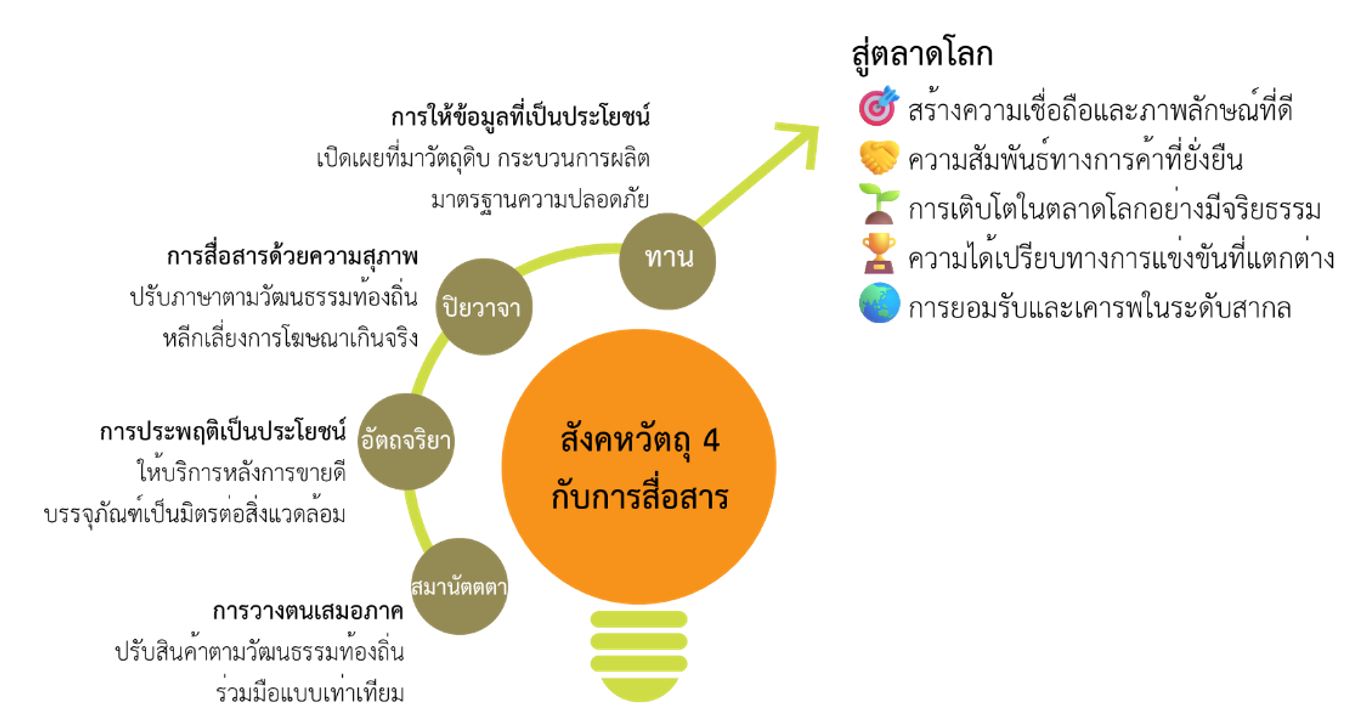
บทความวิชาการนี้มุ่งศึกษาและนำเสนอแนวทางการประยุกต์ใช้หลักธรรมสังคหวัตถุ 4 ได้แก่ ทาน ปิยวาจา อัตถจริยา และสมานัตตตา เพื่อพัฒนารูปแบบการสื่อสารเชิงกลยุทธ์สำหรับการส่งออกสินค้าไทยสู่ตลาดสากล โดยการวิเคราะห์เอกสารและการสังเคราะห์แนวคิดทฤษฎี ผลการศึกษาแสดงให้เห็นว่า การสื่อสารในบริบทการค้าระหว่างประเทศไม่เพียงแต่เป็นกระบวนการถ่ายทอดข้อมูลผลิตภัณฑ์ แต่ยังเป็นกลไกสำคัญในการสร้างความน่าเชื่อถือ ความสัมพันธ์เชิงกลยุทธ์ และอัตลักษณ์ทางการค้าในระดับโลก การประยุกต์ใช้สังคหวัตถุ 4 สามารถนำไปสู่การพัฒนาดิเมนชันการสื่อสารสี่ประการ คือ การให้ข้อมูลอย่างโปร่งใสและเที่ยงธรรม การใช้ภาษาที่เหมาะสมและสร้างสรรค์ การดำเนินการที่สะท้อนความรับผิดชอบต่อสังคม และการแสดงออกซึ่งความเคารพในความหลากหลายทางวัฒนธรรม ซึ่งสอดคล้องกับแนวโน้มการบริโภคแบบมีจริยธรรมและความยั่งยืนของผู้บริโภคในยุคปัจจุบัน การศึกษานี้มีนัยสำคัญในเชิงทฤษฎีและปฏิบัติ โดยแสดงให้เห็นถึงศักยภาพของการบูรณาการหลักธรรมทางพุทธศาสนาเข้ากับยุทธศาสตร์การสื่อสารทางการตลาดระหว่างประเทศ เพื่อสร้างความได้เปรียบเชิงแข่งขันอย่างยั่งยืน
เอกสารอ้างอิง
มหาจุฬาลงกรณราชวิทยาลัย. (2539). พระไตรปิฎกฉบับภาษาไทย ฉบับมหาจุฬาลงกรณราชวิทยาลัย. กรุงเทพฯ: โรงพิมพ์มหาจุฬาลงกรณราชวิทยาลัย.
Adler, R. B. et al. (2018). Understanding Human Communication. New York: Oxford University Press.
Asian Economic Papers. (2017). The Rise and Fall of Thailand's Export-Oriented Industries. MIT Press, 16(3), 128-150.
Berelson, B. & Steiner, G. A. (1964). Human Behavior: An Inventory of Scientific Findings. New York: Harcourt, Brace & World.
Berlo, D. K. (1960). The Process of Communication: An Introduction to Theory and Practice. New York: Holt, Rinehart and Winston.
European Academy for Executive Education. (2020). Cultural Barriers and How to Overcome Them in Your Global Company as A Global Leader. Retrieved April 22, 2025, from https://eurac.com/cultural-barriers-and-how-to-overcome-them-in-your-global-company-as-a-global-leader/
Gudykunst, W. B. & Kim, Y. Y. (2003). Communicating with Strangers: An Approach to Intercultural Communication (4th ed.). New York: McGraw-Hill.
Lobeda, B. (2023). Cross-Cultural Communication: Overcoming Challenges in Global Business. Retrieved April 2, 2025, from https://shorturl.asia/JFOtY
Ma, C. et al. (2025). The Mandarin Advantage: How Thai University Students Are Facilitating Cross-Border E-Commerce for Chinese Tourists in Thailand’s Post-COVID Recovering Hospitality Sector. Retrieved April 22, 2025, from https://shorturl.asia/j3To4
Melkote, S. R. & Steeves, H. L. (2001). Communication for Development in the Third World: Theory and Practice for Empowerment (2nd ed.). New Delhi: SAGE Publications.
Nye, J. S. (2004). Soft Power: The Means to Success in World Politics. New York: Public Affairs.
PwC. (2024). Consumers Willing to Pay 9.7% Sustainability Premium, Even As Cost-of-Living and Inflationary Concerns Weigh: Pwc 2024 Voice of The Consumer Survey. Retrieved March 6, 2025, from https://shorturl.asia/cXlum
Raksong, R. & Muenthaisong, K. (2025). Competitiveness of Thailand Cassava Export: An Empirical Analysis of ASEAN Markets. Research on World Agricultural Economy, 6(2), 379–393.
Schramm, W. (1954). How Communication Works. In W. Schramm (Ed.), The Process and Effects of Mass Communication. (pp. 3–26). Urbana: University of Illinois Press.
Servaes, J. (Ed.) (2008). Communication for Development and Social Change. Thousand Oaks, CA: SAGE Publications.
Thussu, D. K. (2018). International Communication: Continuity and Change (3rd ed.). London: Bloomsbury Publishing.
U.S. Department of Commerce. (2024). Thailand - Market challenges. Country Commercial Guides. Retrieved April 22, 2025, from https://shorturl.asia/ykZ9K
World Bank. (2023). Global Economic Prospects: Weak Growth, High Inflation. Washington, DC: World Bank.
ดาวน์โหลด
เผยแพร่แล้ว
รูปแบบการอ้างอิง
ฉบับ
ประเภทบทความ
หมวดหมู่
สัญญาอนุญาต
ลิขสิทธิ์ (c) 2026 วารสารวิชาการรัฐศาสตร์และรัฐประศาสนศาสตร์

อนุญาตภายใต้เงื่อนไข Creative Commons Attribution-NonCommercial-NoDerivatives 4.0 International License.