IDDHIPADA 4 AND RENEWABLE ENERGY FOR ENVIRONMENTAL CONSERVATION
Keywords:
Iddhipada IV, Renewable Energy, Environmental ConservationAbstract
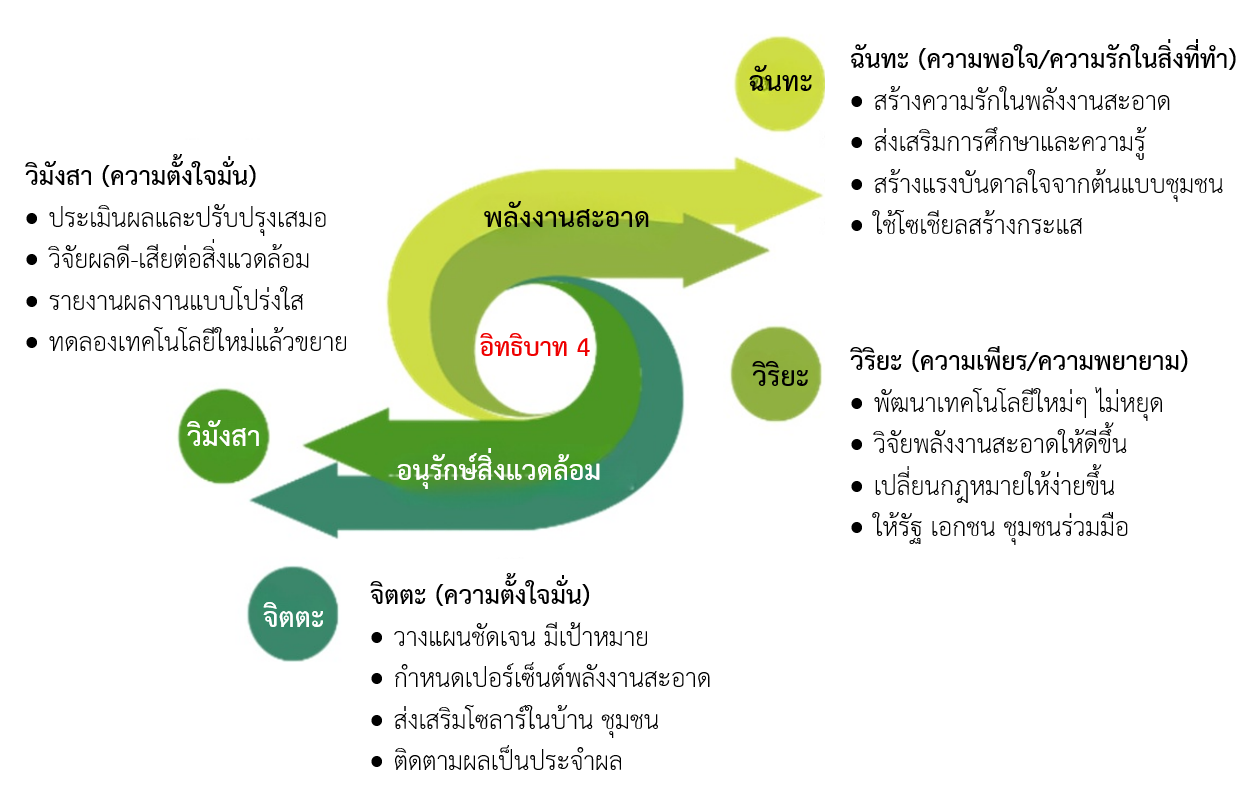
This academic article aimed to explore environmental conservation through the promotion of renewable energy as a key strategy to mitigate the adverse impacts of fossil fuel consumption, including global warming, air pollution, and the degradation of natural resources. However, maximizing the efficiency of renewable energy development required more than technological advancement; it also demanded ethical awareness and collaboration among all sectors. This study presented the application of the Four Iddhipada: Chanda; desire or willingness, Viriya; effort, Citta; concentration, and Vimamsa; investigation, as fundamental Buddhist principle to foster success in any undertaking. These principles were examined for their relevance and applicability in promoting renewable energy at the individual, community, and policy levels. The research employed a qualitative methodology, including document analysis and in-depth interviews with experts in renewable energy, environmental studies, and Buddhist ethics. The findings indicated that the Four Iddhipada can serve as an ethical framework to support the advancement of clean energy in a manner that is consistent with sustainable environmental conservation.
References
คณะกรรมการนโยบายพลังงานแห่งชาติ. (2562). แผนพัฒนาพลังงานทดแทนและพลังงานทางเลือก พ.ศ. 2558-2579. สืบค้น 15 มิถุนายน 2568, จาก https://shorturl.asia/oQ43U
พระพรหมคุณาภรณ์ (ป.อ. ปยุตฺโต). (2549). พระพุทธศาสนาพัฒนาคนและสังคม. กรุงเทพฯ: สหธัมมิก.
มหาจุฬาลงกรณราชวิทยาลัย. (2539). พระไตรปิฎกฉบับภาษาไทย ฉบับมหาจุฬาลงกรณราชวิทยาลัย. กรุงเทพฯ: โรงพิมพ์มหาจุฬาลงกรณราชวิทยาลัย.
รัตติกร โสมสมบัติ. (2563). รูปแบบการส่งเสริมการจัดการเรียนรู้สิ่งแวดล้อมศึกษาเพื่อการพัฒนาอย่างยั่งยืนในสถานศึกษาอาชีวศึกษาเอกชน (วิทยานิพนธ์ศึกษาศาสตรดุษฎีบัณฑิต สาขาวิชาการจัดการศึกษา). กรุงเทพฯ: มหาวิทยาลัยธุรกิจบัณฑิตย์.
อานันท์ กาญจนพันธุ์. (2544). มิติชุมชน : วิธีคิดท้องถิ่นว่าด้วย สิทธิ อำนาจ และการจัดการทรัพยากร. กรุงเทพฯ: สำนักงานกองทุนสนับสนุนการวิจัย.
Attenborough, D. & Hughes, J. (2020). A Life on Our Planet: My Witness Statement and A Vision for The Future. London: Ebury Press.
Ehrlich, P. R. (1968). The Population Bomb. New York, NY: Ballantine Books.International Energy Agency (IEA). (2023). Renewables – Energy System. Retrieved June 15, 2025, from https://www.iea.org/topics/renewables
_____. (2023). World Energy Outlook 2023. Paris: IEA.
Meadows, D. H. et al. (1972). The Limits to Growth. New York: Universe Books.
Tietenberg, T. H. & Lewis, L. (2020). Environmental and Natural Resource Economics (11th ed.). New York, NY: Routledge.
United Nations Environment Programme. (2022). Emissions Gap Report 2022. Nairobi: UNEP.
United Nations. (n.d.). What is Renewable Energy?. Retrieved June 15, 2025, from https://shorturl.asia/h5iRQ
Wilson, E. O. (2016). Half-Earth: Our Planet’s Fight for Life. New York: Liveright Publishing Corporation.
World Commission on Environment and Development. (1987). Our Common Future. Oxford: Oxford University Press.
Downloads
Published
How to Cite
Issue
Section
Categories
License
Copyright (c) 2026 Academic Journal of Political Science and Public Administration

This work is licensed under a Creative Commons Attribution-NonCommercial-NoDerivatives 4.0 International License.