MODEL FOR PROMOTING THE CREATIVE BUDDHISM DISSEMINATION BY THE SUB-DISTRICT PEOPLE'S TRAINING UNIT OF THE SANGHA, PHETCHABURI PROVINCE
Keywords:
Format, Dissemination of Buddhism, Public Training UnitAbstract
Objectives of this research article were: 1. To study status, problems, causes, and obstacles in disseminating Buddhism, 2. To study components of the development of creative dissemination of Buddhism, and 3. To present a model for creative dissemination of Buddhism of the sub-district public training units, conducted by the mixed research methods. The qualitative research, data were collected by interviewing 10 key informants and a workshop for 15 people. The research instrument was an in-depth-interview script. Key informants were purposefully selected, analyzed for content, and summarized and written in a descriptive interpretation.
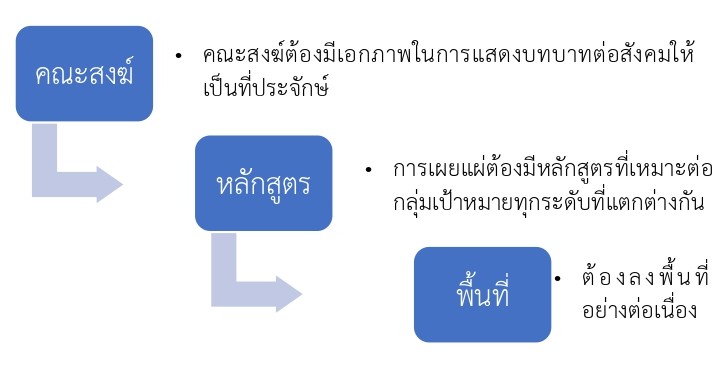
The research results were found that: 1. Status, problems, causes, obstacles; included the Sangha organized the mobile Dharma project in collaboration with the government sector, the Wat,Pracha, Rath Happiness Creating activity. The Five Precepts Observing Village, providing scholarships, and setting up disaster relief units. Problems, causes, and obstacles; Some areas of the Sangha were not working, not responding to the work of the Sangha, changing values, lack of government certification, lack of budget, and duplicating work with the government sector. 2. Components of the development of creative Buddhism dissemination included: 1). Knowledge, promoting higher education for monks and novices. 2. Attitude, creating a unified approach to dissemination to provide advice to Buddhists. 3. Skills, including physical skills, health care, dressing, personality, verbal skills, teaching only beneficial things according to the principles of Buddhism, and mental skills, planning, thinking, and experience. 4. Habits and personalities of the disseminators must be responsible for themselves and the group. 3. Formats of creative Buddhism dissemination included: 1. Senders, monks who will perform the role of disseminators must have studied correctly both in Dhamma and worldly matters. 2. Message, the preachers must apply to the receivers according to their type, such as children, adults, and government officials. 3. The media or communication channels must be factual to improve and develop the dissemination. 4. Receivers of the message must be divided into groups: the elderly, youth, the public, and government officials to be classified into appropriate group of receivers communicateted.
References
พระครูธีรนันทสิทธิ์ (ธีรปญฺโญ (มีผดุง)) และคณะ. (2567). พลวัตการขับเคลื่อนหน่วยอบรมประชาชนประจำตำบลอำเภอนาน้อย จังหวัดน่าน. วารสาร มจร พุทธศาสตร์ปริทรรศน์, 8(1), 68-80.
พระครูสวัสดิ์กาญจโนภาส (ทัตพล แผลงปาน). (2567). การขับเคลื่อนหน่วยอบรมประชาชนประจำตำบล สู่การสร้างนวัตกรรมชุมชนต้นแบบวิถีพุทธ ในเขตการปกครองคณะสงฆ์ จังหวัดกาญจนบุรี. Journal of Roi Kaensarn Academi, 9(12), 1644-1657.
พระครูสังฆรักษ์สุเทพ สุเทโว (ชูชีพ) และคณะ. (2567). ประสิทธิภาพการบริหารจัดการของหน่วยอบรมประชาชนประจำตำบลคลองข่อย อำเภอโพธาราม จังหวัดราชบุรี. วารสารบวรสหการศึกษาและมนุษยสังคมศาสตร์, 5(3), 109-222.
พระวิสุทธิวรกิจ และคณะ. (2563). หน่วยอบรมประชาชนประจำตำบล (อ.ป.ต.) : แนวคิด ปัญหา แนวทางแก้ไขและเทคนิคการแสดงบทบาทต่อสังคมของพระสงฆ์เชิงรุก. การประชุมวิชาการระดับชาติ ครั้งที่ 3 (The 3 rd National Conference MCU.RK.2020) (หน้า 1). นครปฐม: วิทยาลัยสงฆ์พุทธปัญญาศรีทวารวดี มหาวิทยาลัยมหาจุฬาลงกรณราชวิทยาลัย.
พระสุธีรัตนบัณฑิต อบอุ่น และคณะ. (2563). นวัตกรรมและเครือข่ายทางสังคมจากการดำเนินงานหน่วยอบรมประชาชนประจำตำบลของคณะสงฆ์ไทย. วารสาร มจร การพัฒนาสังคม, 5(3), 1-10.
พรั่ง เจนนธี. (2546). คู่มือการปฏิบัติงานหน่วย อ.ป.ต. กรุงเทพฯ: สำนักงานพระพุทธศาสนา.
ระเบียบมหาเถรสมาคมว่าด้วยการตั้งหน่วยอบรมประชาชนประจำตำบล พ.ศ. 2546. (2546, 1 กันยายน). สืบค้น 27 ตุลาคม 2567, จาก https://shorturl.asia/pCJxb
เสถียรพงศ์ วรรณะปก. (2540). พุทธวิธีสอนจากพระไตรปิฎก. กรุงเทพฯ: เพชรรุ่งการพิมพ์จำกัด.
Downloads
Published
How to Cite
Issue
Section
Categories
License
Copyright (c) 2025 Academic Journal of Political Science and Public Administration

This work is licensed under a Creative Commons Attribution-NonCommercial-NoDerivatives 4.0 International License.