WATER MANAGEMENT FOR SUSTAINABLE COMMUNITIES IN CHIANG MAI PROVINCE
Keywords:
Water Management, Sustainable Community, Chiang Mai ProvinceAbstract
Objectives of this research article were: 1. To Study water management for sustainable communities in Chiang Mai Province. 2. To examine factors influencing water management for sustainable communities in Chiang Mai Province. 3. To propose guidelines for water management for sustainable communities in Chiang Mai Province, conducted by qualitative research. The key informants consisted of personnel from government agencies, private-sector organizations, and civil society, as well as experts and academics involved in water management. A total of 30 individuals participated in the research. Data was collected through document analysis, in-depth interviews, and focus group discussions. The data were analyzed using descriptive methods and a continuous, concurrent analysis process.
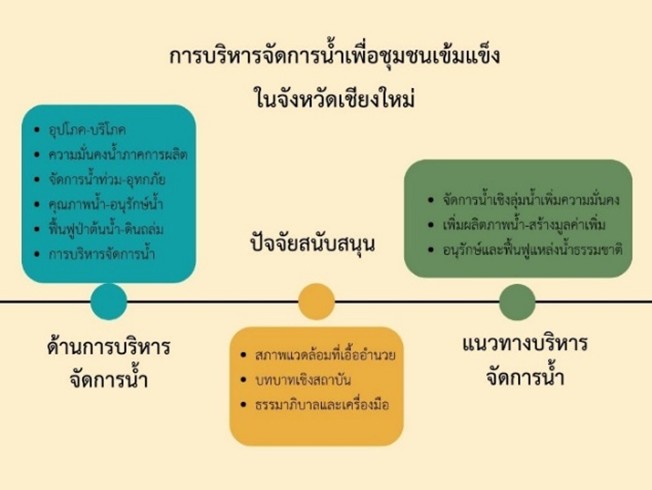
The research findings found that water management for sustainable communities in Chiang Mai Province involved six key areas. 1. Management of water for domestic use and consumption. 2. Ensuring water security for the production sector. 3. Flood and disaster water management. 4. Water quality management and conservation of water resources. 5. Conservation and rehabilitation of degraded watershed forests and prevention of soil erosion. 6. General water management. Factors contributing to effective water management for sustainable communities in Chiang Mai included 1. A supportive environmental context. 2. Institutional roles and participation. 3. Governance issues and management tools, which served as components and mechanisms that enabled decision-makers to make informed choices in managing water resources. The proposed approach to water management for sustainable communities in Chiang Mai was the development of integrated, watershed-based water management. This aims to enhance water security, improve overall water productivity through efficient and value-driven use, and ensure equitable value from water utilization. It also included conserving and restoring rivers, canals, and natural water sources through effective water quality management and the conservation or rehabilitation of waterways.
References
ชลธร ทิพย์สุวรรณ. (2558). ปัจจัยที่นำไปสู่การบริหารจัดการทรัพยากรน้ำแบบบูรณาการลุ่มน้ำสาขาแม่ริม จังหวัดเชียงใหม่. วารสารสังคมศาสตร์วิชาการ, 8(1), 1-10.
ฐกร กาญจน์จิรเดช และคณะ (2561). รูปแบบการมีส่วนร่วมของชุมชนในการบริหารจัดการน้ำอย่างยั่งยืนของจังหวัดอุทัยธานีตามแนวปรัชญาเศรษฐกิจพอเพียง. วารสารสันติศึกษาปริทรรศน์ มจร, 6(2), 537-552.
เดชดำรงค์ ล่องลอย และจักรวาล สุขไมตรี. (2568). การบริหารจัดการน้ำเสียในเขตองค์กรปกครองส่วนท้องถิ่นในประเทศไทย. วารสารสหศาสตร์การพัฒนาสังคม, 3(2), 58-71.
ปราโมทย์ ไม้กลัด. (2555). การทรงงานของพ่อในความทรงจำ. กรุงเทพฯ: สมาคมสงเคราะห์สัตว์ ในพระบรมราชูปถัมภ์.
เปี่ยมจันทร์ ดวงมณี และคณะ. (2564). เปรียบเทียบองค์กรการบริหารจัดการน้ำ. (รายงานผลการวิจัย). กรุงเทพฯ: สำนักงานการวิจัยแห่งชาติ.
ภัทรพร คุนาพงษ์กิติ และคณะ (2565). การส่งเสริมกระบวนการบริหารจัดการทรัพยากรน้ำชุมชนโดยการมีส่วนร่วมกับประชาชน ในตำบลโยธะกา อำเภอบางน้ำเปรี้ยว จังหวัดฉะเชิงเทรา. ใน การประชุมหาดใหญ่วิชาการระดับชาติและนานาชาติ ครั้งที่ 13. สงขลา: มหาวิทยาลัยหาดใหญ่
มูลนิธิอุทกพัฒน์ ในพระบรมราชูปถัมภ์. (2557). การจัดการทรัพยากรน้ำชุมชนตามแนวพระราชดำริ. กรุงเทพฯ: สำนักงานทรัพย์สินส่วนพระมหากษัตริย์.
ศูนย์อุทกวิทยาชลประทานภาคเหนือตอนบน. (2567). รายงานระดับน้ำศูนย์อุทกวิทยาชลประทานภาคเหนือตอนบน ตุลาคม พ.ศ.2567. สืบค้น 25 เมษายน 2568, จาก https://www.hydro-1.net
สมหวัง โชติการ. (2566). การบริหารจัดการด้านสิ่งแวดล้อมเพื่อการบำบัดน้ำในคลองแม่ข่า อำเภอเมือง จังหวัดเชียงใหม่ (ดุษฎีนิพนธ์ปริญญาปรัชญาดุษฎีบัณฑิต สาขาวิชารัฐประศาสนศาสตร์). ปทุมธานี: มหาวิทยาลัยเวสเทิร์น.
สมัชชาสุขภาพแห่งชาติ. (2561). การส่งเสริมความเข้มแข็งกลไกการบริหารจัดการน้ำเชิงพื้นที่ (รายงานผลการวิจัย). นนทบุรี: สมัชชาสุขภาพแห่งชาติ สำนักงานคณะกรรมการสุขภาพแห่งชาติ.
สำนักงานชลประทานที่ 1 กรมชลประทาน. (2562). การบริหารจัดการน้ำ โครงการชลประทานขนาดกลางในเขตความรับผิดชอบ. กรุงเทพฯ: กรมชลประทาน.
อรัญญา ภูโคกค้อย และวิษณุ สุมิตสวรรค์. (2562). การบริหารจัดการน้ำอย่างยั่งยืนขององค์กรปกครองส่วนท้องถิ่น กรณีศึกษาเทศบาลตำบลบ้านโต้น อำเภอพระยืน จังหวัดขอนแก่น. วารสารมหาจุฬานาครทรรศน์, 6(10), 5067-5078.
Global Water Partnership. (2020). What is Integrated Water Resources Management (IWRM). Retrieved June 25, 2025, from https://www.gwp.org/en/gwp-cee/about/why/what-is-iwrm
Downloads
Published
How to Cite
Issue
Section
Categories
License
Copyright (c) 2025 Academic Journal of Political Science and Public Administration

This work is licensed under a Creative Commons Attribution-NonCommercial-NoDerivatives 4.0 International License.