TOURISM MANAGEMENT: A CASE STUDY OF BA NA HILLS, VIETNAM
Keywords:
Management, Tourism, PolicyAbstract
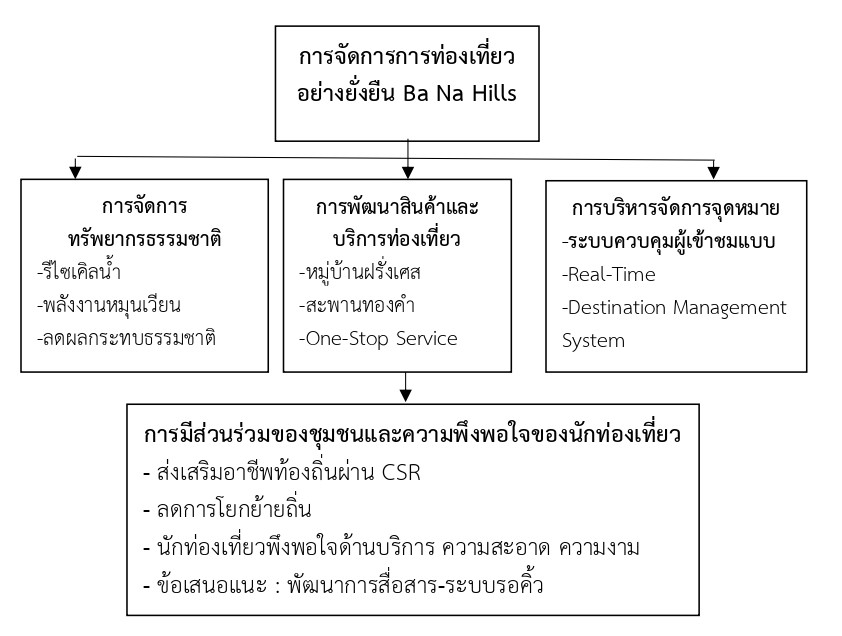
This article examined the tourism management of Ba Na Hills in Vietnam, with a focus on integrating the concept of sustainable development into the management of natural resources, the development of tourism products and services, destination planning, the promotion of local community participation, and tourist satisfaction evaluation. The case study revealed that careful utilization of mountainous areas with rich biodiversity-by limiting development zones and applying technologies such as cable car systems and water recycling-played a significant role in conserving ecosystems. This was complemented by the development of unique tourist attractions, such as the French Village and the Golden Bridge, which helped attract international visitors. In terms of management, Ba Na Hills employed an effective Destination Management system, which included real-time online visitor control and the design of circular tourism routes to promote a seamless and uncrowded visitor experience. Notably, local community participation was encouraged through employment opportunities, support for small-scale entrepreneurs, and capacity-building projects such as training and scholarship programs. These policies have led to an increase in average household income and a reduction in youth migration. challenges remain in balancing conservation with commercial development. It was recommended that mechanisms for greater community involvement in decision-making be established and that community-based economic development be enhanced to build resilience against crises. Tourist feedback from 2024 indicated high satisfaction with cleanliness, services, and the scenic beauty of the area, although there were suggestions for improvement in queue management and multilingual communication. In conclusion, Ba Na Hills represented a successful model of integrating effective management with sustainable development across environmental, social, and economic dimensions, serving as a potential model for tourism site management in Vietnam and the ASEAN region in the future.
References
การท่องเที่ยวแห่งประเทศไทย (ททท.). (2566). Bà Nà Hills: แหล่งท่องเที่ยวบนยอดเขาแห่งเมืองดานัง. สืบค้น 20 พฤษภาคม 2568, จาก https://www.thai.tourismthailand.org/
ผู้จัดการออนไลน์. (2566). “บานาฮิลล์” สวรรค์บนดินแห่งเวียดนามกลาง. สืบค้น 20 พฤษภาคม 2568, https://mgronline.com
กรุงเทพธุรกิจ. (2567). สัมผัสหมอกและหมู่บ้านยุโรปที่บานาฮิลล์ เวียดนาม. สืบค้น 20 พฤษภาคม 2568, https://www.bangkokbiznews.com
Falcon's Creative Group. (n.d.). Bà Nà Hills French Village: A Case Study. Retrieved May 20, 2025, from https://falconscreativegroup.com/ba-na-hills-french-village-a-case-study/
Nguyen, T. T. (2024). Evaluate tourism destinations in Vietnam: A case study of Ba Na tourist area, Da Nang city. Journal of Infrastructure, Policy and Development, 8(13), 7972. https://doi.org/10.24294/jipd7972
UNWTO. (2021). Tourism for Sustainable Development Goals – Journey to 2030. Madrid: World Tourism Organization.
UNWTO. (2022). Managing Sustainable Tourism Destinations: Operational Guidelines and Toolkit. Retrieved May 20, 2025, from https://www.unwto.org
Vietnam National Administration of Tourism. (2023). Annual Tourism Report: Vietnam Tourism Development in Central Region. Hanoi: VNAT.
GSTC. (2020). GSTC Standards Overview. Retrieved May 20, 2025, from https://www.gstc.org/gstc-criteria/
Downloads
Published
How to Cite
Issue
Section
Categories
License
Copyright (c) 2025 Academic Journal of Political Science and Public Administration

This work is licensed under a Creative Commons Attribution-NonCommercial-NoDerivatives 4.0 International License.