APPROACHES FOR SUSTAINABLE TOURISM: LESSONS FROM STAKEHOLDERS IN BUENG KAN PROVINCE
Keywords:
Approach, Sustainable Tourism, Stakeholder, Bueng Kan ProvinceAbstract
Research article aimed to offer recommendations for safety and service standards in tourism that influence the efficacy of tourism management in Bueng Kan Province. The qualitative data analysis employed content analysis derived from interviews with 12 key informants, Purposive Sampling including government organizations, community or religious leaders, tourism operators, residents, and tourists.
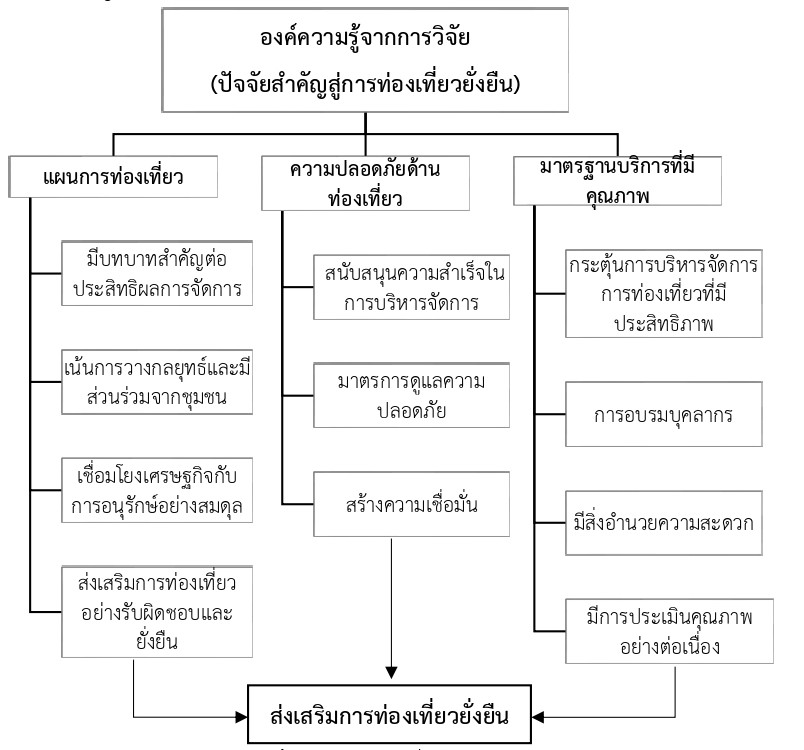
The study findings suggested that a tourism plan must include the cultivation of the province's cultural and natural identity in conjunction with the improvements to infrastructure and transportation systems, as well as the integration of digital technology. The researchers identified that establishing a safety command center, developing advanced alarm systems, personnel training, the promotion of cleanliness practices, and preparing for natural disasters were critical components in enhancing tourists' confidence regarding safety. Enhancing service quality across all dimensions, including accommodation, dining, tourist attractions, and transportation networks, were essential for fostering tourist satisfaction. The utilization of technology, including online reservation systems and intelligent location recommendation platforms, could substantially improve the travel experience. Simultaneously, cultivating human competencies in languages, regional expertise, and crafting services to accommodate all visitor demographics were strategies that bolstered credibility and established the province’s reputation as a premier tourist destination.
References
กระทรวงการท่องเที่ยวและกีฬา. (2565). กระทรวงการท่องเที่ยวและกีฬาแผนปฏิบัติราชการรายปี 2565. กรุงเทพฯ: กระทรวงการท่องเที่ยวและกีฬา.
วรรณพร วาณิชชานุการ. (2540). การท่องเที่ยว : การขยายตัวและผลกระทบทางเศรษฐกิจ. กรุงเทพฯ: สำนักพิมพ์การท่องเที่ยวแห่งประเทศไทย.
ศุภกร เสรีรัตน์. (2543). การตลาดเชิงกลยุทธ์. กรุงเทพฯ: สำนักพิมพ์แห่งจุฬาลงกรณ์มหาวิทยาลัย.
สันติชัย เอื้อจงประสิทธิ์. (2549). นโยบายและกลยุทธ์ในการส่งเสริมการท่องเที่ยวของประเทศไทย. กรุงเทพฯ: สำนักพิมพ์วิชาการท่องเที่ยว.
Anderson, B. (2017). Communities: Reflections on the Origin and Spread of Nationalism. London: Verso Books.
Dunn, W. N. (1994). Public policy analysis: An introduction. Upper Saddle River, NJ: Prentice Hall.
Intipeek, K. et al. (2025). Digital Marketing Strategies for Thai Tourism Entrepreneurs. Chiang Mai Rajabhat University Press. Thailand.
Johnson, R. (2019). Small Business Challenges in Tourism Standardization. Philippine Tourism Studies. Philippines.
Krungsri Research. (2024). Sustainable Tourism: Thailand's Environmental Challenges. Krungsri Report. Thailand.
SornSri, S. et al. (2020). Service Quality for Senior Tourists. EUrASEANs Journal.
Steers, R. M., Ungson, G. R., & Mowday, R. T. (1985). Managing organizations: A global perspective. New York, NY: Harper & Row. United States.
Sunthararaks, P. (2025). Health Tourism in Northeastern Thailand. TEATA Research Publication. Thailand.
Tourism Authority of Thailand. (2024). Tourist Safety Expectations in Bangkok. Journal of Thai Hospitality and Tourism. Thailand.
Yimin, T. (2025). Rail Tourism and Low Carbon Solutions. Ramkhamhaeng University Press. Thailand.
Downloads
Published
How to Cite
Issue
Section
Categories
License
Copyright (c) 2025 Academic Journal of Political Science and Public Administration

This work is licensed under a Creative Commons Attribution-NonCommercial-NoDerivatives 4.0 International License.