GRASSROOTS ECONOMY DEVELOPMENT THROUGH AGRO-TOURISM BASED ON LOCAL WISDOM OF BANNA SUB-DISTRICT, BANNA DISTRICT, NAKHON NAYOK PROVINCE
Keywords:
Grassroots Economic Development, Local Wisdom, Agro-Tourism, Nakhon Nayok ProvinceAbstract
Objectives of this research article were: 1. To examine the significance of local wisdom in grassroots economic development through agrotourism, and 2. To propose development guidelines for grassroots economies driven by local wisdom-based agrotourism. The study adopted mixed-methods research design, combining quantitative and qualitative approaches. The quantitative research and data were collected through questionnaires from 362 samples who were residents in Ban Na Sub-District, selected using stratified random sampling based on proportional allocation. The questionnaire’s reliability was confirmed with Cronbach’s alpha coefficient of 0.812. Statistical analysis included frequency, percentage, mean and standard deviation. The qualitative research, data were gathered from 30 key informants, purposefully selected through in-depth, semi-structured interviews, and analyzed using interpretive content analysis.
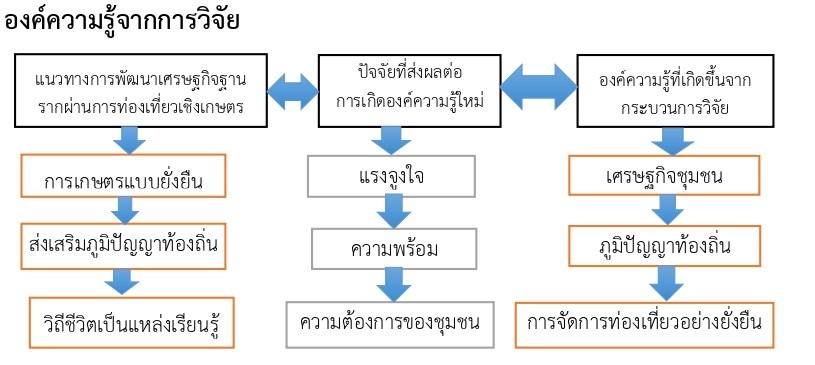
The findings revealed that: 1. The significance of local wisdom in grassroots economic development through agrotourism comprised local identity, the intergenerational transmission of knowledge, and integrated farming systems, and 2. Development through local wisdom-based agrotourism supported the enhancement of community self-reliance, encouraged financial discipline among low-income populations, and promoted the application of the Sufficiency Economy Philosophy for sustainable debt management. Local wisdom-based agrotourism encompassed four core dimensions: agricultural tourism resources; agrotourism services; agrotourism activities; and the integration of indigenous knowledge into tourism practices. The proposed development guidelines emphasized local agricultural knowledge, cultural identity, and the traditional ways of life of local farmers, which contributed to long-term community collaboration and sustainable development.
References
กอบกุลณ์ คำปลอด และทศพล พงษ์ต๊ะ. (2565). การวิเคราะห์ศักยภาพชุมชนเพื่อสร้างนวัตกรรมการพัฒนาเศรษฐกิจฐานรากของชุมชนในอำเภอป่าแดด จังหวัดเชียงราย. วารสารสังคมศาสตร์วิชาการ, 15(1), 1-16.
เบญจวรรณ นัยนิตย์ และคณะ. (2568). ศักยภาพและโอกาสในการพัฒนาการท่องเที่ยวเชิงเกษตรในพื้นที่ชุมชนหนองกุงศรี. วารสารสังคมศาสตร์ปัญญาพัฒน์, 7(1), 177-186.
ภูริชญ์ อุ่นบ้าน. (2564). การพัฒนาผู้ประกอบการและเศรษฐกิจชุมชน. วารสารนวัตกรรมการจัดการภาครัฐและภาคเอกชน คณะรัฐศาสตร์ มหาวิทยาลัยรามคำแหง, 9(1), 93-104.
วงศ์ระวิทย์ น้อมนำทรัพย์. (2565). การพัฒนาเส้นทางการท่องเที่ยวโดยชุมชนเชิงสร้างสรรค์บนฐานภูมิปัญญาช่างศิลป์จังหวัดนครปฐม. วารสารศิลปะศาสตร์ราชมงคลสุวรรณภูมิ, 4(3), 443-456.
สำนักงานเกษตรจังหวัดนครนายก. (2566). รายงานสถานการณ์การเกษตรจังหวัดนครนายก ปีงบประมาณ 2566. นครนายก: สำนักงานเกษตรจังหวัด.
สำนักงานพัฒนาชุมชนจังหวัดนครนายก. (2566). แผนพัฒนาการท่องเที่ยวโดยชุมชนจังหวัดนครนายก. นครนายก: สำนักงานพัฒนาชุมชนจังหวัดนครนายก.
สำนักงานสภาพัฒนาการเศรษฐกิจและสังคมแห่งชาติ. (2565). รายงานสถานการณ์ความยากจนและความเหลื่อมล้ำของประเทศไทย ปี 2565. กรุงเทพฯ: สศช.
อัจฉราวรรณ สุขเกิด. (2568). แนวทางการพัฒนาเป็นเส้นทางการท่องเที่ยวเชิงเกษตร อำเภอเมือง จังหวัดอุทัยธานี. วารสารวิทยาการจัดการ มหาวิทยาลัยราชภัฏสกลนคร, 5(1), 161-171.
อิสริยา ดวงดี และลินจง โพชารี. (2567). แนวทางการพัฒนาการท่องเที่ยวเชิงเกษตรอย่างยั่งยืน บ้านผารังหมี อำเภอเนินมะปราง จังหวัดพิษณุโลก. วารสารมหาวิทยาลัยราชภัฏมหาสารคาม, 18(2), 285-295.
Downloads
Published
How to Cite
Issue
Section
Categories
License
Copyright (c) 2026 Academic Journal of Political Science and Public Administration

This work is licensed under a Creative Commons Attribution-NonCommercial-NoDerivatives 4.0 International License.