GUIDELINES FOR PROMOTING CORRUPTION PREVENTION IN ORGANIZATIONS WITH PERSONNEL PARTICIPATION
Keywords:
Human Resource Management, Participation, Corruption Prevention, TransparencyAbstract
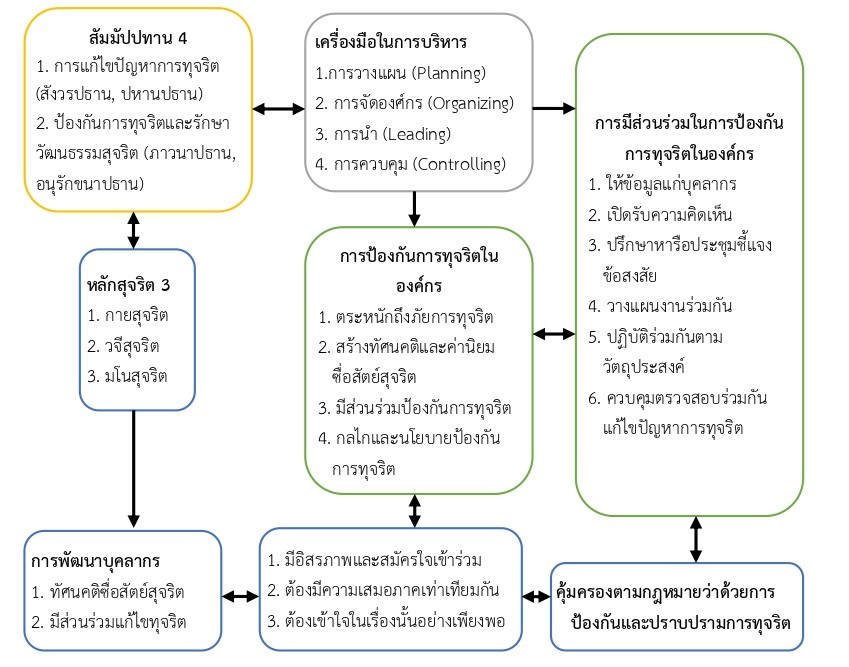
This academic article aimed to study the approach to promote corruption prevention in organizations, consisting of 4 issues: 1. Promoting personnel to learn and be aware of the dangers of corruption, 2. Promoting attitudes and values about honesty and integrity, 3. Developing personnel by promoting and supporting their participation in corruption prevention in both public and private sectors, and 4. Operations and mechanisms for operations to respond to corruption prevention policies. This is to promote personnel in the organization to play a role and participate in the organization's management in preventing corruption, which is the development of human resources that leads to solving corruption problems effectively, keeping up with changes in the economy, politics, society, and technology at present. This academic article will be useful in creating personnel participation and giving personnel an opportunity to participate in decision-making on policies, projects, or activities that affect personnel in each organization in order to create attitudes and values against corruption to create transparency by embedding Buddhist principles, promoting morality and ethics in the minds of personnel, along with monitoring and evaluating results according to the project or activity plan to create awareness and jointly prevent corruption more effectively.
References
เกียรติขจร วัจนะสวัสดิ์. (2550). การมีส่วนร่วมของประชาชนต่อการดำเนินนโยบายของรัฐบาลด้านการบริการจัดหางาน. กรุงเทพฯ: กองแผนงานและสารสนเทศ กรมการจัดหางาน กระทรวงแรงงาน.
เฉลิมรัก สดไสย. (2562). การบริหารงานบุคคล. สืบค้น 17 มิถุนายน 2568, จาก http://www.local.moi.go.th/newweb2019/web/assets/uploads/book/document/20211222_66937.pdf
ถวิลวดี บุรีกุล. (2552). พลวัตรการมีส่วนร่วมของประชาชน : จากอดีตจนถึงรัฐธรรมนูญแห่งราชอาณาจักรไทย พุทธศักราช 2550. กรุงเทพฯ: บริษัท เอ.พี.กราฟิค ดีไซน์และการพิมพ์ จำกัด.
บวรศักดิ์ อุวรรณโณ และถวิลวดี บุรีกุล. (2548). ประชาธิปไตยแบบมีส่วนร่วม (Participatory Democracy). กรุงเทพฯ: สถาบันพระปกเกล้า.
บูรชัย ศิริมหาสาคร. (2540). กลั่นสามก๊กฉบับนักบริหาร. กรุงเทพฯ: แสงดาว.
พระพรหมคุณาภรณ์ (ป.อ. ปยุตฺโต). (2554). พจนานุกรมพุทธศาสตร์ ฉบับประมวลธรรม (พิมพ์ครั้งที่ 34). นนทบุรี: เอส.อาร์ พริ้นติ้ง แมสโปรดักส์.
พระมหาหรรษา ธมฺมหาโส. (2557). สุจริตธรรมในฐานะเครื่องมือป้องกันการทุจริตคอร์รัปชันในสังคมไทยปัจจุบัน. สืบค้น 17 มิถุนายน 2568, จาก https://www.mcu.ac.th/article/detail/439
มหาเถรสมาคม. (2564). หลักธรรมคำสอนในพระพุทธศาสนากับหลักสูตรต้านทุจริตศึกษา (Anti – Corruption Education). นนทบุรี: สำนักงานคณะกรรมการป้องกันและปราบปรามการทุจริตแห่งชาติ
มัณฑรา ธรรมบุศย์. (2550). 10 สิ่งที่ผู้นำควรรู้และควรทำ. วารสารวิทยาจารย์, 3(106), 12-15.
วันชัย วัฒนศัพท์ และคณะ. (2551). คู่มือการมีส่วนร่วมของประชาชน การตัดสินใจที่ดีกว่าโดยให้ชุมชนมีส่วนร่วม. ขอนแก่น: โรงพิมพ์ศิริภัณฑ์ ออฟเซ็ท.
สมพงษ์ เกษมสิน. (2556). การบริหารงานบุคคลแผนใหม่. กรุงเทพฯ: ไทยวัฒนาพานิช.
สำนักข่าวอิศรา. (2568). 9 สถาบันต่างชาติ สะท้อนปัญหาทุจริตไทย. สืบค้น 17 มิถุนายน 2568, จาก https://www.isranews.org/article/isranews-scoop/138816
สำนักงานคณะกรรมการพัฒนาการเศรษฐกิจและสังคมแห่งชาติ. (2559). แผนพัฒนาเศรษฐกิจและสังคมแห่งชาติฉบับที่สิบสอง พ.ศ. 2560 - 2564. กรุงเทพฯ: สำนักนายกรัฐมนตรี.
สุภัทรา เอื้อวงศ์ และคณะ. (2557). ปัจจัยที่มีผลต่อความสำเร็จของการประกันคุณภาพการศึกษา ระดับคณะวิชา มหาวิทยาลัยสยาม. ใน ประชุมวิชาการระดับชาติ สมาคมสถาบันอุดมศึกษาเอกชน ประจำปี 2557. กรุงเทพฯ: สมาคมสถาบันอุดมศึกษาเอกชนแห่งประเทศไทย (สสอท.)
เสนาะ ติเยาว์. (2551). หลักการบริหาร. กรุงเทพฯ: โรงพิมพ์มหาวิทยาลัยธรรมศาสตร์.
อรุณรุ่ง เอื้ออารีสุขสกุล. (2558). การบริหารจัดการคนเก่งเชิงกลยุทธ์: ปัจจัยสำคัญสู่ความได้เปรียบทางการแข่งขันอย่างยั่งยืน. วารสารสาขามนุษยศาสตร์ สังคมศาสตร์ และศิลปะ มหาวิทยาลัยศิลปากร, 8(3), 1096-1112.
Berger, A.L. & Berger, R.D. (2004). The Talent Management Handbook: Creating Organization Excellence by Identifying Developing and Promoting Your Best People. New York: McGraw-Hill.
Dessler, G. (2004). A framework for human resource management. New Jersey: Pearson Education.
Jackson, S, E., et. al. (2012). Human resource management. OH: South - Western / Cengage Learning.
Johnston, M. (1998). Fighting Systemic Corruption: Social Foundations for Institutional Reform. The European Journal of Development Research, 10(1), 85-104.
Likert, R. (1961). New Patterns of Management. New York: McGraw-Hil.
Michaels, E. & Axelrod, B. (2001). The War for Talent. Massachusetts: Harvard Business School Press.
Raymond, N. A. et al. (2003). Human resource management: gaining a Competitive Advantage. River, New Jersey: Pearson Education.
Swansburg, R. C. (1996). Management and Leadership for Nurse Manager (2nd Ed.). Boston: Boston Jones and Bartlett Publishers.
William, A. P. (1978). Participative Management. Massachusetts: Addison-Wesley.
Downloads
Published
How to Cite
Issue
Section
Categories
License
Copyright (c) 2026 Academic Journal of Political Science and Public Administration

This work is licensed under a Creative Commons Attribution-NonCommercial-NoDerivatives 4.0 International License.