FACTORS AFFECTING GENERATION Z YOUTH'S EXPECTATIONS ON THE PERFORMANCE OF DUTIES OF THE NATIONAL HUMAN RIGHTS COMMISSION
Keywords:
Expectations, Competence, Gen Z, Civil Servants of the National Human Rights Commission Office, National Human Rights CommissionAbstract
Objectives of this research article were: 1. To compare the expectations of Gen Z youth towards the performance of the National Human Rights Commission (NHRC) classified by personal factors, and 2. To find the relationship between organizational competence and expectations for the performance of the National Human Rights Commission (NHRC) among Gen Z youth, conducted by the quantitative research with samples of 400 Gen Z youth from all regions of Thailand. The statistics used for data analysis included one-way analysis of variance and Pearson’s Correlation Coefficient test. The statistical significance level used in this study was set at 0.05.
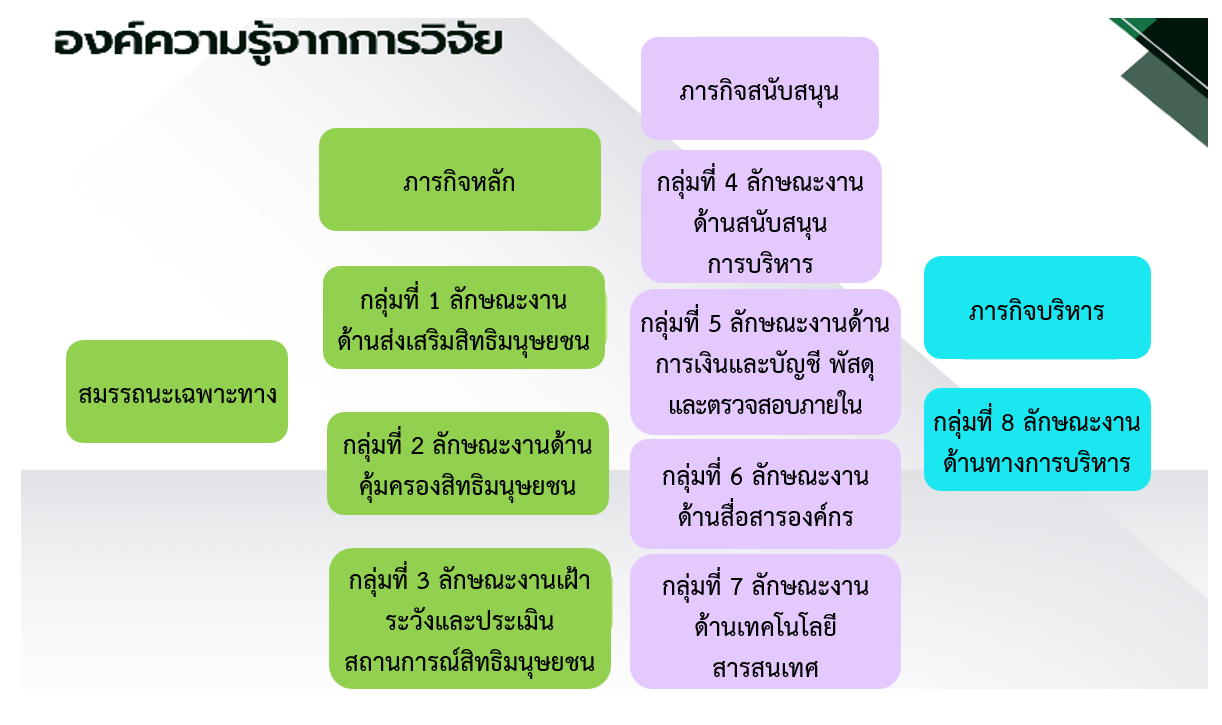
The research results were found that the sample group had an overall level of opinion on the competence of civil servants under the National Human Rights Commission Office at a high agreement level , and an overall level of expectation for the performance of the National Human Rights Commission Office had a high expectations level. The hypothesis testing results were found that Gen Z youth with different personal factors, including gender, age, and education level, had different overall expectations for the performance of the National Human Rights Commission (NHRC) at a statistically significant level of 0.05. Regarding organizational competence, core competence had a moderate relationship, and specific competence had a high relationship with expectations for the performance of the National Human Rights Commission (NHRC) at a statistical significance level of 0 .01. In particular, the relationship between specific competence and overall expectations for the performance of the National Human Rights Commission (NHRC) in terms of human rights protection and promotion of respect for human rights both had highly relationships with Gen Z youth’s expectations.
References
กรมการปกครอง กระทรวงมหาดไทย. (2568). สถิติทางการทะเบียนราษฎร (รายเดือน). สืบค้น 21 กรกฎาคม 2568, จาก https://shorturl.asia/tj7X9
ณัฏฐณิชา ทิพย์สังข์. (2566). ความคาดหวังของประชาชนต่อนโยบายด้านการพัฒนากับการมีส่วนร่วมของประชาชนในเขตเทศบาลเมืองคอหงส์ จังหวัดสงขลา (สารนิพนธ์ปริญญารัฐประศาสนศาสตรมหาบัณฑิต สาขาวิชารัฐประศาสนศาสตร์). สงขลา: มหาวิทยาลัยสงขลานครินทร์.
มนัส สุวรรณ. (2544). ระเบียบวิธีวิจัยทางสังคมศาสตร์และมนุษยศาสตร์. กรุงเทพฯ: โอ.เอส.พริ้นติ้ง เฮาส์.
รัฐธรรมนูญแห่งราชอาณาจักรไทย. (2560, 6 เมษายน). ราชกิจจานุเบกษา. เล่ม 134 ตอนที่ 40 ก. หน้า 72-73.
เลิศพร อุดมพงษ์. (2565). บทบาทและแนวทางการส่งเสริมประสิทธิภาพการดำเนินงานของคณะกรรมการสิทธิมนุษยชนแห่งชาติตามรัฐธรรมนูญแห่งราชอาณาจักรไทย พ.ศ. 2560. กรุงเทพฯ: สถาบันพระปกเกล้า.
สำนักงานคณะกรรมการสิทธิมนุษยชนแห่งชาติ. (2566). คู่มือการเสริมสร้างค่านิยมองค์กร. สืบค้น 17 กรกฎาคม 2568, จาก https://shorturl.asia/5mUMd
_____. (2566). แผนยุทธศาสตร์ด้านการบริหารทรัพยากรบุคคลสำนักงานคณะกรรมการสิทธิมนุษยชนแห่งชาติ ประจำปีงบประมาณ พ.ศ. 2567-2570. สืบค้น 20 กรกฎาคม 2568, จาก https://shorturl.asia/4BkXy
_____. (2568). คำรับรองการปฏิบัติราชการของสำนักงาน กสม. ประจำปีงบประมาณ พ.ศ. 2568 รอบการประเมินที่ 2. สืบค้น 19 กรกฎาคม 2568 , จาก https://www.nhrc.or.th/th/certification-of-official-performance/14512
อำนวย ทองโปร่ง. (2559). ความคาดหวังของนักศึกษาสาขาวิชาการบริหารการศึกษา คณะศึกษาศาสตร์ มหาวิทยาลัยรามคำแหง ที่มีต่อพฤติกรรมภาวะผู้นำทางวิชาการของผู้บริหารสถานศึกษาขั้นพื้นฐาน. วารสารดุษฎีบัณฑิตทางสังคมศาสตร์, 6(3), 23–34.
Yamane, T. (1973). Statistics: An Introductory Analysis (3rd ed.). New York: Harper and Row.
Downloads
Published
How to Cite
Issue
Section
Categories
License
Copyright (c) 2026 Academic Journal of Political Science and Public Administration

This work is licensed under a Creative Commons Attribution-NonCommercial-NoDerivatives 4.0 International License.