THE DEVELOPMENT OF BAN MAP CHAN COMMUNITY, MUEANG RAYONG DISTRICT, RAYONG PROVINCE FOR COMMUNITY MANAGEMENT AND LOCAL WISDOM MODEL
Keywords:
Community Development, Community Management, Local Wisdom, IddhipadaAbstract
Objectives of this research article were: 1. To examine the existing conditions of community management and local wisdom at Ban Map Chan village, 2. To enhance the community management and local wisdom practices at Ban Map Chan, and 3. To transform Ban Map Chan into a model community for effective community management and local wisdom preservation. The study utilized a qualitative research approach, collecting data through in-depth interviews with 25 key informants who were purposefully selected from four groups: community leaders, local wisdom keepers, residents, and academicians. Additionally, focus group discussions were held with 10 participants who were experts from the same stakeholder groups.
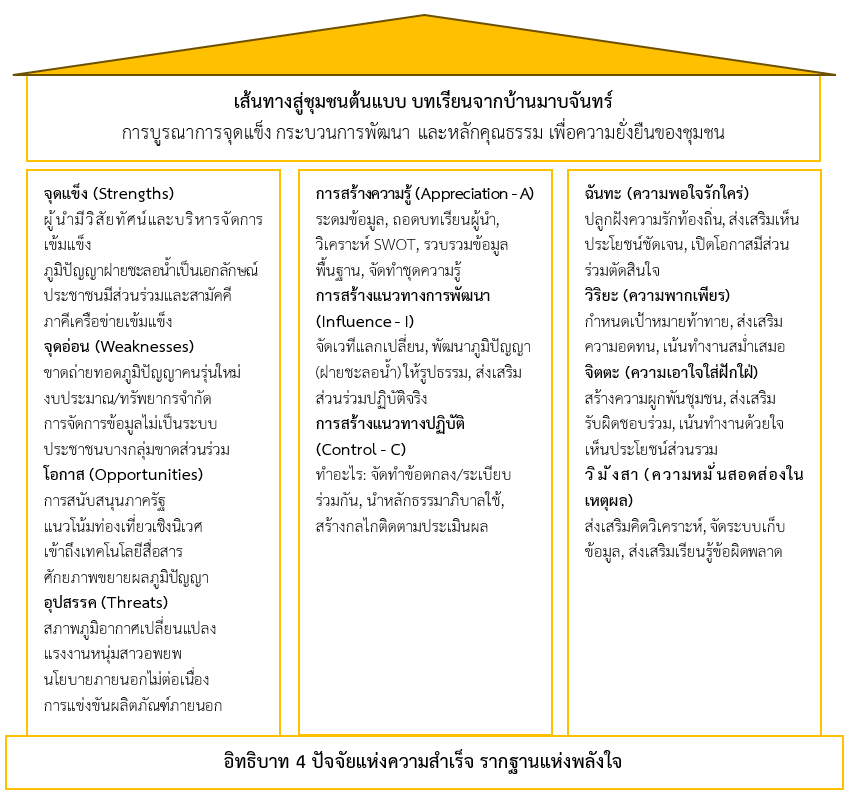
The findings showed that the community had several notable strengths, including strong leadership, distinctive water retention dam wisdom, active community collaboration, and well-established network partnerships. However, challenges existed in transmitting traditional knowledge to younger generations and securing adequate funding. While the community benefited from opportunities in ecotourism and technological advancement, it also faced threats from climate change impacts and out-migration of working-age population. The community development process followed the AIC model framework. In the Appreciation phase, data were gathered and SWOT analysis was conducted. The Influence stage involved organizing knowledge-sharing forums and encouraging community participation. The Control phase focused on establishing mutual agreements and creating monitoring and evaluation mechanisms. The research demonstrated that the community successfully elevated itself to model status by implementing the four Iddhipada principles. Through Chanda, they fostered local pride and developed a shared vision. Viriya was evident in setting ambitious yet achievable goals and creating detailed action plans. Citta manifested through cultivating collective consciousness and strengthening community bonds. Finally, Vimamgsa was applied by developing systematic analytical thinking and establishing learning mechanisms from past experiences, ultimately leading to sustainable community development.
References
กริชพัฒน์ ภูวนา. (2554). รูปแบบการพัฒนาชุมชนอยู่ดีมีสุข กรณีศึกษา : บ้านดอนมัน อำเภอกันทรวิชัย จังหวัดมหาสารคาม (วิทยานิพนธ์ปริญญาปรัชญาดุษฎีบัณฑิต สาขาวิชายุทธศาสตร์การพัฒนาภูมิภาค). มหาสารคาม: มหาวิทยาลัยราชภัฏมหาสารคาม.
จุรีพร กาญจนการุณ. (2546). การนำเสนอแนวทางการพัฒนาและการใช้ประโยชน์แหล่งการเรียนรู้ตลอดชีวิตในชุมชนเขตบางขุนเทียน (วิทยานิพนธ์ปริญญาครุศาสตรดุษฎีบัณฑิต สาขาวิชาพัฒนศึกษา). กรุงเทพฯ: จุฬาลงกรณ์มหาวิทยาลัย).
จุไรรัตน์ บุญที่สุด. (2556). บทบาทของพระสงฆ์ในการพัฒนาสังคม กรณีศึกษา พระเทพรัตนกวี (สุรินทร์ ชุตินฺธโร) วัดมหาธาตุ อ.เมือง จ.เพชรบูรณ์ (รายงานการวิจัย). เพชรบูรณ์: มหาวิทยาลัยราชเพชรบูรณ์.
ชนาธิป พรมวัน. (2567). การประยุกต์ใช้หลักธรรมอิทธิบาท 4 กับนโยบายเมืองอัจฉริยะ. วารสารบัณฑิตศึกษาวิชาการ, 2(3), 140-147.
ดารณี รักดี. (2540). การพัฒนารูปแบบการศึกษาขั้นพื้นฐานเพื่ออาชีพในชุมชนชนบทพึ่งตนเอง (ดุษฎีนิพนธ์ปริญญาครุศาสตรดุษฎีบัณฑิต สาขาวิชาพัฒนศึกษา). จุฬาลงกรณ์มหาวิทยาลัย).
เปรมชญา ชนะวงศ์ และคณะ. (2553). การพัฒนาศักยภาพชุมชนบนเพื่อการพึ่งตนเองบนฐานทุนทางสังคม (รายงานการวิจัย). สุราษฎร์ธานี: มหาวิทยาลัยราชภัฏสุราษฎร์ธานี.
พนิดา อมราวิกรม. (2567). 10 นโยบายหลักกระทรวงมหาดไทย : ความเป็นไปได้ในเชิงปฏิบัติ สำหรับองค์กรปกครองส่วนท้องถิ่นโดยประยุกต์ตามหลักพุทธธรรม. วารสารบัณฑิตศึกษาวิชาการ, 2(3), 123-129.
พระปลัดธันวา วิชฺชากโร (พ่วงกุล). (2567). พุทธภาวะผู้นำของผู้บริหารองค์กรปกครองท้องถิ่นตามหลักสังคหวัตถุ 4. วารสารบัณฑิตศึกษาวิชาการ, 2(4), 69-77.
พระอุดมสิทธินายก (กำพล คุณงฺกโร). (2567). การจัดการเชิงพุทธสมัยใหม่กับการจัดการองค์การสงฆ์. วารสารบัณฑิตศึกษาวิชาการ, 2(3), 54-64.
เพิ่มศักดิ์ โคตรชมพู. (2549). บทบาทในการพัฒนาสังคมของวัดในจังหวัดหนองคาย (รายงานการวิจัย). อุดรธานี: มหาวิทยาลัยราชภัฏอุดรธานี.
อดุลย์ วังศรี. (2543). การสังเคราะห์งานวิจัยเกี่ยวกับกระบวนการเรียนรู้ของชุมชนที่ทำให้ชุมชนเข้มแข็ง : การวิจัยเชิงชาติพันธุ์วรรณาอภิมาณ (ดุษฎีนิพนธ์ปริญญาครุศาสตรดุษฎีบัณฑิต สาขาวิชาการศึกษานอกระบบโรงเรียน). กรุงเทพฯ: จุฬาลงกรณ์มหาวิทยาลัย).
อรอนงค์ แจ้งพงศ์พันธ์. (2567). หลักอริยสัจ 4 กับการกำหนดนโยบายสาธารณะ. วารสารบัณฑิตศึกษาวิชาการ, 2(3), 105-113.
Downloads
Published
How to Cite
Issue
Section
Categories
License
Copyright (c) 2026 Academic Journal of Political Science and Public Administration

This work is licensed under a Creative Commons Attribution-NonCommercial-NoDerivatives 4.0 International License.