DEVELOPMENT OF POLITICAL LEADERSHIP OF YOUTH IN COMMUNITY DEVELOPMENT BASED ON BUDDHIST PRINCIPLES, SAMUT SONGKHRAM PROVINCE
Keywords:
Political Leadership, Community Development, Tisikkha, Four IddhipadasAbstract
This research article aimed to: 1. analyze the approaches for developing political leadership of youth in community development based on Buddhist principles in Samut Songkhram Province, 2. promote the approaches for developing political leadership of youth in community development based on Buddhist principles in Samut Songkhram Province, and 3. propose the approaches for developing political leadership of youth in community development based on Buddhist principles in Samut Songkhram Province. This study was qualitative research, using in-depth interviews with 25 key informants (monks or persons), and data were analyzed by descriptive content analysis.
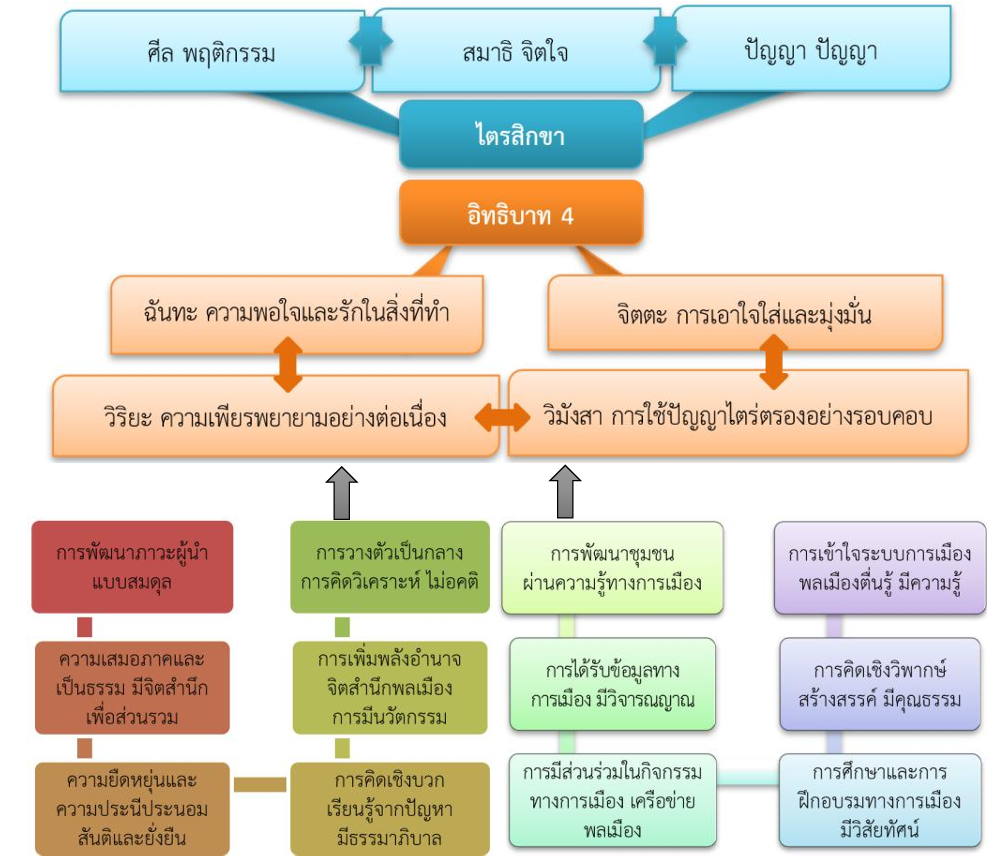
The research results found that: 1. the balanced development of political leadership among youth consisted of 1.1 equality and fairness, 1.2 flexibility and compromise, 1.3 neutrality, 1.4 empowerment, and 1.5 positive thinking; 2. the development of political leadership among youth for community development through political knowledge development consisted of 2.1 receiving political information with critical consideration, 2.2 participation in political activities, 2.3 understanding of the political system, 2.4 critical thinking, and 2.5 political education and training; and 3. the approaches for promoting the development of political leadership among youth for community development based on Buddhist principles in Samut Songkhram Province employed the Threefold Training (Sikkha), namely morality (Sila), concentration (Samadhi), and wisdom (Panna), as a comprehensive framework encompassing behavior, mind, and intellect. This approach is capable of driving sustainable community development. In addition, the Four Bases of Success (Iddhipada IV), namely Chanda (satisfaction and love in what one does), Viriya (continuous perseverance), Citta (attentiveness and determination), and Vimamsa (careful reflection with wisdom), which form the foundation of success in all undertakings, enable youth to grow into leaders who possess dedication to their work, perseverance, commitment, and wisdom in reflection, thereby leading their communities toward sustainable development.
References
กุลธิดา อุ่นจิตต์ และคณะ. (2566). การพัฒนาประชาธิปไตยโดยใช้เยาวชนไทยเป็นฐานในการพัฒนา. วารสารรัฐประศาสนศาสตร์และการจัดการสังคม, 5(2), 73–82.
ชัชนิธิฐา ชัชวาลวงศ์ และคณ. (2567). การบูรณาการหลักพุทธธรรมเพื่อพัฒนาภาวะผู้นำของเยาวชนโดยการดำเนินงานของชุมชนในกรุงเทพมหานคร. วารสารสหวิทยาการนวัตกรรมปริทรรศน์, 7(1), 163–177.
บุญยิ่ง ประทุม. (2566). เอกสารประกอบการสอนวิชาทฤษฎีและหลักการพัฒนาชุมชน. นครศรีธรรมราช: สาขาวิชาการพัฒนาชุมชน คณะมนุษยศาสตร์และสังคมศาสตร์ มหาวิทยาลัยราชภัฏนครศรีธรรมราช.
พระครูวิโรจน์กาญจนเขต (นัทกฤต ปทุมมารัชเชปัณณ์). (2567). การประยุกต์หลักพุทธธรรมเพื่อส่งเสริมภาวะผู้นำของนักการเมืองท้องถิ่นในจังหวัดนนทบุรี (ดุษฎีนิพนธ์ปริญญาปรัชญาดุษฎีบัณฑิต สาขาวิชารัฐศาสตร์). พระนครศรีอยุธยา: มหาวิทยาลัยมหาจุฬาลงกรณราชวิทยาลัย.
พระพรหมคุณาภรณ์ (ป.อ. ปยุตฺโต). (2546). การศึกษาเพื่อสันติภาพ. กรุงเทพฯ: สำนักพิมพ์มูลนิธิพุทธธรรม.
______. (2553). พจนานุกรมพุทธศาสตร์ ฉบับประมวลธรรม (พิมพ์ครั้งที่ 19). กรุงเทพฯ: เอสอาร์พริ้นติ้งแมสโปรดักส์.
______. (2556). การพัฒนาที่ยั่งยืน (พิมพ์ครั้งที่ 13). กรุงเทพฯ: มูลนิธิโกมลคีมทอง.
พระมหานิรุต ญาณวุฑฺโฒ (พยนต์ยิ้ม). (2566). พุทธบูรณาการเพื่อส่งเสริมภาวะผู้นำทางการเมืองของนักการเมืองท้องถิ่นในจังหวัดสมุทรสงคราม (ดุษฎีนิพนธ์ปริญญาปรัชญาดุษฎีบัณฑิต สาขาวิชารัฐศาสตร์). พระนครศรีอยุธยา: มหาวิทยาลัยมหาจุฬาลงกรณราชวิทยาลัย.
พระมหาสมบัติ ธนปญฺโญ (ฉลองนิติติ์กุล). (2566). การประยุกต์หลักพุทธธรรมเพื่อส่งเสริมจิตสำนึกทางการเมืองของเด็กและเยาวชนในจังหวัดสมุทรปราการ (ดุษฎีนิพนธ์ปริญญาปรัชญาดุษฎีบัณฑิต สาขาวิชารัฐศาสตร์). พระนครศรีอยุธยา: มหาวิทยาลัยมหาจุฬาลงกรณราชวิทยาลัย.
พระมหาอภิวัชร์ อภิวชฺชโร (โภคสวัสดิ์). (2567). การประยุกต์หลักพุทธธรรมเพื่อการเสริมสร้างภาวะผู้นำทางการเมืองของผู้บริหารท้องถิ่นในจังหวัดเพชรบุรี (ดุษฎีนิพนธ์ปริญญาปรัชญาดุษฎีบัณฑิต สาขาวิชารัฐศาสตร์). พระนครศรีอยุธยา: มหาวิทยาลัยมหาจุฬาลงกรณราชวิทยาลัย.
มหาจุฬาลงกรณราชวิทยาลัย. (2539). พระไตรปิฎกฉบับภาษาไทย ฉบับมหาจุฬาลงกรณราชวิทยาลัย. กรุงเทพฯ: โรงพิมพ์มหาจุฬาลงกรณราชวิทยาลัย.
รัตนา สนเปี่ยม. (2565). ภาวะผู้นำสมดุล: รูปแบบภาวะผู้นำที่ส่งเสริมประชาธิปไตย. วารสารบริหารการศึกษา มศว, 19(37), 184–194.
วชิระ เสระทอง และเพ็ญณี แนรอท. (2562). การพัฒนาประชาธิปไตยสำหรับเยาวชนในโรงเรียนระดับมัธยมศึกษาสังกัดสำนักงานคณะกรรมการ การศึกษาขั้นพื้นฐาน ภาคตะวันออกเฉียงเหนือ. ใน การประชุมวิชาการระดับชาติด้านการบริหารกิจการสาธารณะยุคดิจิทัล ครั้งที่ 5 การบริหารกิจการสาธารณะยุคดิจิทัล: กฎหมาย ความเป็นธรรม และการกลับคืนสู่ประชาธิปไตย. (น. 593–601). ขอนแก่น: มหาวิทยาลัยขอนแก่น.
สำนักส่งเสริมการเมืองภาคพลเมือง สถาบันพระปกเกล้า. (2565). ผู้นำเยาวชนแห่งอนาคต: จากทฤษฎีสู่การปฏิบัติ ปี 2565. กรุงเทพฯ: สถาบันพระปกเกล้า.
Downloads
Published
How to Cite
Issue
Section
Categories
License
Copyright (c) 2026 Academic Journal of Political Science and Public Administration

This work is licensed under a Creative Commons Attribution-NonCommercial-NoDerivatives 4.0 International License.