CO-PRODUCTION OF PUBLIC SERVICES IN URBAN WASTE MANAGEMENT
Keywords:
Co-Production of Public Services, Public Service Management, Waste Management, Urban AreasAbstract
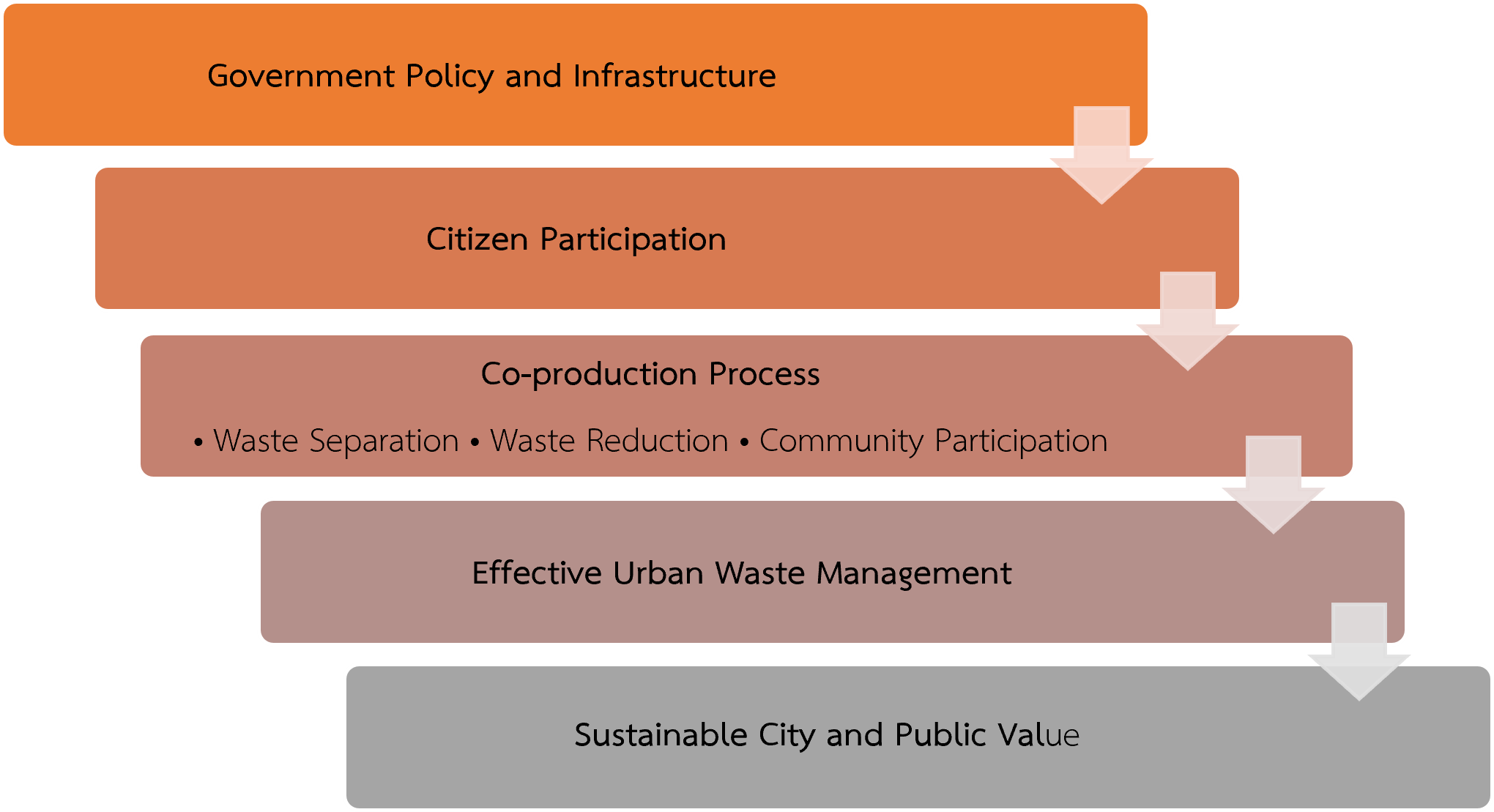
This academic article aims to analyze the concept of co-production of public services in urban waste management. The study is based on a conceptual synthesis of public service management, public value, and co-production theories in order to explain the roles of government and citizens in the joint delivery of public services. The analysis indicates that waste management in large cities cannot be effectively addressed by government agencies alone, but requires active collaboration between the public sector and citizens, as citizens’ behavior directly influences the effectiveness of waste management systems. Citizens play an important role in activities such as waste separation at the source and waste reduction, while the government is responsible for policy formulation, infrastructure provision, and the creation of mechanisms that facilitate public participation. The article contributes to the literature by proposing a conceptual explanation of co-production in urban waste management, demonstrating that the integration of roles between government and citizens constitutes a key mechanism for improving the efficiency of waste management systems and promoting the sustainability of public service delivery in large urban contexts.
References
Alford, J. (2009). Engaging Public Sector Clients: from Service Delivery to Co-Production. New York: Palgrave Macmillan.
Bovaird, T. (2007). Beyond Engagement and Participation: User and Community Co-Production of Public Services. Public Administration Review, 67(5), 846–860.
Denhardt, R. B. & Denhardt, J. V. (2000). The New Public Service: Serving Rather Than Steering. Public Administration Review, 60(6), 549–559.
Moore, M. H. (1995). Creating Public Value: Strategic Management in Government. Cambridge, MA: Harvard University Press.
Osborne, S. P. (2010). The New Public Governance? Emerging Perspectives on The Theory and Practice of Public Governance. London: Routledge.
Ostrom, E. (1996). Crossing The Great Divide: Coproduction, Synergy, and Development. World Development, 24(6), 1073–1087.
Wilson, D. C. et al. (2006). Role of Informal Sector Recycling in Waste Management in Developing Countries. Habitat International, 30(4), 797–808.
Downloads
Published
How to Cite
Issue
Section
Categories
License
Copyright (c) 2026 Academic Journal of Political Science and Public Administration

This work is licensed under a Creative Commons Attribution-NonCommercial-NoDerivatives 4.0 International License.