PROMOTING PUBLIC VALUE–BASED PARTICIPATION FOR SUSTAINABLE TOURISM DEVELOPMENT
Keywords:
Empowered Participation, Network Governance, Public Value, Sustainable Tourism, Participatory GovernanceAbstract
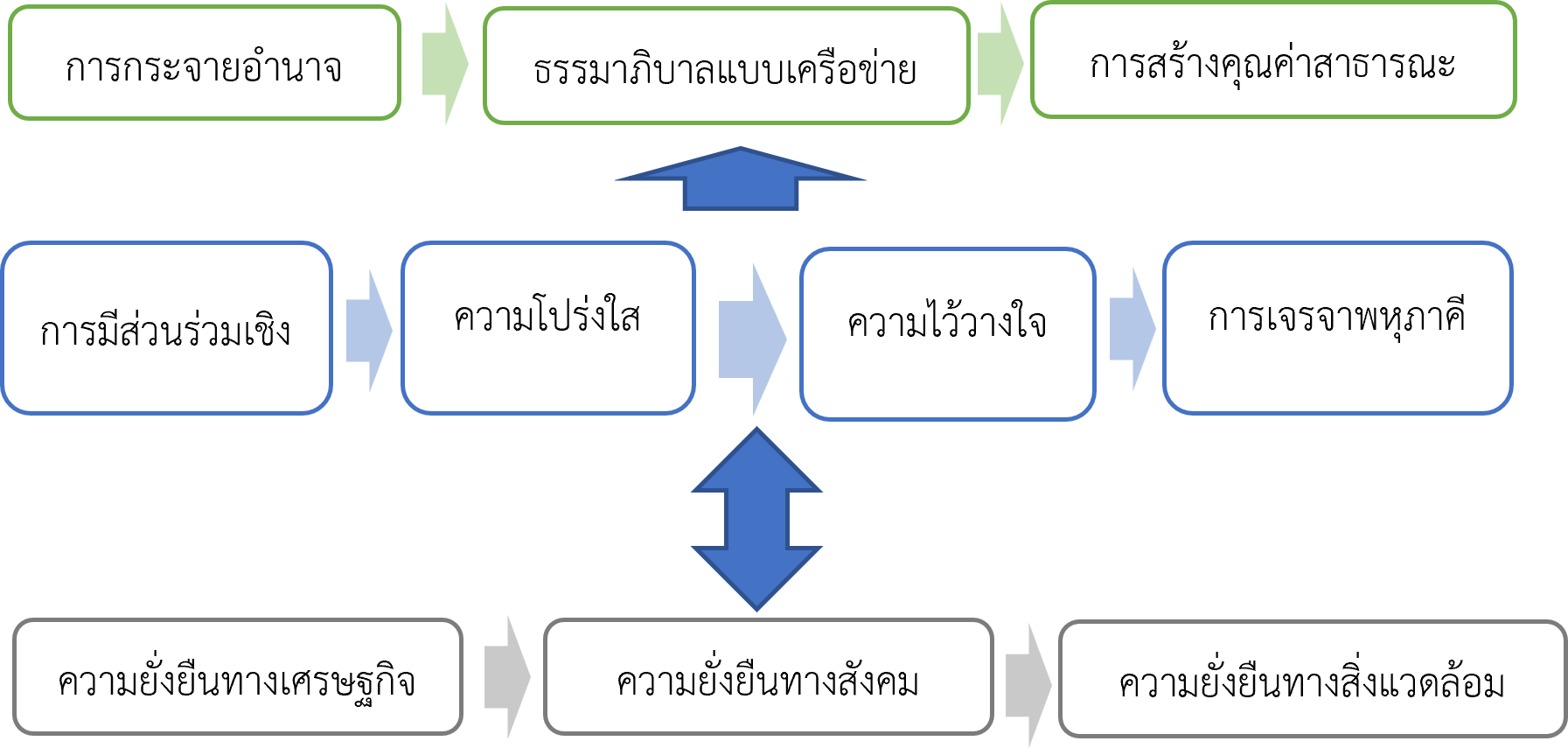
This academic article aims to analyze and synthesize the concepts of participation in public administration, sustainable tourism development, and public value in order to explain the governance mechanism for sustainable tourism development in the context of public administration. The study employs documentary analysis and theoretical synthesis of relevant literature in the fields of public administration and tourism development. The findings indicate that sustainable tourism development cannot rely solely on centralized state administration but requires a network governance structure that enables multiple stakeholders including government agencies, private sector actors, local communities, and civil society to participate in policy formulation, resource management, and monitoring of tourism development. Such participatory governance enhances the legitimacy of policy decisions, strengthens trust between the state and society, and promotes collaboration among stakeholders in managing tourism resources. The synthesis of these concepts leads to the development of a participatory governance model based on public value for sustainable tourism development. The model consists of three key components: stakeholder participation and power sharing, network governance structures, and the process of public value creation. The public values generated through this mechanism include policy legitimacy, trust between stakeholders, and collaborative engagement in sustainable tourism management. The proposed model provides a conceptual framework for designing tourism governance mechanisms that aim to balance economic development, social equity, and environmental sustainability in the long term.
References
โกวิทย์ พวงงาม. (2562). การบริหารราชการส่วนท้องถิ่น. กรุงเทพฯ: สำนักพิมพ์แห่งจุฬาลงกรณ์มหาวิทยาลัย.
มยุรี อนุมานราชธน. (2549). การกำหนดนโยบายสาธารณะ. กรุงเทพฯ: เอ็กซเปอร์เน็ท.
วรเดช จันทรศร. (2560). การกระจายอำนาจและการปกครองท้องถิ่นไทย. กรุงเทพฯ: สำนักพิมพ์แห่งจุฬาลงกรณ์มหาวิทยาลัย.
สมบัติ ธำรงธัญวงศ์. (2553). นโยบายสาธารณะ: แนวคิด การวิเคราะห์ และกระบวนการ. กรุงเทพฯ: เสมาธรรม.
สุโขทัย ธีรสวัสดิ์. (2561). การบริหารงานท้องถิ่นไทย. กรุงเทพฯ: สำนักพิมพ์มหาวิทยาลัยธรรมศาสตร์.
อเนก เหล่าธรรมทัศน์. (2559). การเมืองการปกครองท้องถิ่นไทย. กรุงเทพฯ: ฟ้าเดียวกัน.
Ansell, C. & Gash, A. (2008). Collaborative Governance in Theory and Practice. Journal of Public Administration Research and Theory, 18(4), 543–571.
Arnstein, S. R. (1969). A Ladder of Citizen Participation. Journal of the American Institute of Planners, 35(4), 216–224.
Bramwell, B. & Lane, B. (2011). Critical Research on The Governance of Tourism and Sustainability. Journal of Sustainable Tourism, 19(4–5), 411–421.
Gaventa, J. (2006). Finding The Spaces for Change: A Power Analysis. IDS Bulletin, 37(6), 23–33.
Hall, C. M. (2011). Policy Learning and Policy Failure in Sustainable Tourism Governance. Journal of Sustainable Tourism, 19(4–5), 649–671.
Kontogeorgopoulos, N. (2005). Community-Based Ecotourism in Phuket and Ao Phangnga, Thailand: Partial Victories and Bittersweet Remedies. Journal of Sustainable Tourism, 13(1), 4–23.
Kontogeorgopoulos, N. et al. (2014). Success Factors in Community-Based Tourism in Thailand: The Role of Luck, External Support, and Local Leadership. Tourism Planning & Development, 11(1), 106–124.
Moore, M. H. (1995). Creating Public Value: Strategic Management in Government. Cambridge, MA: Harvard University Press.
Richards, G. & Hall, D. (Eds.). (2000). Tourism and Sustainable Community Development. London: Routledge.
World Commission on Environment and Development. (1987). Our Common Future. Oxford: Oxford University Press.
Downloads
Published
How to Cite
Issue
Section
Categories
License
Copyright (c) 2026 Academic Journal of Political Science and Public Administration

This work is licensed under a Creative Commons Attribution-NonCommercial-NoDerivatives 4.0 International License.