DEVELOPMENT OF A NETWORK FOR CARING FOR THE ELDERLY USING BUDDHIST PRINCIPLES IN PHETCHABURI PROVINCE
Keywords:
Network Development, Elderly Care, Bhavana 4Abstract
This research article aimed to: 1. study the general conditions of older persons care based on Buddhist principles in Phetchaburi Province; 2. examine the process of developing a network for older persons care based on Buddhist principles; and 3. propose a model for developing a network for older persons care based on Buddhist principles in Phetchaburi Province. This study employed a mixed-methods research design, including qualitative research involving interviews with 17 key informants and a workshop seminar with 25 participants. The research instrument was an interview form. Key informants were selected through purposive sampling, and the data were analyzed using content analysis and presented descriptively.
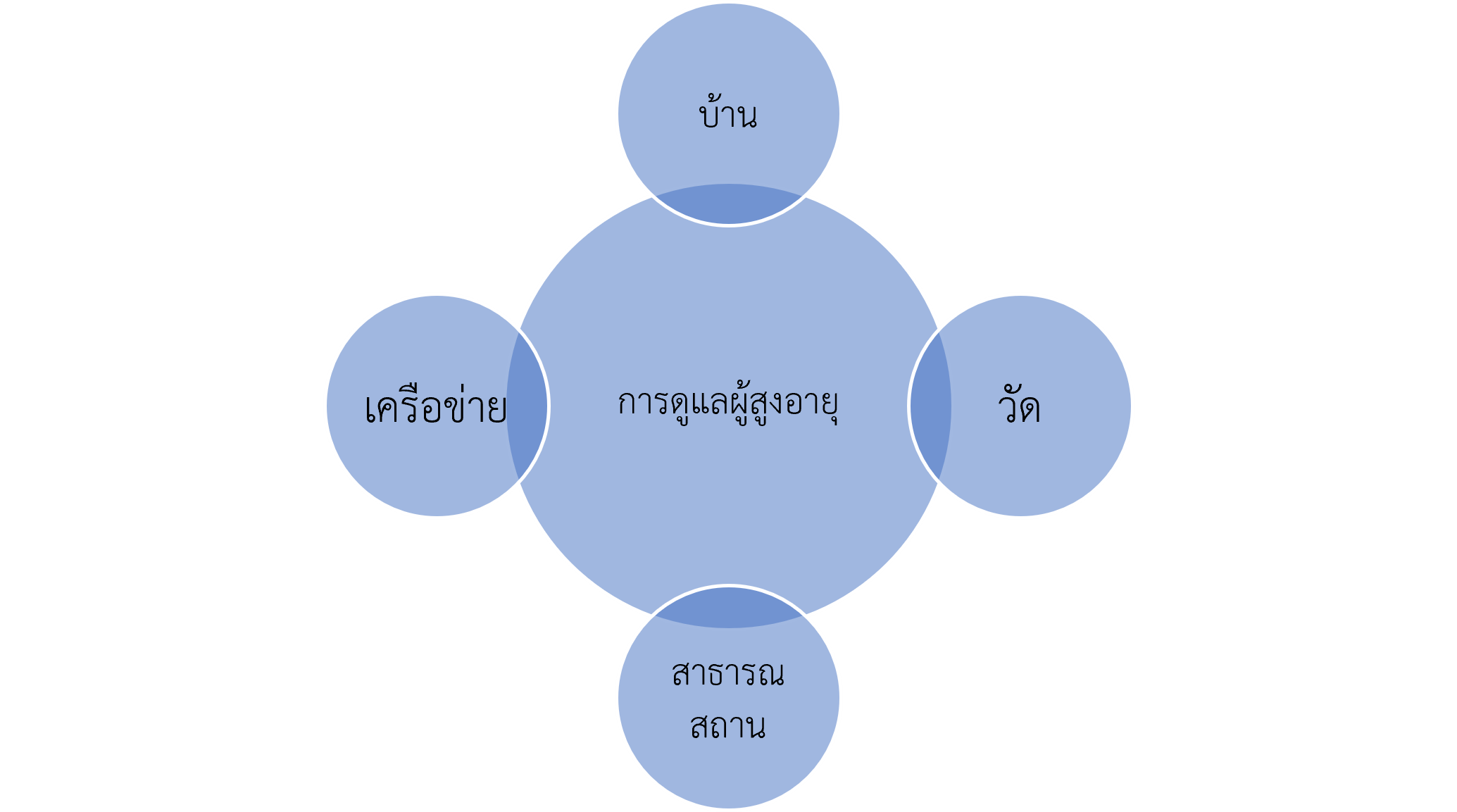
The findings revealed that 1. The general conditions of older persons care comprised: 1) strengths, including the presence of agencies responsible for older persons care, such as Subdistrict Health Promoting Hospitals and agencies under the Ministry of Social Development and Human Security; 2) weaknesses, including the weakening of family institutions and a shortage of personnel providing care for older persons; 3) opportunities, including improved standards of older persons care in healthcare and welfare; and 4) threats, including caregivers’ lack of appropriate skills, increasing costs of older persons care, and unsuitable housing and environmental conditions. 2. The process of developing an older persons care network comprised: 1) Kayabhavana (physical development), emphasizing physical well-being and compassion toward older persons; 2) Silabhavana (behavioral development), fostering positive relationships between caregivers and older persons; 3) Cittabhavana (mental development), appropriately strengthening positive relationships within the community; and 4) Paññabhavana (wisdom development), providing activities that enable older persons to practice meditation and develop wisdom to understand life as it truly is. 3. The model for developing an older persons care network consisted of seven dimensions: 1) nutrition, promoting appropriate diets for older persons; 2) physical mobility, promoting exercise for older persons in the community; 3) elimination, providing caregivers with training in assisting older persons with elimination needs; 4) prevention of household accidents, implementing programs to reduce accidents among older persons; 5) infection and chronic disease management, establishing collaborative networks among hospitals and communities; 6) mental health, organizing relaxation and well-being activities in collaboration with public and private sectors; and 7) environment, providing safe walkways, clean living spaces, adequate lighting, appropriate temperatures, and green spaces.
References
จารุกิตติ์ พิริยสุวัฒน์. (2567). การขับเคลื่อนงานสุขภาวะวิถีพุทธในการดูแลผู้สูงวัย ในจังหวัดเลย. วารสารมนุษยศาสตร์และสังคมศาสตร์ มมร วิทยาเขตอีสาน, 5(2), 51–62.
ชวิศา แก้วอนันต์. (2561). โภชนาการสำหรับผู้สูงอายุ. วารสารวิชาการมหาวิทยาลัยอีสเทิร์นเอเชีย ฉบับวิทยาศาสตร์และเทคโนโลยี, 12(2), 114-119.
ธวัลรัตน์ แดงหาญ. (2562). รูปแบบการใช้วัดเป็นศูนย์กลางในการดูแลผู้สูงอายุในอนาคต (รายงานผลการวิจัย). พระนครศรีอยุธยา: มหาวิทยาลัยมหาจุฬาลงกรณราชวิทยาลัย.
นิชนันท์ บุญโข. (2568). พุทธบูรณาการเพื่อการพัฒนาสุขภาวะองค์รวมผู้สูงอายุของศูนย์บริการสาธารณสุขในสังกัดกรุงเทพมหานคร (ดุษฎีนิพนธ์ปริญญาปรัชญาดุษฎีบัณฑิต สาขาวิชารัฐประศาสนศาสตร์). พระนครศรีอยุธยา: มหาวิทยาลัยมหาจุฬาลงกรณราชวิทยาลัย.
ประยงค์ จันทร์แดง. (2561). การดูแลผู้สูงอายุตามแนวพุทธ: กรณีศึกษาโรงเรียนผู้สูงอายุในวัดเขตตำบลแม่กา อำเภอเมือง จังหวัดพะเยา. วารสารวิชาการมนุษยศาสตร์และสังคมศาสตร์, 26(52), 28-48.
พระครูปราโมทย์ปัญญาวัฒน์ (บุญเลิศ เตชปุญฺโญ). (2564). พุทธบูรณาการเพื่อการพัฒนาคุณภาพชีวิตผู้สูงอายุของคณะสงฆ์จังหวัดสมุทรสงคราม (ดุษฎีนิพนธ์ปริญญาพุทธศาสตรดุษฎีบัณฑิต สาขาวิชาการจัดการเชิงพุทธ). พระนครศรีอยุธยา: มหาวิทยาลัยมหาจุฬาลงกรณราชวิทยาลัย.
พระชญาเชษฐกาญจน์ ควันจี (กุลเพชรจารุภักดี). (2567). การบริหารจัดการสุขภาวะแบบองค์รวมของผู้สูงอายุในศูนย์ปฏิบัติธรรมเฉลิมพระเกียรติ 84 พรรษา ราชนครินทร์ อำเภอแก่งหางแมว จังหวัดจันทบุรี (สารนิพนธ์ปริญญาพุทธศาสตรมหาบัณฑิต สาขาวิชาการจัดการเชิงพุทธ). พระนครศรีอยุธยา: มหาวิทยาลัยมหาจุฬาลงกรณราชวิทยาลัย.
พระปลัดระพิน พุทธิสาโร. (2566). พุทธธรรมแนวคิด หลักปฏิบัติในพระพุทธศาสนา:เพื่อพัฒนาให้เป็นกลไกในการพัฒนาสุขภาวะแบบองค์รวมในผู้สูงอายุ. Journal of Spatial Development and Policy, 1(1), 35-56.
พระมหาสมชาย ขนฺติสรโณ (มะลิซ้อน). (2567). รูปแบบการบริหารจัดการวัดเพื่อการพัฒนาคุณภาพชีวิตผู้สูงอายุในกรุงเทพมหานคร (ดุษฎีนิพนธ์ปริญญาพุทธศาสตรดุษฎีบัณฑิต สาขาวิชาการจัดการเชิงพุทธ). พระนครศรีอยุธยา: มหาวิทยาลัยมหาจุฬาลงกรณราชวิทยาลัย.
พระราเชนทร์ วิสารโท. (2559). บูรณาการพุทธธรรมกับระบบการดูแลสุขภาพระยะยาวสำหรับผู้สูงอายุของอำเภอศรีวิไล จังหวัดบึงกาฬ (รายงานผลการวิจัย). พระนครศรีอยุธยา: มหาวิทยาลัยมหาจุฬาลงกรณราชวิทยาลัย.
ลำภู เปรมจิตร์ และคณะ. (2566). รูปแบบการบูรณาการหลักสัปปายะเพื่อส่งเสริมการพึ่งพาตนเองของผู้สูงวัยในเทศบาลดอยสะเก็ด อำเภอดอยสะเก็ด จังหวัดเชียงใหม่. วารสารวิชาการ มจร บุรีรัมย์, 8(1), 190-203.
สุรกุล เจนอบรม. (2541). วิทยาการผู้สูงอายุ (พิมพ์ครั้งที่ 2). กรุงเทพฯ: นิชินแอดเวอร์ไทซิ่ง กรุ๊พ.
เสาวนีย์ ไชยกุล และคณะ. (2562). การศึกษาองค์ประกอบและเกณฑ์ชี้วัดในการเสริมสร้างสุขภาวะของผู้สูงอายุตามแนวพระพุทธศาสนาในจังหวัดพะเยา (รายงานผลการวิจัย). พระนครศรีอยุธยา: มหาวิทยาลัยมหาจุฬาลงกรณราชวิทยาลัย.
Downloads
Published
How to Cite
Issue
Section
Categories
License
Copyright (c) 2026 Academic Journal of Political Science and Public Administration

This work is licensed under a Creative Commons Attribution-NonCommercial-NoDerivatives 4.0 International License.