ปัจเจกนิยมดิจิทัลกับการเปลี่ยนแปลงวัฒนธรรมทางการเมืองไทยของ Generation Z
คำสำคัญ:
Generation Z, ปัจเจกนิยมดิจิทัล, วัฒนธรรมทางการเมือง, การเมืองดิจิทัล, ความชอบธรรมทางการเมืองบทคัดย่อ
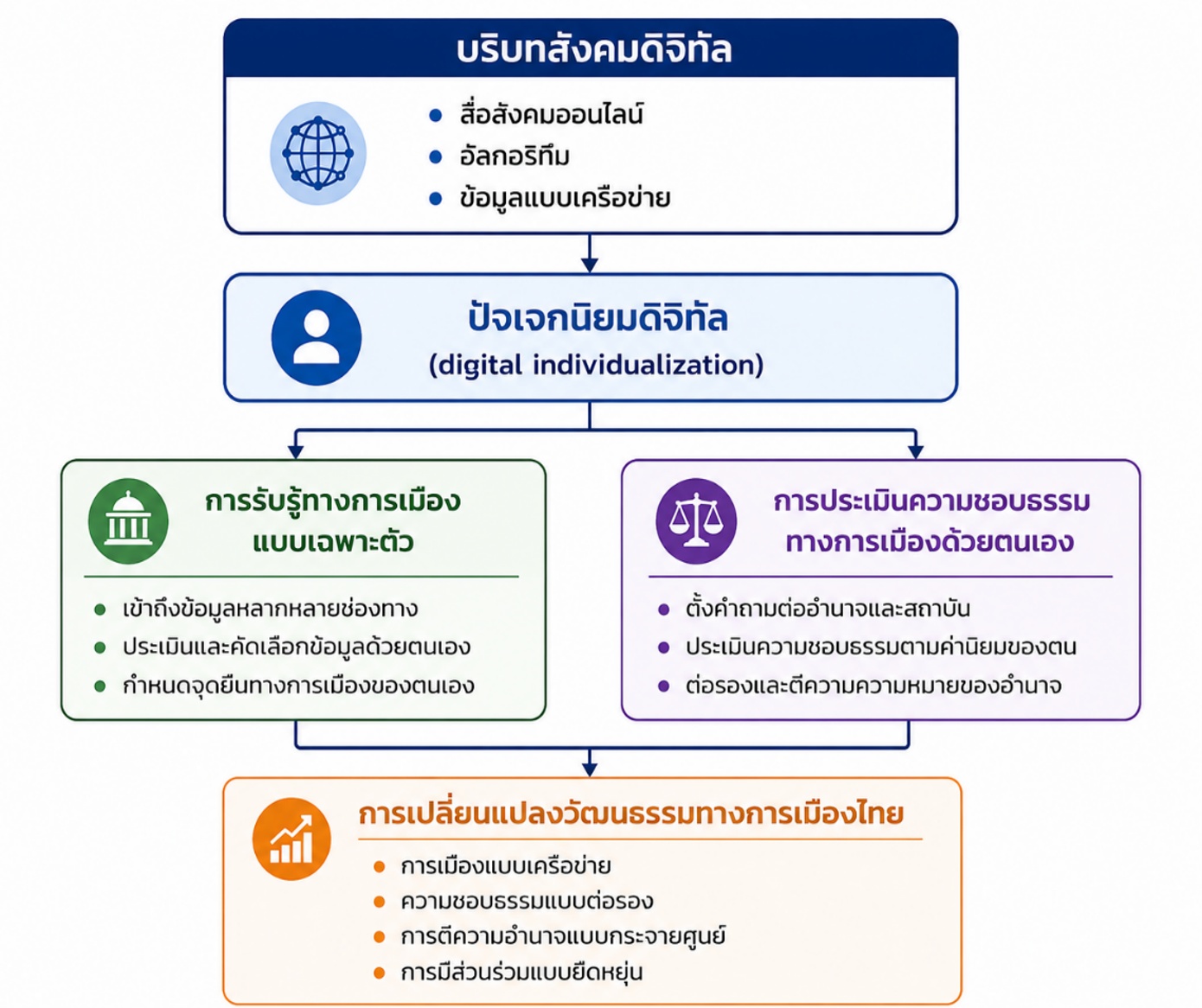
บทความนี้ศึกษาความสัมพันธ์ระหว่าง Generation Z ปัจเจกนิยมดิจิทัล และการเปลี่ยนแปลงวัฒนธรรมทางการเมืองไทยในบริบทสังคมดิจิทัล โดยใช้วิธีการสังเคราะห์วรรณกรรมเชิงตีความเพื่ออธิบายลักษณะของคนรุ่นใหม่ภายใต้สภาพแวดล้อมดิจิทัลและนัยของสื่อสังคมออนไลน์ต่อความสัมพันธ์ระหว่างปัจเจกกับอำนาจทางการเมือง บทความเสนอว่า การเติบโตมาพร้อมเทคโนโลยีดิจิทัลและการไหลเวียนของข้อมูลจำนวนมากส่งผลให้คนรุ่นใหม่มีแนวโน้มรับรู้ ตีความ และประเมินประเด็นสาธารณะผ่านประสบการณ์และการตัดสินของตนเองมากขึ้น ขณะเดียวกัน สื่อสังคมออนไลน์ได้กลายเป็นพื้นที่สาธารณะดิจิทัลที่เอื้อต่อการเข้าถึงข้อมูล การเชื่อมโยงเครือข่าย และการมีส่วนร่วมทางการเมืองในลักษณะยืดหยุ่นและขับเคลื่อนตามประเด็น บทความนี้เสนอแนวคิด “ปัจเจกนิยมดิจิทัล” (Digital Individualization) เพื่ออธิบายกระบวนการที่สภาพแวดล้อมดิจิทัลทำให้ผู้คนต้องรับผิดชอบต่อการรับรู้ ตีความ และประเมินความชอบธรรมทางการเมืองด้วยตนเองมากขึ้น ภายใต้เงื่อนไขที่ข้อมูลและการผลิตความหมายทางการเมืองมิได้ถูกผูกขาดโดยสถาบันหรือศูนย์กลางอำนาจเพียงด้านเดียวอีกต่อไป กระบวนการดังกล่าวส่งผลให้ความชอบธรรมทางการเมืองในสังคมไทยร่วมสมัยมีลักษณะพึ่งพาการยอมรับ การตีความ และการต่อรองจากผู้คนมากขึ้น บทความจึงเสนอว่า ความเปลี่ยนแปลงสำคัญของการเมืองไทยในยุคดิจิทัลมิได้อยู่เพียงที่รูปแบบการมีส่วนร่วมทางการเมืองของคนรุ่นใหม่ หากยังอยู่ที่การเปลี่ยนฐานความสัมพันธ์ระหว่างพลเมือง อำนาจทางการเมือง และความชอบธรรมทางการเมืองในระดับวัฒนธรรมทางการเมืองร่วมสมัยด้วย
เอกสารอ้างอิง
เอนก เหล่าธรรมทัศน์. (2550). สองนคราประชาธิปไตย (พิมพ์ครั้งที่ 6). กรุงเทพฯ: โครงการจัดพิมพ์คบไฟ.
Almond, G. A. & Verba, S. (1963). The civic culture: Political attitudes and democracy in five nations. Princeton, NJ: Princeton University Press.
Areeprachakun, P. & Senivongse, B. (2025). Space of exclusion and subjugation but also democracy: Social media for political demonstration among Thai youth. Journal of Cultural Analysis and Social Change, 10(2), 411–420.
Beck, U. (1992). Risk society: Towards a new modernity. London, England: Sage Publications.
Bennett, W. L. & Segerberg, A. (2012). The logic of connective action: Digital media and the personalization of contentious politics. Information, Communication & Society, 15(5), 739–768.
Castells, M. (2010). The rise of the network society (2nd ed., with a new preface). Chichester, England: Wiley-Blackwell.
Dhiravegin, L. (1985). Thai politics: Selected aspects of development and change. Bangkok, Thailand: Tri-Sciences Publishing House.
Dimock, M. (2019). Defining generations: Where Millennials end and Generation Z begins. Pew Research Center. Retrieved May 5, 2020, from https://www.pewresearch.org/short-reads/2019/01/17/where-millennials-end-and-generation-z-begins/.
Farrell, W. C. & Phungsoonthorn, T. (2020). Generation Z in Thailand. International Journal of Cross Cultural Management, 20(1), 25–51.
Giddens, A. (1991). Modernity and self-identity: Self and society in the late modern age. Stanford, CA: Stanford University Press.
Habermas, J. (1989). The structural transformation of the public sphere: An inquiry into a category of bourgeois society (T. Burger, Trans.). Cambridge, MA: MIT Press.
Hofstede, G. (2001). Culture's consequences: Comparing values, behaviors, institutions and organizations across nations (2nd ed.). Thousand Oaks, CA: Sage Publications.
Keating, A. & Melis, G. (2017). Social media and youth political engagement: Preaching to the converted or providing a new voice for youth? The British Journal of Politics and International Relations, 19(4), 877–894.
Laothamatas, A. (1996). A tale of two democracies: Conflicting perceptions of elections and democracy in Thailand. In R. H. Taylor (Ed.), The politics of elections in Southeast Asia (pp. 201–223). Cambridge, England: Cambridge University Press.
Loader, B. D. et al. (2014). The networked young citizen: Social media, political participation and civic engagement. Information, Communication & Society, 17(2), 143–150.
Matthes, J. (2022). Social media and the political engagement of young adults: Between mobilization and distraction. Online Media and Global Communication, 1(1), 6–22.
Muakchim, N. (2021). Factors affecting the political attentiveness of Thai youths. Rajapark Journal, 15(38), 253–265.
Sinpeng, A. (2021). Hashtag activism: Social media and the #FreeYouth protests in Thailand. Critical Asian Studies, 53(2), 192–205.
Triandis, H. C. (1995). Individualism and collectivism. Boulder, CO: Westview Press.
Vromen, A. et al. (2015). Young people, social media and connective action: From organisational maintenance to everyday political talk. Journal of Youth Studies, 18(1), 80–100.
ดาวน์โหลด
เผยแพร่แล้ว
รูปแบบการอ้างอิง
ฉบับ
ประเภทบทความ
หมวดหมู่
สัญญาอนุญาต
ลิขสิทธิ์ (c) 2026 วารสารวิชาการรัฐศาสตร์และรัฐประศาสนศาสตร์

อนุญาตภายใต้เงื่อนไข Creative Commons Attribution-NonCommercial-NoDerivatives 4.0 International License.