Reproductive Intention, Personality and Related Factors in Working Woman with no Child in Bangkok Metropolis
Article Sidebar
Main Article Content
Abstract
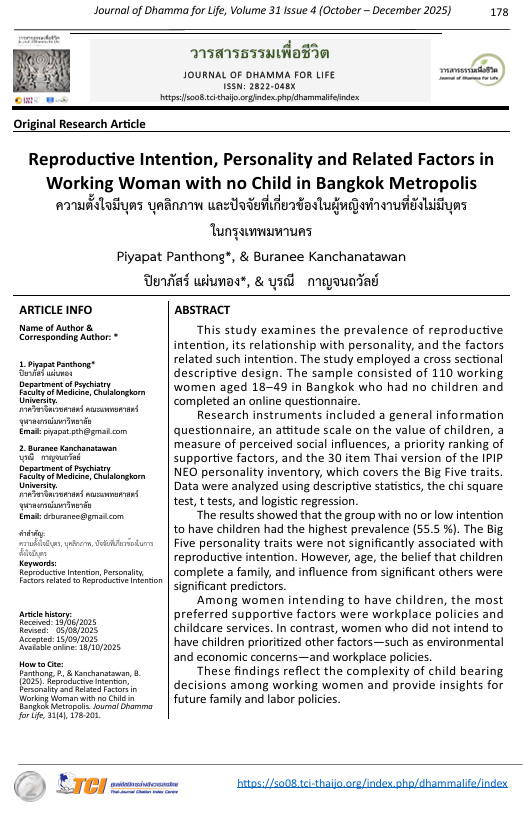
This study examines the prevalence of reproductive intention, its relationship with personality, and the factors related such intention. The study employed a cross sectional descriptive design. The sample consisted of 110 working women aged 18–49 in Bangkok who had no children and completed an online questionnaire.
Research instruments included a general information questionnaire, an attitude scale on the value of children, a measure of perceived social influences, a priority ranking of supportive factors, and the 30 item Thai version of the IPIP NEO personality inventory, which covers the Big Five traits. Data were analyzed using descriptive statistics, the chi square test, t tests, and logistic regression.
The results showed that the group with no or low intention to have children had the highest prevalence (55.5 %). The Big Five personality traits were not significantly associated with reproductive intention. However, age, the belief that children complete a family, and influence from significant others were significant predictors.
Among women intending to have children, the most preferred supportive factors were workplace policies and childcare services. In contrast, women who did not intend to have children prioritized other factors—such as environmental and economic concerns—and workplace policies.
These findings reflect the complexity of child bearing decisions among working women and provide insights for future family and labor policies.
