A Study of Herbs According to Buddhism In Nakhon Si Thammarat Province
Article Sidebar
Main Article Content
Abstract
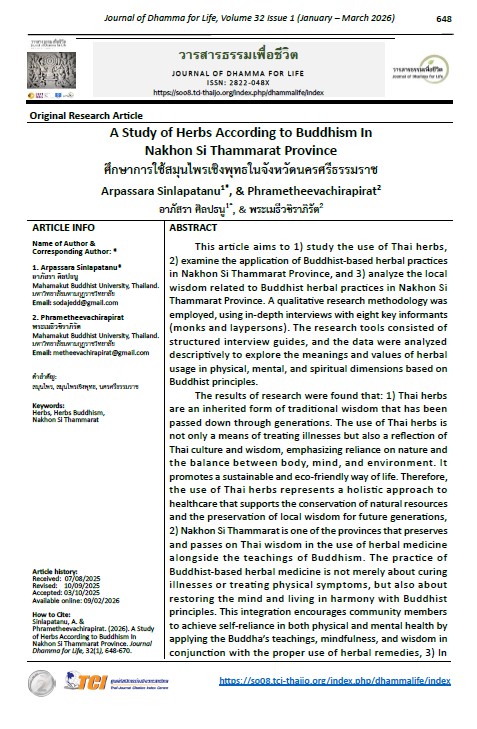
This article aims to 1) study the use of Thai herbs, 2) examine the application of Buddhist-based herbal practices in Nakhon Si Thammarat Province, and 3) analyze the local wisdom related to Buddhist herbal practices in Nakhon Si Thammarat Province. A qualitative research methodology was employed, using in-depth interviews with eight key informants (monks and laypersons). The research tools consisted of structured interview guides, and the data were analyzed descriptively to explore the meanings and values of herbal usage in physical, mental, and spiritual dimensions based on Buddhist principles.
The results of research were found that: 1) Thai herbs are an inherited form of traditional wisdom that has been passed down through generations. The use of Thai herbs is not only a means of treating illnesses but also a reflection of Thai culture and wisdom, emphasizing reliance on nature and the balance between body, mind, and environment. It promotes a sustainable and eco-friendly way of life. Therefore, the use of Thai herbs represents a holistic approach to healthcare that supports the conservation of natural resources and the preservation of local wisdom for future generations, 2) Nakhon Si Thammarat is one of the provinces that preserves and passes on Thai wisdom in the use of herbal medicine alongside the teachings of Buddhism. The practice of Buddhist-based herbal medicine is not merely about curing illnesses or treating physical symptoms, but also about restoring the mind and living in harmony with Buddhist principles. This integration encourages community members to achieve self-reliance in both physical and mental health by applying the Buddha’s teachings, mindfulness, and wisdom in conjunction with the proper use of herbal remedies, 3) In Buddhism, herbal healing is not limited to the treatment of the body but also serves as a process of mental cultivation through meditation and mindfulness of suffering. The restoration of health thus involves both physical healing and mental development, which play a vital role in alleviating illness. It represents a holistic approach to health care that deeply and sustainably integrates ancient wisdom with the fundamental teachings of Buddhism.
Article Details
References
กรมการแพทย์แผนไทยและการแพทย์ทางเลือก. (2561). ความรู้พื้นฐานการแพทย์แผนไทยและการแพทย์ทางเลือก. กรุงเทพมหานคร: กระทรวงสาธารณสุข.
กระทรวงสาธารณสุข. (2561). แผนยุทธศาสตร์การพัฒนาการแพทย์แผนไทยและการแพทย์ทางเลือก พ.ศ. 2560–2564. กรุงเทพมหานคร: กระทรวงสาธารณสุข.
คณะกรรมการสมุนไพรแห่งชาติ. (2559). แผนแม่บทแห่งชาติว่าด้วยการพัฒนาสมุนไพรไทย พ.ศ. 2560–2564. กรุงเทพมหานคร: สำนักงานคณะกรรมการอาหารและยา.
ทวี วรคุณ. (2551). หมอชีวกโกมารภัจจ์กับการแพทย์ในพระพุทธศาสนา. กรุงเทพมหานคร: สำนักพิมพ์มหาจุฬาลงกรณราชวิทยาลัย.
พระครูอินทสารวิจักษ์ (อินฺทสโร). (2551). การศึกษาการรักษาโรคด้วยยาสมุนไพรและธรรมโอสถที่ปรากฏในคัมภีร์พระพุทธศาสนา. วิทยานิพนธ์พุทธศาสตรมหาบัณฑิต, มหาวิทยาลัยมหาจุฬาลงกรณราชวิทยาลัย.
พระครูอินทสารวิจักษ์ (อินฺทสโร). (2551). พุทธธรรมกับการดูแลสุขภาพแบบองค์รวม. กรุงเทพมหานคร: สำนักพิมพ์มหาจุฬาลงกรณราชวิทยาลัย.
พระพรหมคุณาภรณ์ (ป.อ. ปยุตฺโต). (2550). พุทธเศรษฐศาสตร์. กรุงเทพมหานคร: สำนักพิมพ์มูลนิธิพุทธธรรม.
พระพรหมคุณาภรณ์ (ป.อ. ปยุตฺโต). (2558). พุทธธรรมกับการแพทย์และการดูแลสุขภาพ. กรุงเทพมหานคร: มหาวิทยาลัยมหาจุฬาลงกรณราชวิทยาลัย.
พระวิชัย เสงี่ยม. (2543). เภสัชในพระพุทธศาสนา. กรุงเทพมหานคร: โรงพิมพ์มหาจุฬาลงกรณราชวิทยาลัย.
พุทธทาสภิกขุ. (2550). ธรรมโอสถ: การรักษาโรคทางกายและโรคทางใจ. กรุงเทพมหานคร: ธรรมสภา.
เพ็ญนภา ทิพย์สุราษฎร์, และ ประดิษฐ์ จิระเดชประไพ. (2559). การศึกษาพืชสมุนไพรท้องถิ่นและภูมิปัญญาด้านการใช้พืชสมุนไพร: กรณีศึกษาอุทยานแห่งชาติแก่งกรุง จังหวัดสุราษฎร์ธานี. รายงานการวิจัย. มหาวิทยาลัยราชภัฏสุราษฎร์ธานี.
มหาวิทยาลัยมหาจุฬาลงกรณราชวิทยาลัย. (2558). เอกสารประกอบการเรียนการสอนรายวิชาพุทธธรรมกับสุขภาพ. พระนครศรีอยุธยา: มหาวิทยาลัยมหาจุฬาลงกรณราชวิทยาลัย.
วรรณี ศรีสุพรรณ. (2562). สมุนไพรไทยกับการปรับสมดุลธาตุในร่างกาย. เชียงใหม่: สำนักพิมพ์ล้านนาสุขภาพ.
สุดารัตน์ ต่ายธานี, และคณะ. (2563). การศึกษาการใช้สมุนไพรเพื่อการดูแลสุขภาพของพระสงฆ์: กรณีศึกษาอำเภอเบญจลักษ์ จังหวัดศรีสะเกษ. วารสารวิชาการด้านสาธารณสุขและการแพทย์แผนไทย, 19(2), 45–60.
สุดารัตน์ ต่ายธานี, และคณะ. (2563). ภูมิปัญญาหมอยาพื้นบ้านกับการเปลี่ยนแปลงของระบบสุขภาพไทย. กรุงเทพมหานคร: สำนักพิมพ์แห่งจุฬาลงกรณ์มหาวิทยาลัย.
สุภา ศรีธนสาร. (2560). ทฤษฎีธาตุทั้งสี่กับการดูแลสุขภาพตามหลักการแพทย์แผนไทย. นนทบุรี: สำนักพิมพ์ภูมิปัญญาไทย.
อรอุมา เลาหพิบูลย์กุล. (2557). โพชฌงค์ 7 กับการเยียวยาสุขภาพจิตตามแนวพุทธ. กรุงเทพมหานคร: สำนักพิมพ์มหาวิทยาลัยธรรมศาสตร์.
อุดมศักดิ์ ศรีวิชัย. (2559). แนวคิดสุขภาพองค์รวมกับการแพทย์แผนไทย. กรุงเทพมหานคร: สำนักพิมพ์สุขภาพไทย.
Kabat-Zinn, J. (2003). Mindfulness-based interventions in context: Past, present, and future. Clinical Psychology: Science and Practice, 10(2), 144–156.
Payutto, P. A. (2003). Buddhism and health. Bangkok: Buddhadhamma Foundation.
Sivaraksa, S. (2014). Seeds of peace: A Buddhist vision for renewing society. Berkeley, CA: Parallax Press.
Thanissaro Bhikkhu. (2010). The wings to awakening: An anthology from the Pāli Canon. Barre, MA: Dhamma Dana Publications.
