The Guideline of Comparative Judgement on Offense of Theft and Incorrect According to Thai Law
Article Sidebar
Main Article Content
Abstract
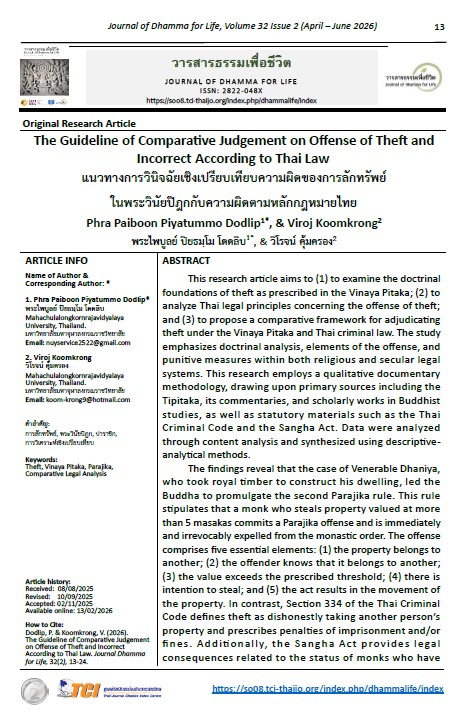
This research article aims to (1) to examine the doctrinal foundations of theft as prescribed in the Vinaya Pitaka; (2) to analyze Thai legal principles concerning the offense of theft; and (3) to propose a comparative framework for adjudicating theft under the Vinaya Pitaka and Thai criminal law. The study emphasizes doctrinal analysis, elements of the offense, and punitive measures within both religious and secular legal systems. This research employs a qualitative documentary methodology, drawing upon primary sources including the Tipitaka, its commentaries, and scholarly works in Buddhist studies, as well as statutory materials such as the Thai Criminal Code and the Sangha Act. Data were analyzed through content analysis and synthesized using descriptive-analytical methods.
The findings reveal that the case of Venerable Dhaniya, who took royal timber to construct his dwelling, led the Buddha to promulgate the second Parajika rule. This rule stipulates that a monk who steals property valued at more than 5 masakas commits a Parajika offense and is immediately and irrevocably expelled from the monastic order. The offense comprises five essential elements: (1) the property belongs to another; (2) the offender knows that it belongs to another; (3) the value exceeds the prescribed threshold; (4) there is intention to steal; and (5) the act results in the movement of the property. In contrast, Section 334 of the Thai Criminal Code defines theft as dishonestly taking another person’s property and prescribes penalties of imprisonment and/or fines. Additionally, the Sangha Act provides legal consequences related to the status of monks who have incurred Parajika offenses. The comparative analysis demonstrates that both the Vinaya and Thai law emphasize intentionality and ownership as core elements of theft. However, they differ significantly in their underlying objectives and sanctions: the Vinaya seeks to preserve the moral purity and integrity of the monastic community, whereas criminal law aims to protect property rights and maintain public order. The research synthesizes these findings into the “TT Model,” a conceptual framework for systematically comparing legal principles, adjudicative criteria, and integrative approaches to moral and legal sanctions.
Article Details
References
คณิต ณ นคร. (2555). กฎหมายอาญาภาคความผิด (พิมพ์ครั้งที่ 11). วิญญูชน.
จิ ระ ศักดิ์ สั ง เมฆ. (2020). ความ ผิด อาญา เกี่ยว กับ ทรัพย์: ศึกษา เปรียบเทียบ แนวคิด แห่ง กฎหมายอาญา ไทย กับ แนวคิด อทินนาทาน แห่ง พระพุทธ ศาสนา เถรวาท. วารสาร ว ไลย อลงกรณ์ ปริทัศน์, 10(2), 15-30.
ชนนันท์ชัย ภัทรสกล. (2562). แนวคิดทางทฤษฎีเกี่ยวกับความผิดฐานลักทรัพย์และฉ้อโกงในกฎหมายอาญาไทย. วารสารนิติศาสตร์, 48(2), 1–25.
ฉั ต ต มา ศ วิเศษ สิน ธุ์, & สุชาดา ศรี ใหม่. (2017). พระ ภิกษุ ยักยอก ทรัพย์: ศึกษา ความ รับผิด ทาง อาญา และ อาบัติ ตาม พระ วินัย. วารสาร นิติศาสตร์ และ สังคม ท้องถิ่น, 1(1), 107-133.
ธนอิสินันท์ มหาวัฒนางกูล. (2561). ทฤษฎีกฎหมายอาญา (พิมพ์ครั้งที่ 4). วิญญูชน.
ธวัช หนูคำ. (2560). ปัญหาการบังคับใช้กฎนิคหกรรมของคณะสงฆ์ไทยในบริบทกฎหมายสมัยใหม่. วารสารพุทธศาสน์ศึกษา, 24(1), 45–68.
ประมวลกฎหมายอาญา. (2499). ราชกิจจานุเบกษา, เล่ม 73 ตอนที่ 95 ก (13 พฤศจิกายน 2499).
พระไตรปิฎก เล่มที่ 1 วินัยปิฎก มหาวิภังค์. (ม.ป.ป.). มหามกุฏราชวิทยาลัย.
พระไตรปิฎก เล่มที่ 4 วินัยปิฎก มหาวิภังค์. (2539). โรงพิมพ์มหาจุฬาลงกรณราชวิทยาลัย.
พระพรหมคุณาภรณ์ (ป.อ. ปยุตฺโต). (2559). พระพุทธศาสนาในฐานะเป็นรากฐานของวิทยาศาสตร์. ผลิธัมม์.
พระ มหา สำราญ ฐา นุ ตฺ ต โม, & สมบัติ อรรถ พิมล. (2024). การ ศึกษา เปรียบเทียบ ความ รับผิด ของ พระ ภิกษุ วิกลจริต ที่ กระทำความผิด ตาม พระ ธรรม วินัย และ ความ รับผิด ของ บุคคล วิกลจริต ตาม ประมวล กฎหมายอาญา มาตรา 65. วารสาร สห วิทยาการ นวัตกรรม ปริทรรศน์, 7(4), 237-251.
พระราชบัญญัติคณะสงฆ์ พ.ศ. 2505. (2505). ราชกิจจานุเบกษา, เล่ม 79 ตอนที่ 115 ก (31 ธันวาคม 2505).
มหาจุฬาลงกรณราชวิทยาลัย. (2539). พระไตรปิฎกภาษาไทย ฉบับมหาจุฬาลงกรณราชวิทยาลัย. โรงพิมพ์มหาจุฬาลงกรณราชวิทยาลัย.
สมเด็จพระมหาสมณเจ้ากรมพระยาวชิรญาณวโรรส. (2538). วินัยมุข (เล่ม 1). มหามกุฏราชวิทยาลัย.
สุชาติ, ก. (2562). คำอธิบายกฎหมายอาญาภาคความผิด. วิญญูชน.
Chansamorn, S. (2021). Principles for considering punishment of offenders in disciplinary matters according to Buddhist precepts and criminal offenses according to the Penal Code: a comparative study of similarities and differences. Journal of Graduate Studies, Mahamakut Buddhist University, 19(2), 249-263.
Wongyai, T. (2026). Problems in the Conduct of Disciplines According to Buddhist Doctrine and Criminal Procedures Against Monks: A Comparative Case Study of Theravada Monks in Thailand and Sri Lanka. Mae Fah Luang University Law Journal, 232-263.
