Research on the Artistic Characteristics of Chinese Ballet in the 21st Century
Article Sidebar
Main Article Content
Abstract
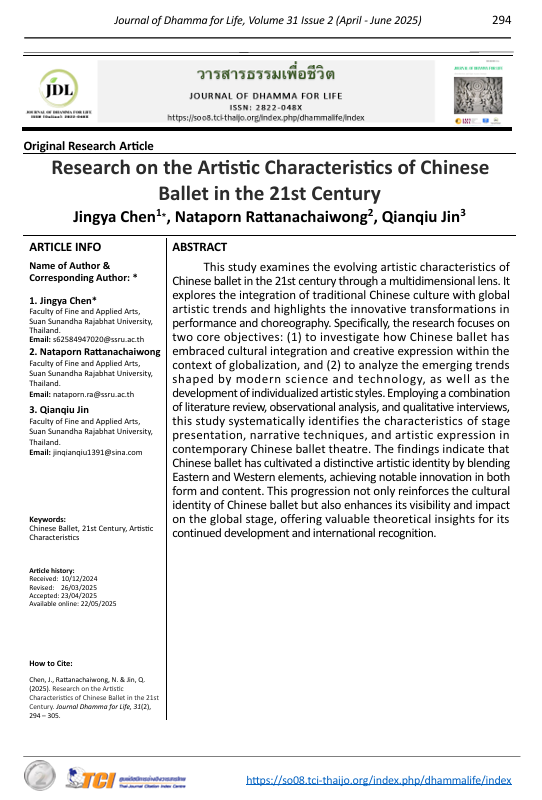
This study examines the evolving artistic characteristics of Chinese ballet in the 21st century through a multidimensional lens. It explores the integration of traditional Chinese culture with global artistic trends and highlights the innovative transformations in performance and choreography. Specifically, the research focuses on two core objectives: (1) to investigate how Chinese ballet has embraced cultural integration and creative expression within the context of globalization, and (2) to analyze the emerging trends shaped by modern science and technology, as well as the development of individualized artistic styles. Employing a combination of literature review, observational analysis, and qualitative interviews, this study systematically identifies the characteristics of stage presentation, narrative techniques, and artistic expression in contemporary Chinese ballet theatre. The findings indicate that Chinese ballet has cultivated a distinctive artistic identity by blending Eastern and Western elements, achieving notable innovation in both form and content. This progression not only reinforces the cultural identity of Chinese ballet but also enhances its visibility and impact on the global stage, offering valuable theoretical insights for its continued development and international recognition.
Article Details
References
Chen, Y. (2012). Developmental stages of Chinese ballet theatre. Beijing: Performing Arts Press.
Fokkema, D. (2011). Chinese literature and Soviet influence. Peking University Press.
Gao, B. (2010). Model plays. Yunnan People's Publishing House.
Hu, R. R. (2010). Fragrance of jasmine on the tip of the toes. Shanghai Music Publishing House.
Huang, L. (2018). Innovation and national identity in Chinese ballet. Journal of Dance Studies, 23(2), 85–102.
Liu, J. (2013). Chinese ballet after the reform era: Training, institutions, and creative trends. Shanghai: National Arts Publishing House.
Ministry of Culture and Tourism of the People’s Republic of China. (2020). National guidelines for cultural development and performance arts (2016–2020). http://www.mct.gov.cn/
Ou, J. (2014). Chinese ballet theatre art and its creative elements. Beijing: Dance Research Press.
Ou, J. P. (2014). The monument of Chinese ballet. Shanghai Music Publishing House.
Sun, H. (2019). The aesthetics of modern Chinese performing arts in the age of globalization. Cultural Dialogue, 14(1), 59–71.
Wang, J. J. (2017). Beyond modernity. China Social Sciences Press.
Wang, M. (2015). Art, modernity, and the rise of cultural China. Hong Kong: Chinese University Press.
Wu, Y. (2021). Ballet diplomacy: Chinese ballet’s global ambitions and soft power. International Journal of Cultural Policy, 27(4), 521–537.
Xiao, S. (2014). The evolution and evaluation of Chinese ballet theatre art. Beijing: Chinese Theatre Arts Publishing House.
Xiao, S. H. (2014). History, life, and dance. Central University for Nationalities Press.
Zhang, Y. (2010). From revolution to renaissance: The changing role of ballet in Chinese cultural life. Asian Theatre Journal, 27(1), 104–120.
Zou, Z. R. (2012). History of ballet in new China. Tsinghua University Press.