Guidelines For Worshipping Vessavaṇa According to The Buddhist Perspective in Nakhon Ratchasima Province
Article Sidebar
Main Article Content
Abstract
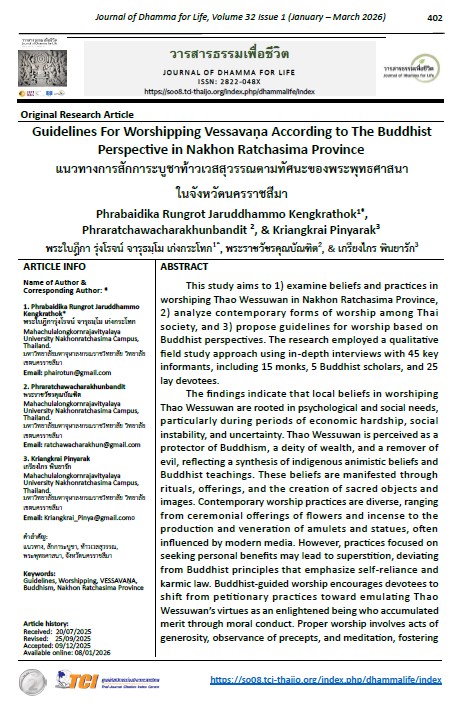
This study aims to 1) examine beliefs and practices in worshiping Thao Wessuwan in Nakhon Ratchasima Province, 2) analyze contemporary forms of worship among Thai society, and 3) propose guidelines for worship based on Buddhist perspectives. The research employed a qualitative field study approach using in-depth interviews with 45 key informants, including 15 monks, 5 Buddhist scholars, and 25 lay devotees.
The findings indicate that local beliefs in worshiping Thao Wessuwan are rooted in psychological and social needs, particularly during periods of economic hardship, social instability, and uncertainty. Thao Wessuwan is perceived as a protector of Buddhism, a deity of wealth, and a remover of evil, reflecting a synthesis of indigenous animistic beliefs and Buddhist teachings. These beliefs are manifested through rituals, offerings, and the creation of sacred objects and images. Contemporary worship practices are diverse, ranging from ceremonial offerings of flowers and incense to the production and veneration of amulets and statues, often influenced by modern media. However, practices focused on seeking personal benefits may lead to superstition, deviating from Buddhist principles that emphasize self-reliance and karmic law. Buddhist-guided worship encourages devotees to shift from petitionary practices toward emulating Thao Wessuwan’s virtues as an enlightened being who accumulated merit through moral conduct. Proper worship involves acts of generosity, observance of precepts, and meditation, fostering wisdom-based faith, personal development, and the preservation of valuable cultural heritage.
Article Details
References
กิติยวดี ชาญประโคน. (2560).ท้าวเวสุวรรณในสังคมและวัฒนธรรมไทย”. วารสารรามคำแหงฉบับมนุษยศาสตร์. ปีที่ 36 ฉบับที่2 กรกฎาคม-ธันวาคม 2560.
เดือน คำดี. (2541). ศาสนศาสตร์. กรุงเทพมหานคร: มหาวิทยาลัยเกษตรศาสตร์.
ปริวัตร ศิระเกียรติสกุล. (2559). ท้าวเวสุวรรณ: บทบาทด้านการสั่งสอนในการปริวัตรทางจิตวิญญาณมนุษย์. วิทยานิพนธ์หลักสูตรปรัชญาดุษฎีบัณฑิต. บัณฑิตวิทยาลัย: มหาวิทยาลัยนเรศวร.
พรชัย ศรีวิไลกุล.(2565). ศึกษาการใช้ปาฏิหาริย์ 3 ในพระพุทธศาสนาเพื่อพัฒนาสังคมไทย. วิทยานิพนธ์พุทธศาสตรดุษฎีบัณฑิต บัณฑิตวิทยาลัย: มหาวิทยาลัยมหาจุฬาลงกรณราชวิทยาลัย.
พรศิริ ธนะสังข์. (2567). ศรัทธาและการบูชาพระธาตุ 9 จอม ของชาวพุทธในจังหวัดเชียง.วารสาร มจร.หริภุญชัยปริทรรศน. รายปีที่ 8 ฉบับที่ 3 กรกฎาคม – กันยายน 2567.
พระครูใบฎีกาวิชาญ วิสุทฺโธและคณะ. (2565). เวสสุวรรณมหาเทพผู้มั่งคั่งผู้พิทักษ์พุทธศาสนา. วารสารวนัมฎองแหรกพุทธศาสตรปริทรรศน์. ปีที่ 9 ฉบับที่ 2: (กรกฎาคม–ธันวาคม 2565.
พระเฑียรวิทย์ อตฺตสนฺโต (โอชาวัฒน์). (2548). การศึกษาความเชื่อและพิธีกรรมทางพระพุทธศาสนาของร่างทรง: กรณีศึกษาในเขตกรุงเทพมหานคร. วิทยานิพนธ์พุทธศาสตรมหาบัณฑิต. บัณฑิตวิทยาลัย: มหาวิทยาลัยมหาจุฬาลงกรณราชวิทยาลัย.
พระมหาประสพฤกษ์ จารุวาโท (รัตนยงค์). (2550). การศึกษาเชิงวิเคราะห์แนวความคิดเรื่องการบูชาในพระพุทธศาสนา. วิทยานิพนธ์พุทธศาสตรมหาบัณฑิต. บัณฑิตวิทยาลัย: มหาวิทยาลัยมหาจุฬาลงกรณราชวิทยาลัย.
พระยศวัจน์ จิตฺตปาโล (วิริยเลิศ). (2566). การศึกษาเปรียบเทียบสาระสาคัญของมงคลระหว่าง มงคลสูตรกับมหามังคลชาดก. ดุษฎีนิพนธ์พุทธศาสตรดุษฎีบัณฑิต. บัณฑิตวิทยาลัย: มหาวิทยาลัยมหาจุฬาลงกรณราชวิทยาลัย.
พระอนันต์ อภินนฺโท. (2563). การปฏิบัติตามหลักวัตตบท 7 เพื่อการพัฒนาคุณภาพชีวิต. วารสารวิชาการ มจร บุรีรัมย์.147 ปีที่ 5 ฉบับที่ 2 (2563). กรกฎาคม–ธันวาคม.
มณี พะยอมยงค์.(2554). วัฒนธรรมล้านนาไทย. กรุงเทพมหานคร: ไทยวัฒนาพานิช.
ราชบัณฑิตยสถาน.(2554). พจนานุกรมราชบัณฑิตสถาน พุทธศักราช 2554. พิมพ์ครั้งที่ 2. กรุงเทพมหานคร: บริษัทนามีบุ๊คส์พับลิเคชั่น จำกัด.
สุวรรณ สุวรรณวโช. (2529). พื้นฐานความเชื่อของสังคมไทย. กรุงเทพมหานคร: บรรณกิจ.
อธิราชย์ นันขันตีดุ. (2558). การนับถือผีของชาวไทยย้อ: ความสัมพันธ์ด้านความเชื่อและนิเวศวิทยาวัฒนธรรม. ดุษฎีนิพนธ์ปรัชญาดุษฎีบัณฑิต. บัณฑิตวิทยาลัย: มหาวิทยาลัยบูรพา.
