An Analysis of the Development of Teaching and Learning Management of Buddhist Moral Education Monks in Schools Based on the Four Iddhipāda Principles
Article Sidebar
Main Article Content
Abstract
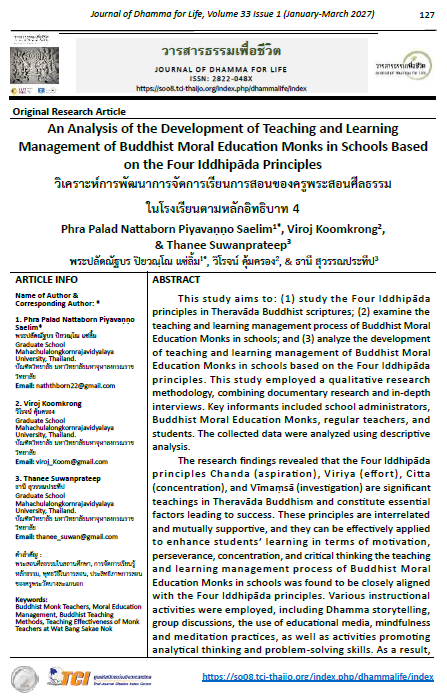
This study aims to: (1) study the Four Iddhipāda principles in Theravāda Buddhist scriptures; (2) examine the teaching and learning management process of Buddhist Moral Education Monks in schools; and (3) analyze the development of teaching and learning management of Buddhist Moral Education Monks in schools based on the Four Iddhipāda principles. This study employed a qualitative research methodology, combining documentary research and in-depth interviews. Key informants included school administrators, Buddhist Moral Education Monks, regular teachers, and students. The collected data were analyzed using descriptive analysis.
The research findings revealed that the Four Iddhipāda principles Chanda (aspiration), Viriya (effort), Citta (concentration), and Vīmaṃsā (investigation) are significant teachings in Theravāda Buddhism and constitute essential factors leading to success. These principles are interrelated and mutually supportive, and they can be effectively applied to enhance students’ learning in terms of motivation, perseverance, concentration, and critical thinking the teaching and learning management process of Buddhist Moral Education Monks in schools was found to be closely aligned with the Four Iddhipāda principles. Various instructional activities were employed, including Dhamma storytelling, group discussions, the use of educational media, mindfulness and meditation practices, as well as activities promoting analytical thinking and problem-solving skills. As a result, students demonstrated greater interest in learning, increased responsibility, improved concentration, and the ability to apply Buddhist teachings appropriately in their daily lives. The development of teaching and learning management based on the Four Iddhipāda principles should emphasize cultivating Chanda through engaging learning activities, strengthening Viriya through practical exercises and positive reinforcement, developing Citta through mindfulness and meditation training, and promoting Vīmaṃsāthrough questioning, discussion, and rational analysis. Such an approach contributes to the holistic development of learners, enabling them to acquire both knowledge and moral values and to live effectively and harmoniously in society in accordance with Buddhist principles.
Article Details
References
กระทรวงศึกษาธิการ. (2561). แนวทางการจัดการเรียนรู้คุณธรรมจริยธรรม. โรงพิมพ์คุรุสภา.
คณาจารย์ มหาวิทยาลัยมหาจุฬาลงกรณราชวิทยาลัย. (2554). พุทธวิธีการสอน. โรงพิมพ์มหาจุฬาลงกรณราชวิทยาลัย.
จีรศักดิ์ บุญฤทธิ์, พระ. (2554). ผลการใช้กิจกรรมกลุ่มด้วยหลักอิทธิบาท 4 ที่มีต่อพฤติกรรมความรับผิดชอบในการเรียนของนักเรียนชั้นประถมศึกษาปีที่ 3. สารนิพนธ์การศึกษามหาบัณฑิต สาขาจิตวิทยาการแนะแนว, มหาวิทยาลัยศรีนครินทรวิโรฒ.
ทิศนา แขมมณี. (2560). ศาสตร์การสอน: องค์ความรู้เพื่อการจัดกระบวนการเรียนรู้ที่มีประสิทธิภาพ. สำนักพิมพ์แห่งจุฬาลงกรณ์มหาวิทยาลัย.
บุญมี บุญเอี่ยม. (2548). ศึกษาการนำอิทธิบาท 4 ไปใช้ในการทำงานของพนักงานศูนย์ควบคุมการบินภูเก็ต บริษัท วิทยุการบินแห่งประเทศไทย จำกัด. วิทยานิพนธ์การศึกษามหาบัณฑิต, มหาวิทยาลัยมหาสารคาม.
พระคันธสาราภิวงศ์. (2555). โพธิปักขิยธรรม. บริษัท บุญศิริการพิมพ์ จำกัด.
พระครูอดุลธรรมสาร โอภาโส (บัญญัติ คำบุญเรือง). (2567). วิเคราะห์การบูรณาการอิทธิบาท 4 กับการปฏิบัติธรรมตามหลักพระพุทธศาสนา. วิทยานิพนธ์พุทธศาสตรมหาบัณฑิต, มหาวิทยาลัยมหาจุฬาลงกรณราชวิทยาลัย.
พระโฆษิต โฆสิตธมฺโม. (2022). การประยุกต์ใช้หลักอิทธิบาท 4 เพื่อการบริหารองค์กรสู่ความสำเร็จ. วารสารธรรมวัตร, 3(1), 40–48.
พระพรหมคุณาภรณ์ (ป. อ. ปยุตฺโต). (2559). พุทธธรรม ฉบับปรับขยาย (พิมพ์ครั้งที่ 45). สหธรรมิก.
พระศรีรัชมงคลบัณฑิต, พระมหาขนบ เข้ทอง , พระมหาสมสักดิ์ ธมฺมโชติโก , & พระเจริญพงษ์ ธมฺมทีโป (2565). การพัฒนาคุณธรรมจริยธรรมด้วยการเล่านิทานธรรมบทแก่เยาวชนในอำเภอพุทธมณฑลจังหวัดนครปฐม. วารสารปรัชญาปริทรรศน์, 27(1), 67–79. สืบค้น จาก https://so05.tci-thaijo.org/index. php/phiv/article/view/257080
ปิ่น มุทุกันต์. (2539). ปฏิบัติตามธรรมะประสบความสำเร็จ. มงคลสาร.
ประทาน คงฤทธิ์ศึกษากร. (2530). สุขาภิบาลในฐานะหน่วยการปกครองตนเอง. วารสารพัฒนบริหารศาสตร์, 27(3), 342.
พูนสุข ภูสุข. (2016). ประสิทธิภาพการปฏิบัติงานตามหลักอิทธิบาท 4 ของข้าราชการฝ่ายอัยการสำนักงานอัยการคดีเยาวชนและครอบครัวจังหวัดในภาคตะวันออกเฉียงเหนือ. Journal of Graduate MCU KhonKaen Campus, 3(2), 41–52.
เสกสันต์ บุญยะ. (2549). การใช้อิทธิบาท 4 ในการบริหารบุคคลของผู้บริหารโรงเรียนพระปริยัติธรรมขนาดเล็ก แผนกสามัญศึกษา สังกัดสำนักงานเขตพื้นที่การศึกษาเชียงใหม่ เขต 4. วิทยานิพนธ์ครุศาสตรมหาบัณฑิต สาขาการบริหารการศึกษา, มหาวิทยาลัยราชภัฏเชียงใหม่.
อานนท์ เมธีวรฉัตร. (2562). รูปแบบการเสริมสร้างสมรรถนะด้านการสอนของพระสอนศีลธรรมในโรงเรียนในเขตการปกครองคณะสงฆ์ ภาค 4. วารสารบัณฑิตปริทรรศน์ วิทยาลัยสงฆ์นครสวรรค์, 7(2), 168–180.
Krippendorff, K. (2004). Content analysis: An introduction to its methodology (2nd ed.). Sage Publications.