A Guideline of Life Quality Development Based on Puññakiriyāvatthu Principle for Practitioners at Wat Bang Sakae Nok, Talat Phlu Subdistrict, Bangkok
Article Sidebar
Main Article Content
Abstract
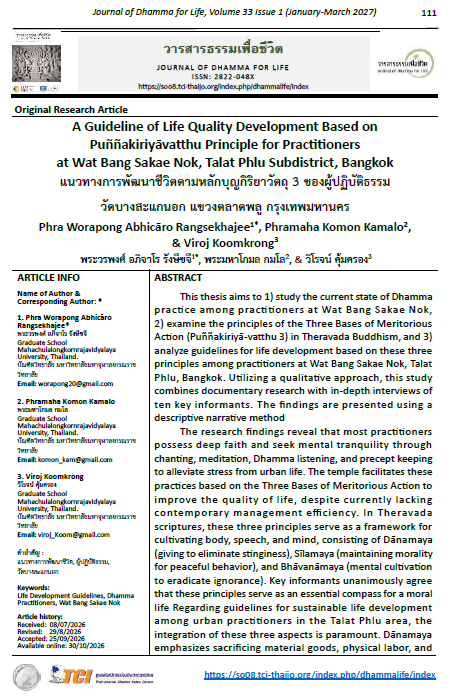
This thesis aims to 1) study the current state of Dhamma practice among practitioners at Wat Bang Sakae Nok, 2) examine the principles of the Three Bases of Meritorious Action (Puññakiriyā-vatthu 3) in Theravada Buddhism, and 3) analyze guidelines for life development based on these three principles among practitioners at Wat Bang Sakae Nok, Talat Phlu, Bangkok. Utilizing a qualitative approach, this study combines documentary research with in-depth interviews of ten key informants. The findings are presented using a descriptive narrative method
The research findings reveal that most practitioners possess deep faith and seek mental tranquility through chanting, meditation, Dhamma listening, and precept keeping to alleviate stress from urban life. The temple facilitates these practices based on the Three Bases of Meritorious Action to improve the quality of life, despite currently lacking contemporary management efficiency. In Theravada scriptures, these three principles serve as a framework for cultivating body, speech, and mind, consisting of Dānamaya (giving to eliminate stinginess), Sīlamaya (maintaining morality for peaceful behavior), and Bhāvanāmaya (mental cultivation to eradicate ignorance). Key informants unanimously agree that these principles serve as an essential compass for a moral life Regarding guidelines for sustainable life development among urban practitioners in the Talat Phlu area, the integration of these three aspects is paramount. Dānamaya emphasizes sacrificing material goods, physical labor, and Dhamma teachings to sustain Buddhism and support the community. Sīlamaya focuses on behavioral discipline via the 5 and 8 precepts through moral training programs to reduce social conflict. Bhāvanāmaya centers on practicing the Four Foundations of Mindfulness (Satipaṭṭhāna 4) in all postures to cultivate wisdom, understand mind-matter realities, and overcome greed, hatred, and delusion. This holistic development enhances mental, behavioral, and social well-being, fostering public-mindedness and a sustainable foundation for peace in urban society.
Article Details
References
กันตภณ หนูทองแก้ว. (2556). การนำหลักบุญกิริยาวัตถุมาใช้ในวิถีชีวิตของประชาชน อำเภอเมือง จังหวัดนครศรีธรรมราช. มหาวิทยาลัยมหามกุฏราชวิทยาลัย, สถาบันวิจัยญาณสังวร.
จิราพร รักการ. (2563). ทฤษฎีทางจิตเวชศาสตร์และการพยาบาลจิตเวช. วิทยาลัยพยาบาลและสุขภาพ มหาวิทยาลัยราชภัฏสวนสุนันทา.
ดาไล ลามะ, & คัทเลอร์, ไฮเวิร์ด ซี. (2553). ศิลปะแห่งความสุข: คู่มือในการใช้ชีวิต (วัชรีวรรณ ชัยวรศิลป์, ผู้แปล; พิมพ์ครั้งที่ 6). สำนักพิมพ์อิเทอร์นัล อิงค์.
ธนิต อยู่โพธิ์. (2539). อานิสงส์วิปัสสนากัมมัฏฐาน (พิมพ์ครั้งที่ 6). บุญนิธิพุทธจักร.
ธิติพร สุวรรณอำภา. (2557). ผลของโปรแกรมการพยาบาลโดยใช้บุญกิริยาวัตถุสามต่อความผาสุกทางจิตวิญญาณของผู้ป่วยโรคมะเร็ง. วิทยานิพนธ์พยาบาลศาสตรมหาบัณฑิต, จุฬาลงกรณ์มหาวิทยาลัย.
บุญมี แท่นแก้ว. (2546). ประวัติศาสตร์ต่าง ๆ และปรัชญาธรรม. โอเดียนสโตร์.
พระครูธรรมธรสุนทร กวิสฺสโร (เพ็งอาจ). (2558). ศึกษาทัศนคติต่อการถวายสังฆทานของชาวพุทธกลุ่มวัยรุ่น: กรณีศึกษาวัดจระเข้ใหญ่ อำเภอบางเสาธง จังหวัดสมุทรปราการ. วิทยานิพนธ์พุทธศาสตรมหาบัณฑิต, มหาวิทยาลัยมหาจุฬาลงกรณราชวิทยาลัย.
พระครูปลัดกิตติวัฒน์ (เมธวัจน์ สีลภูสิโต). (2560). การปฏิบัติบุญกิริยาวัตถุของพุทธศาสนิกชน: ศึกษาเฉพาะกรณีพุทธศาสนิกชนวัดบางนานอก. วิทยานิพนธ์พุทธศาสตรมหาบัณฑิต, มหาวิทยาลัยมหาจุฬาลงกรณราชวิทยาลัย.
พระพรหมคุณาภรณ์ (ป. อ. ปยุตฺโต). (2558). พจนานุกรมพุทธศาสตร์ ฉบับประมวลธรรม (พิมพ์ครั้งที่ 30). มูลนิธิธรรมทานกุศลจิต.
พระธรรมปิฎก (ป.อ. ปยุตฺโต). (2539). ธรรมนูญชีวิต ฉบับสองพากย์ (พิมพ์ครั้งที่ 2). สหธรรมิก.
พระศรีรัชมงคลบัณฑิต, พระมหาขนบ เข้ทอง , พระมหาสมสักดิ์ ธมฺมโชติโก , & พระเจริญพงษ์ ธมฺมทีโป (2565). การพัฒนาคุณธรรมจริยธรรมด้วยการเล่านิทานธรรมบทแก่เยาวชนในอำเภอพุทธมณฑลจังหวัดนครปฐม. วารสารปรัชญาปริทรรศน์, 27(1), 67–79. สืบค้น จาก https://so05.tci-thaijo.org/index. php/phiv/article/view/257080
ศิริขรินทร์ ไชยนา และคณะ. (2549). การบำเพ็ญบุญตามหลักบุญกิริยาวัตถุของนักเรียนวิทยาลัยอาชีวศึกษาเชียงใหม่. มหาวิทยาลัยมหามกุฏราชวิทยาลัย, สถาบันญาณสังวร.
สมศักดิ์ ดวงสีเสน. (2534). บุญกิริยาวัตถุ 3 ของพุทธศาสนิกชนไทยในท้องถิ่นที่กำลังเปลี่ยนไปสู่สังคมอุตสาหกรรมใหม่: ศึกษาเปรียบเทียบระหว่างผู้มีอาชีพเกษตรกรรมกับลูกจ้างในโรงงานอุตสาหกรรม อำเภอคลองหลวง จังหวัดปทุมธานี.